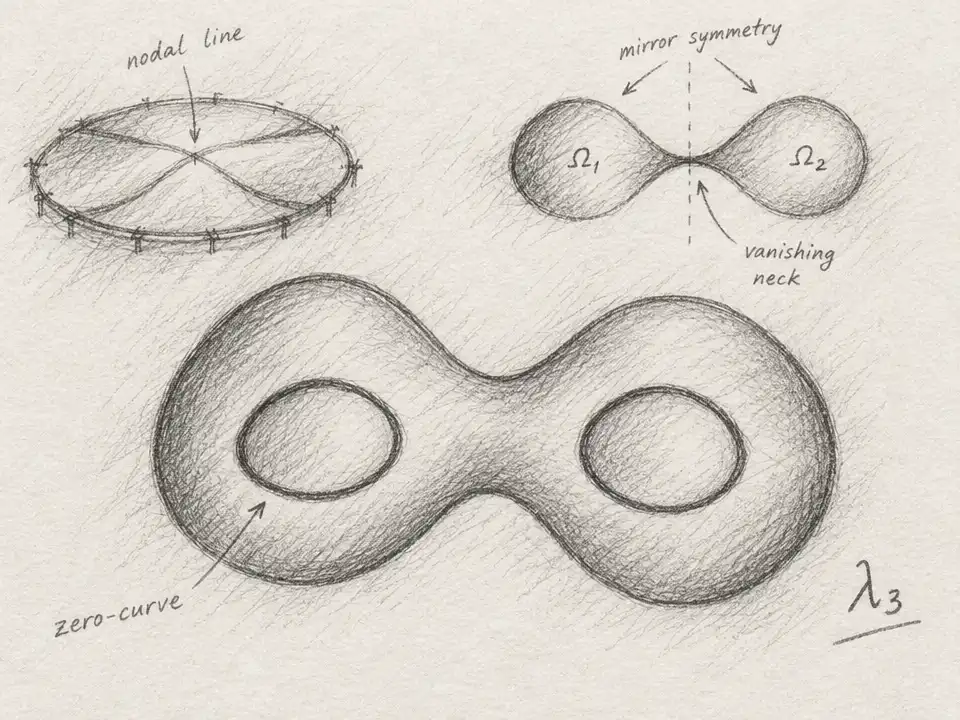
Can a Third Vibration Mode Hide Two Closed Loops Inside a Drum?
A clever thin-neck construction creates a smooth drum whose simple third vibration mode has two closed nodal loops inside.
A clever thin-neck construction creates a smooth drum whose simple third vibration mode has two closed nodal loops inside.
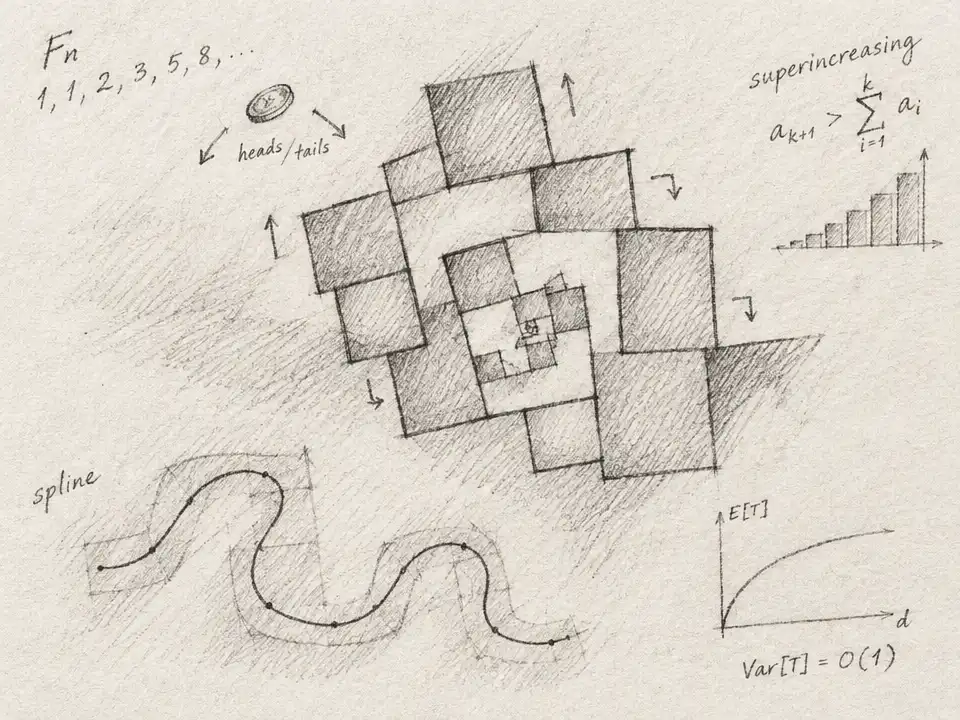
A random Fibonacci tile pattern turns a wandering growth problem into exact predictions about when distant lattice points get covered.
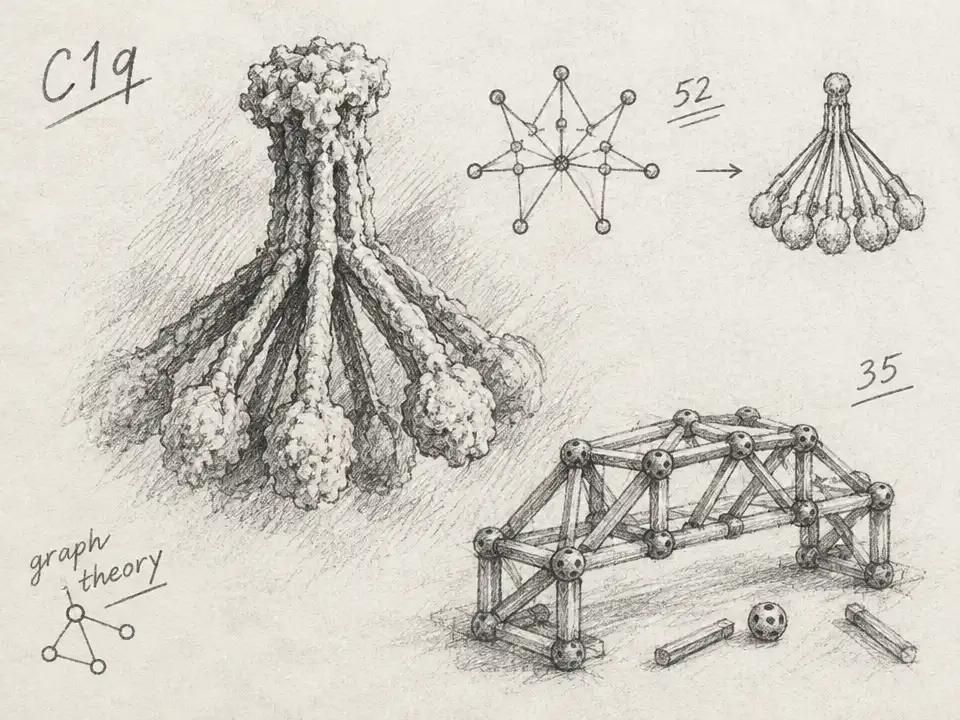
A graph-theory framework explains how local binding rules and assembly order can turn many possible networks into one reliable structure.
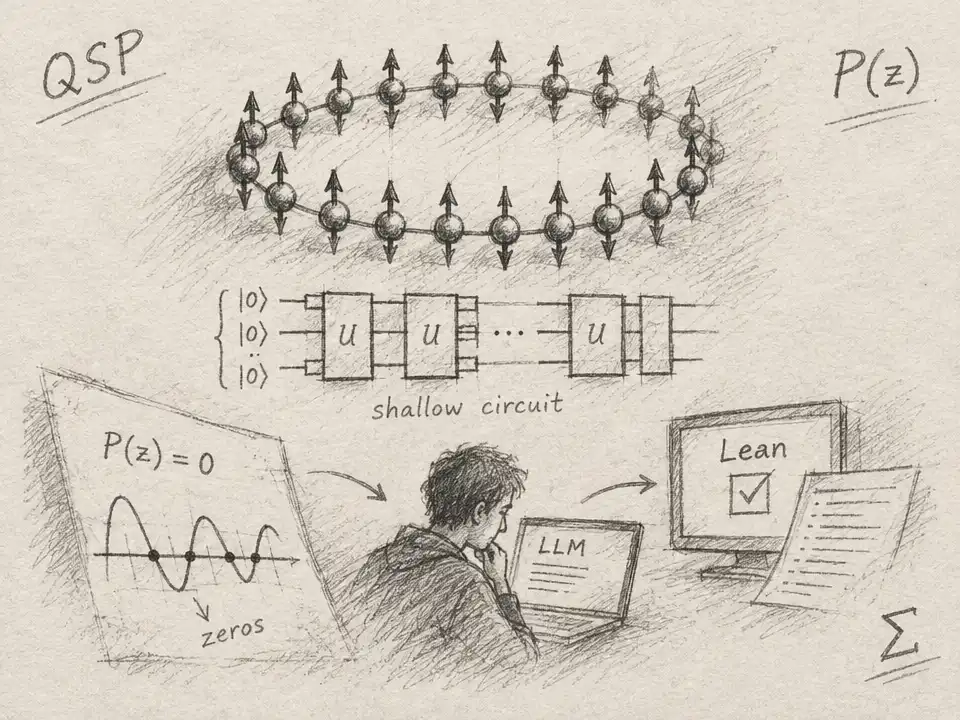
A quantum optimization conjecture fell when researchers turned a spin-ring circuit into a polynomial problem and formally checked the proof.
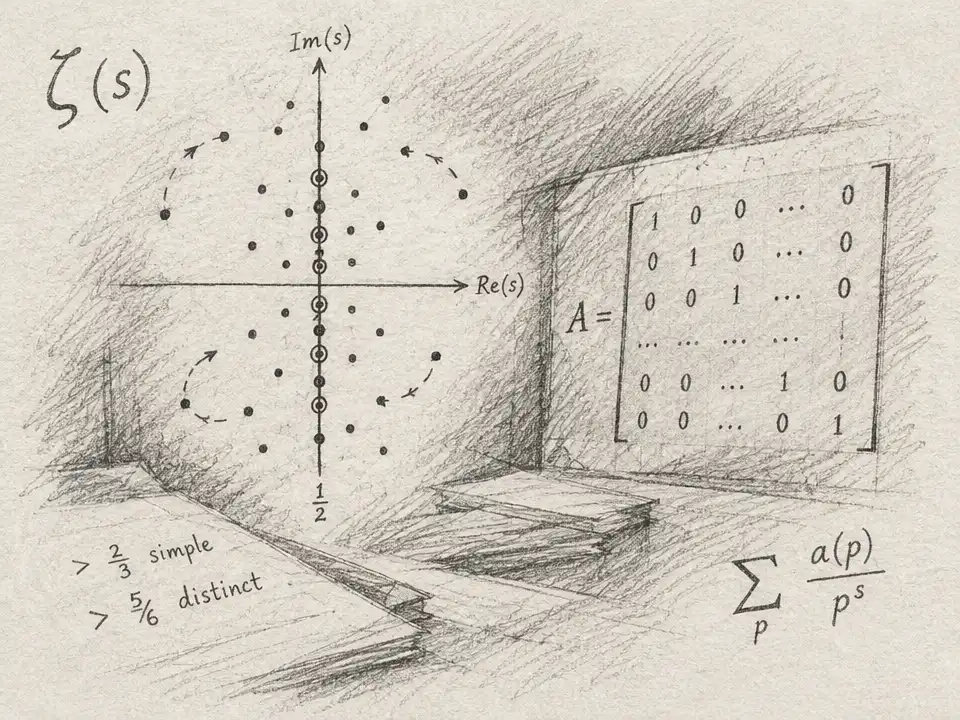
An unconditional theorem puts at least two-thirds of zeta’s nontrivial zeros on the critical line—without resolving the Riemann hypothesis.
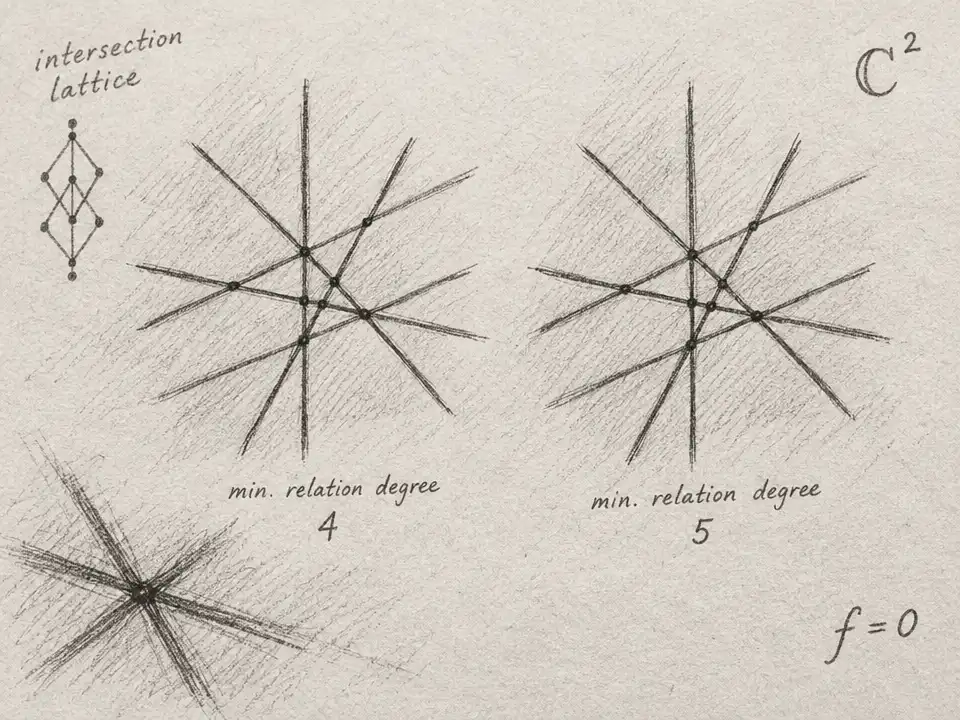
Two nine-line arrangements share the same intersection map, yet their equations reveal different hidden algebra—challenging a proposed mathematical rule.
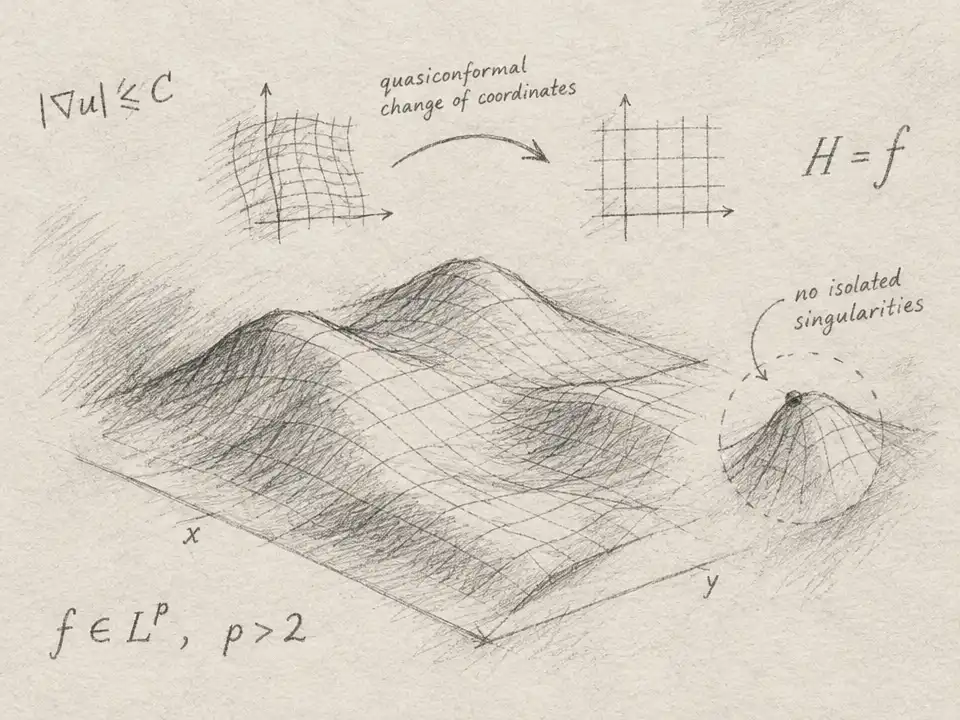
A new theorem shows how a hidden two-dimensional coordinate change can reveal smoothness in rough geometric graphs, even in high codimension.
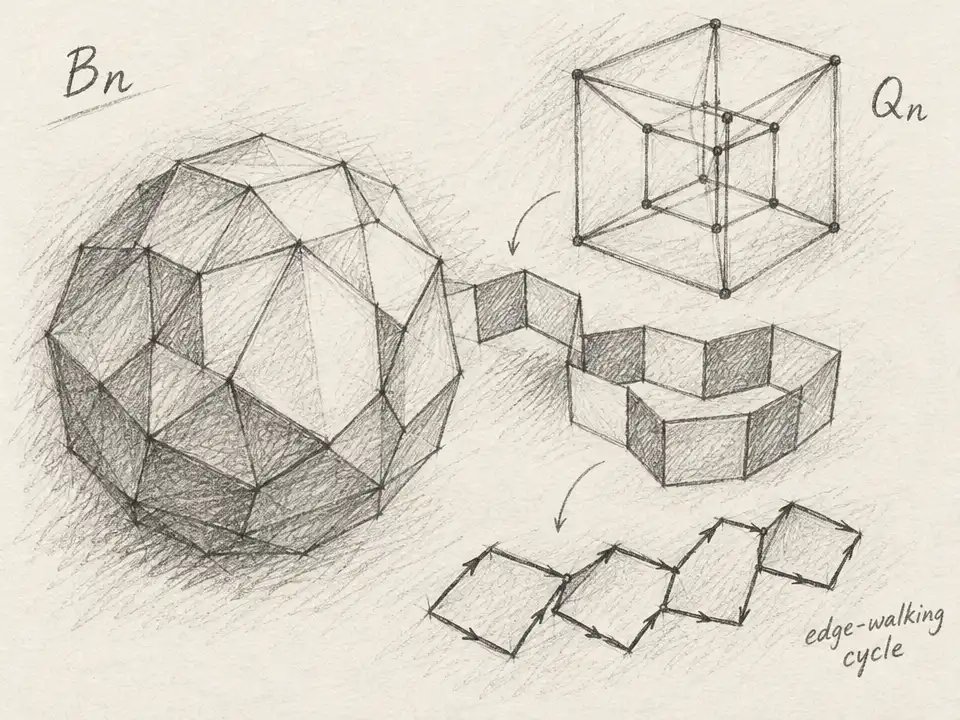
A hidden ribbon in a hypercube’s face structure reveals a cycle through every facet of the more complex B-permutahedron.
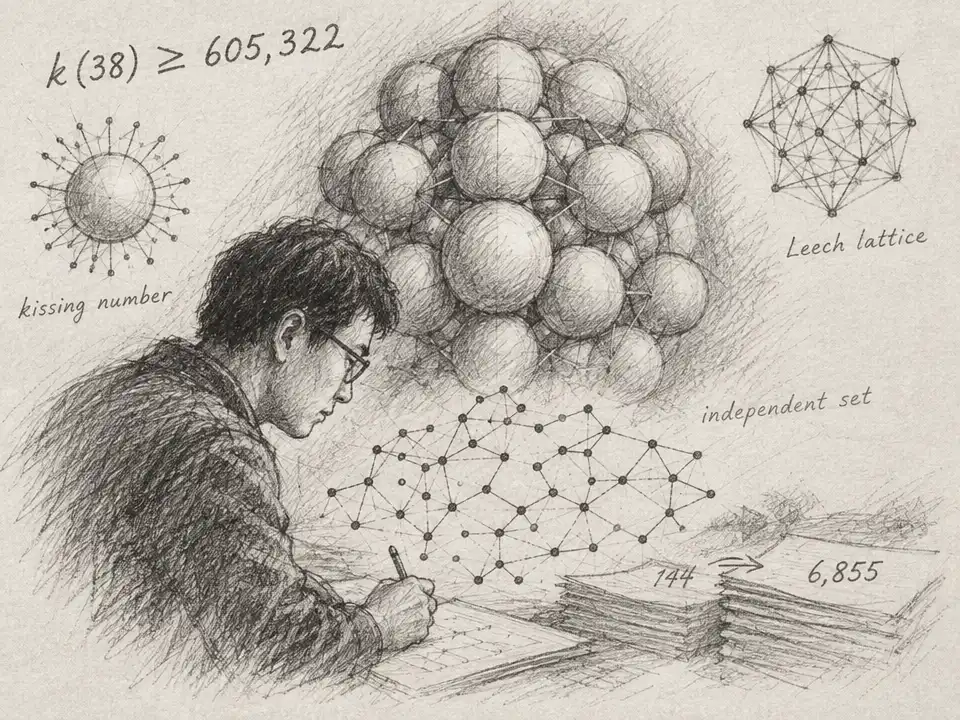
A search through a 38-dimensional lattice turns an apparently empty equator into 6,855 compatible directions—and a major new kissing bound.
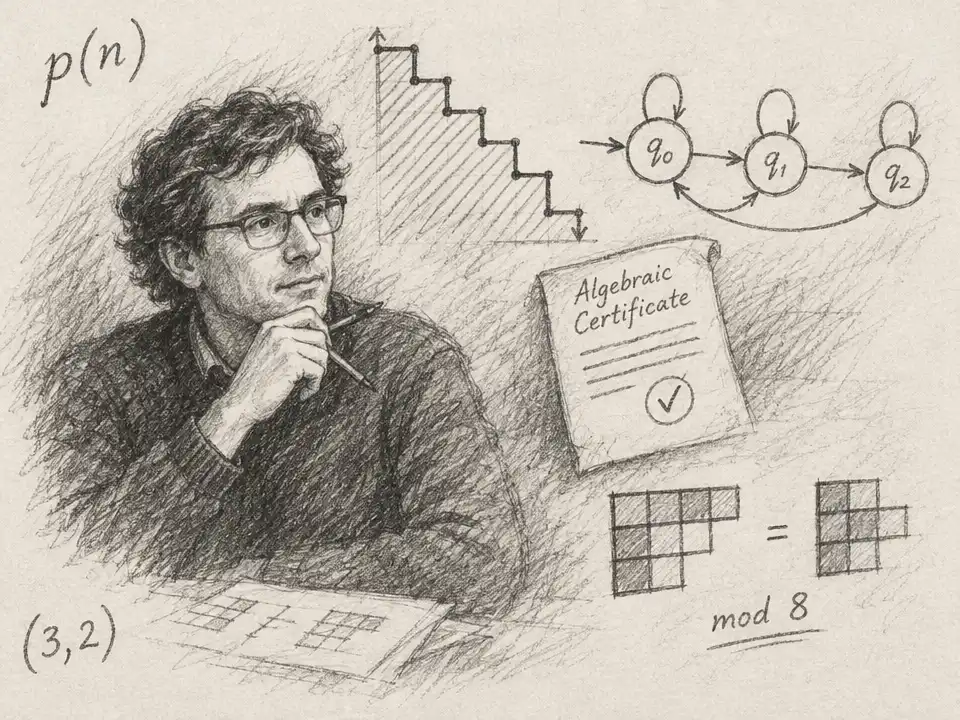
A staircase-shaped path turns colored partitions into finite-state machines, helping an exact certificate prove a new residue-class identity.
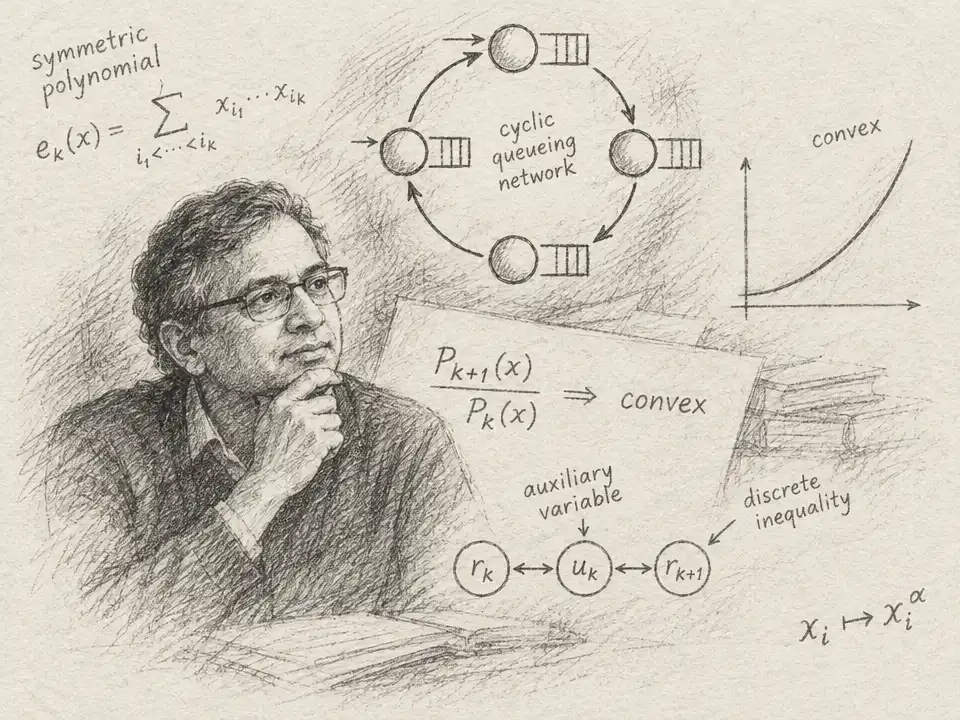
A queueing network turns a stubborn symmetric-polynomial inequality into a story about service times, hidden curvature, and a clever splitting trick.
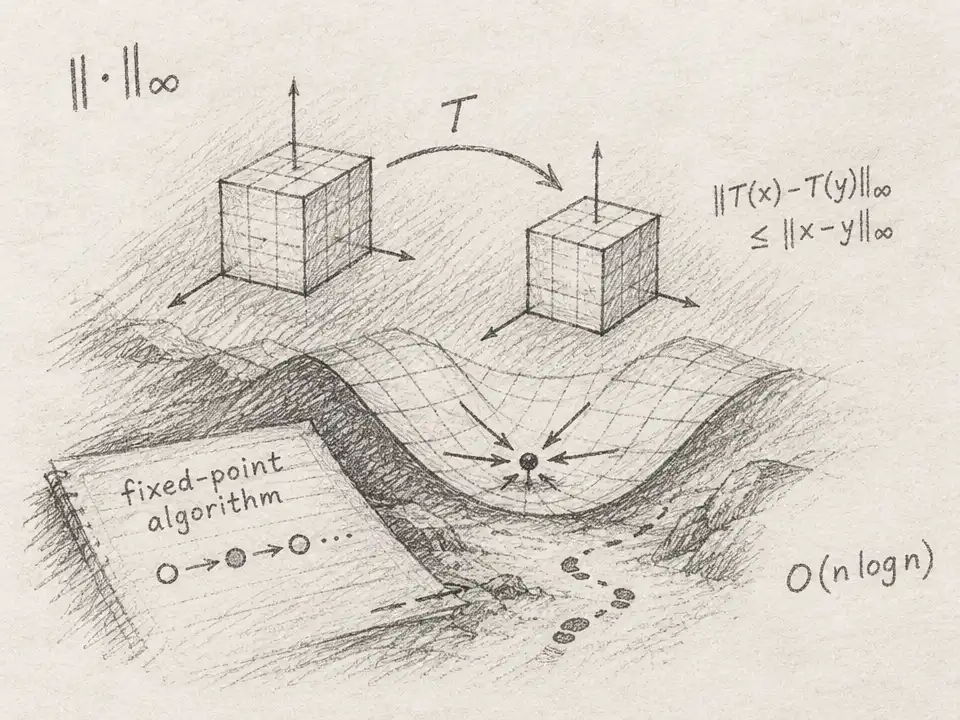
A hidden nonexpansive property helps turn a query-efficient fixed-point method into a computable one, while dimension remains a challenge.
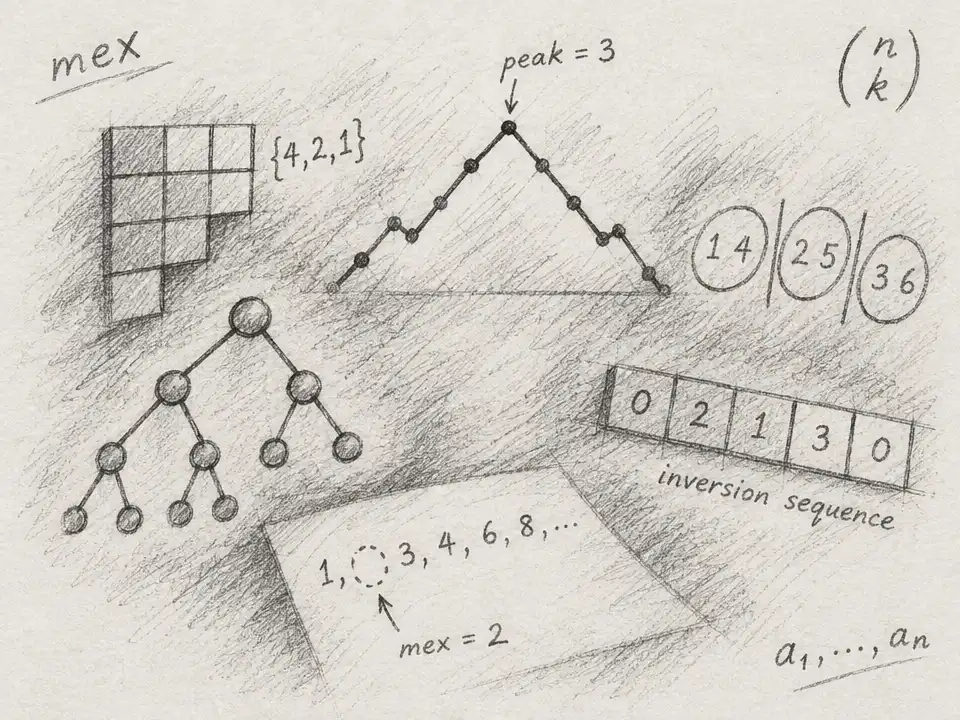
A simple missing-value rule connects partitions, paths, and trees—and hints at an unexplained mirror in inversion sequences.
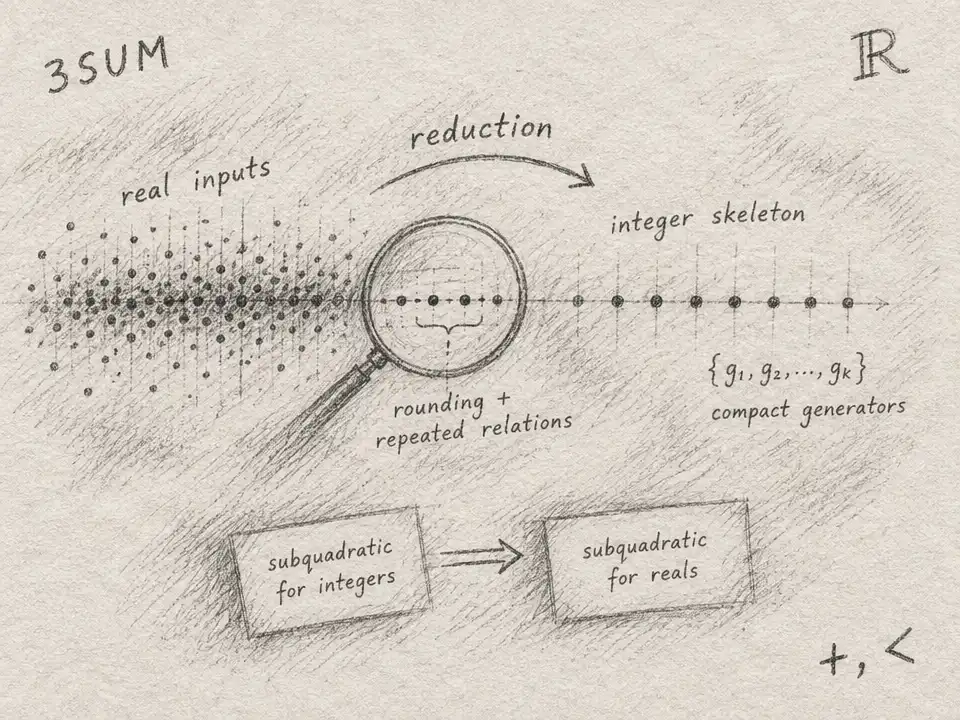
A new mathematical reduction finds a discrete integer skeleton beneath real-number 3SUM, linking two seemingly different hard problems.
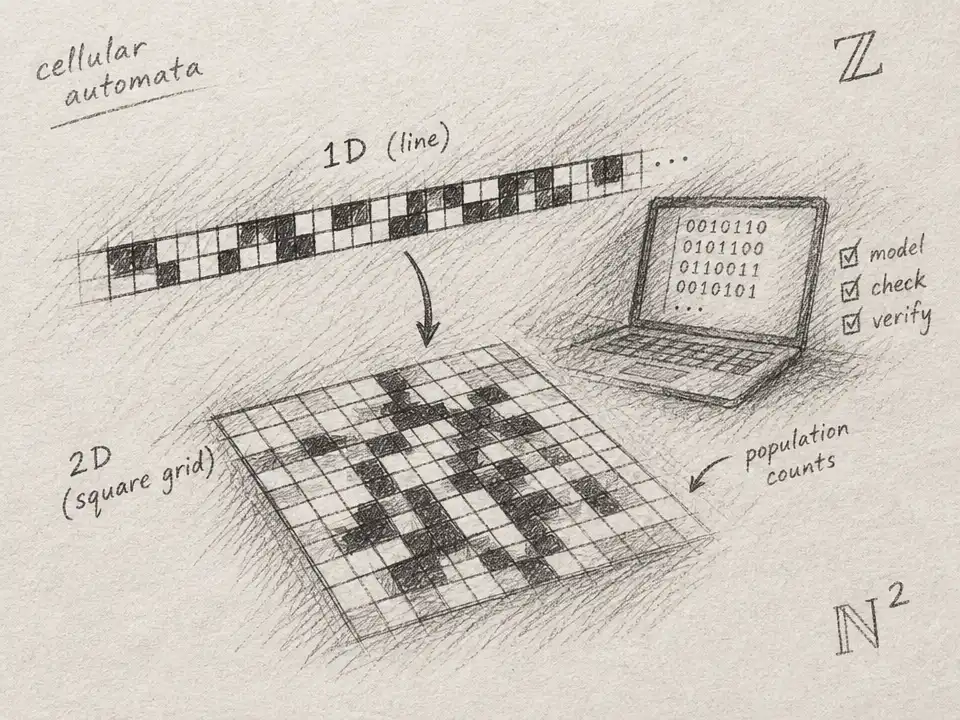
A search across 50 million sequence pairs uncovers a precise bridge between cellular automata growing on a line and a square grid.

A complete classification of four-runner distances reveals a rigid fraction sequence, one missing value, and a solitary speed-pattern exception.
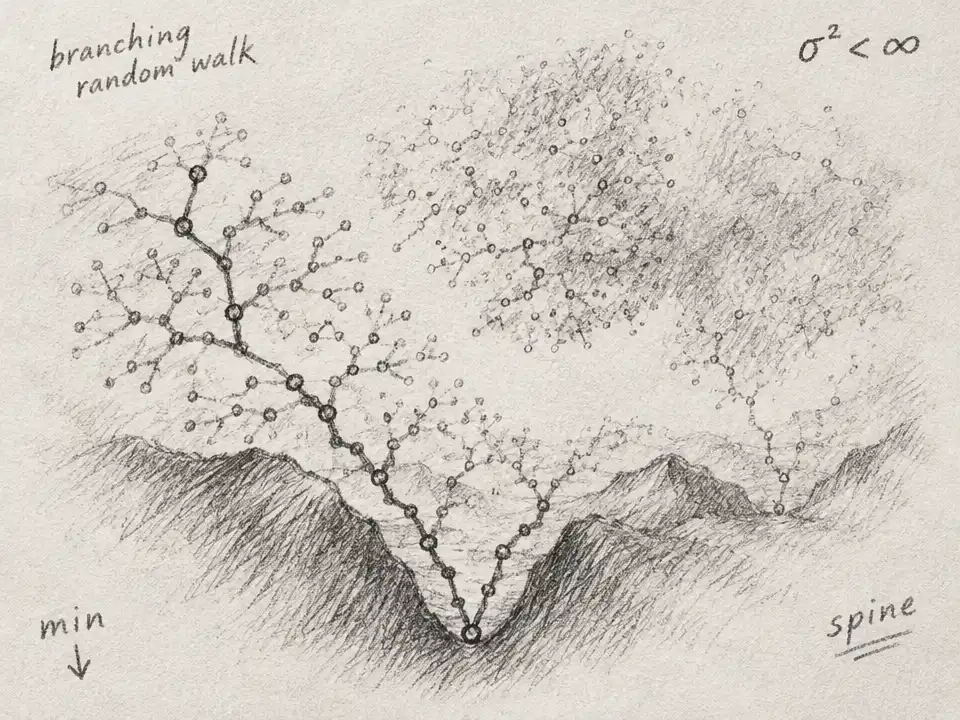
A branching population seems to crowd its immortal lineage out of the minimum. A new theorem finds it returning, with reproduction setting the rhythm.
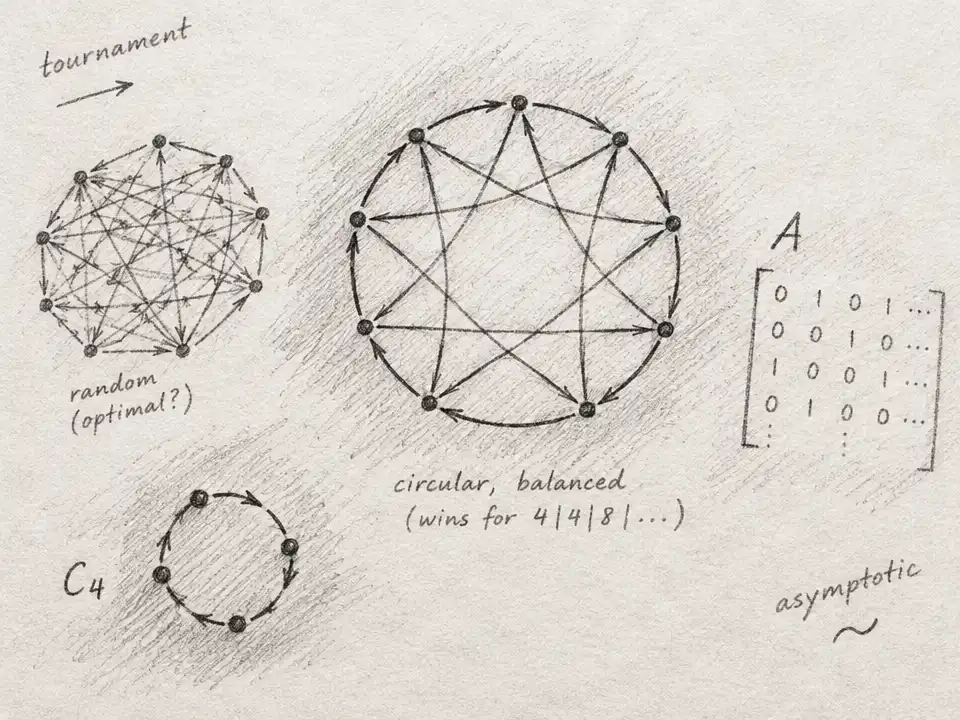
A new proof shows why a balanced circular tournament beats randomness at counting cycles whose lengths are divisible by four.
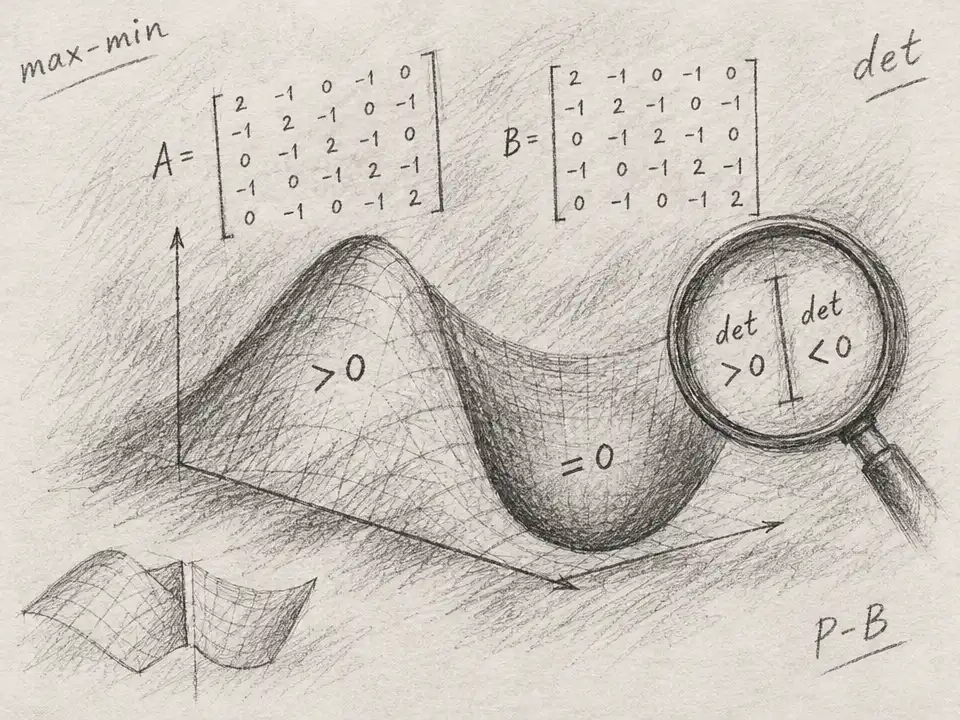
A pair of five-by-five matrices hides a determinant sign that defeats every finite polynomial recipe for a continuous piecewise-quadratic function.
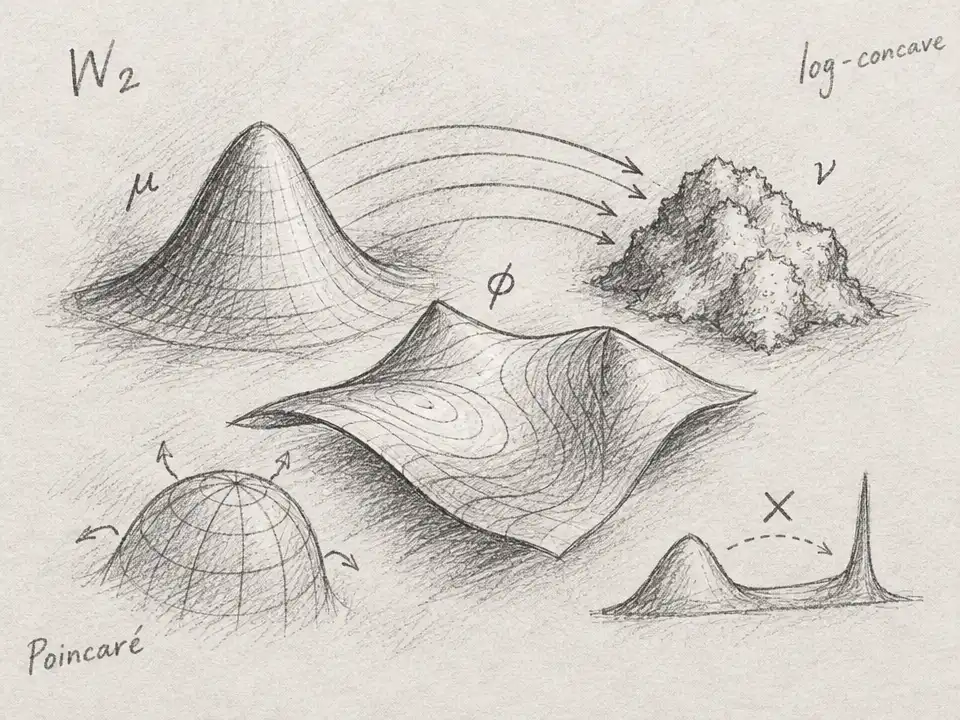
A new optimal-transport inequality is stronger than Poincaré’s rule—until a carefully shaped log-concave distribution breaks it.