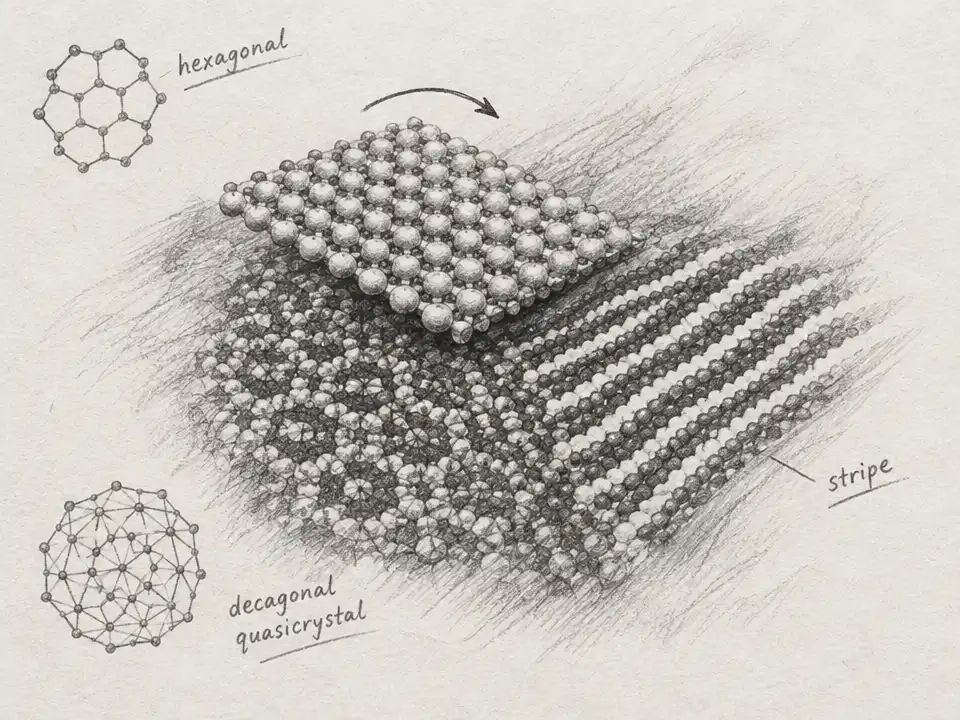
A Hexagonal Layer Finds Its Fit by Twisting on a Quasicrystal
A hexagonal colloid layer twists on a decagonal quasicrystal, creating stripe-like distortions that could make friction direction-dependent.
A hexagonal colloid layer twists on a decagonal quasicrystal, creating stripe-like distortions that could make friction direction-dependent.
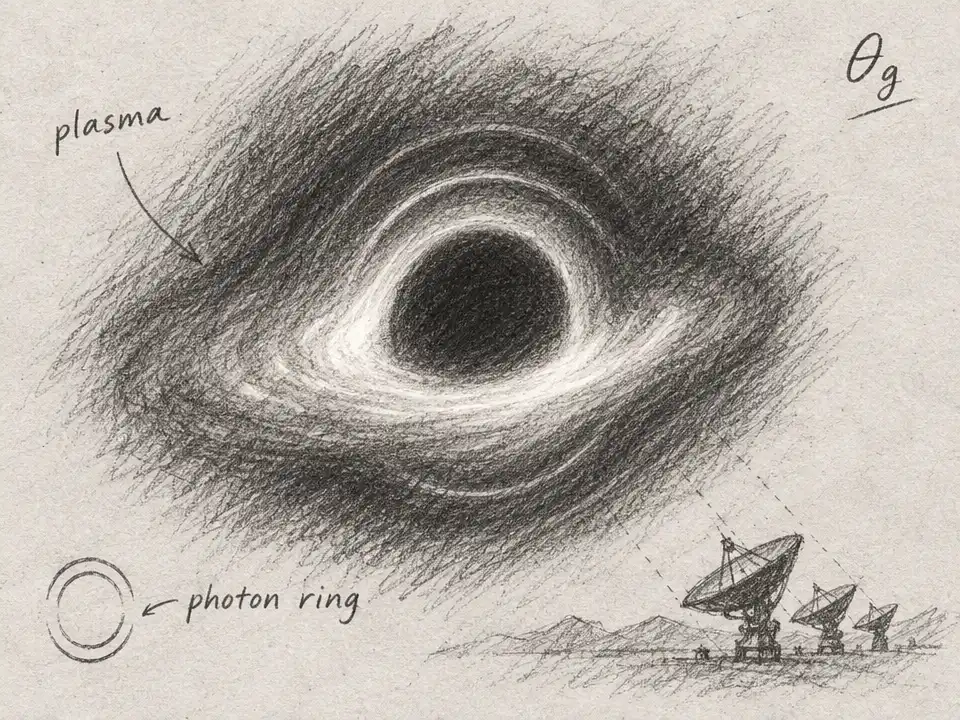
The M87 black hole’s glowing ring is not a direct picture of its horizon. Researchers are searching its finer light patterns for gravity’s hidden signature.
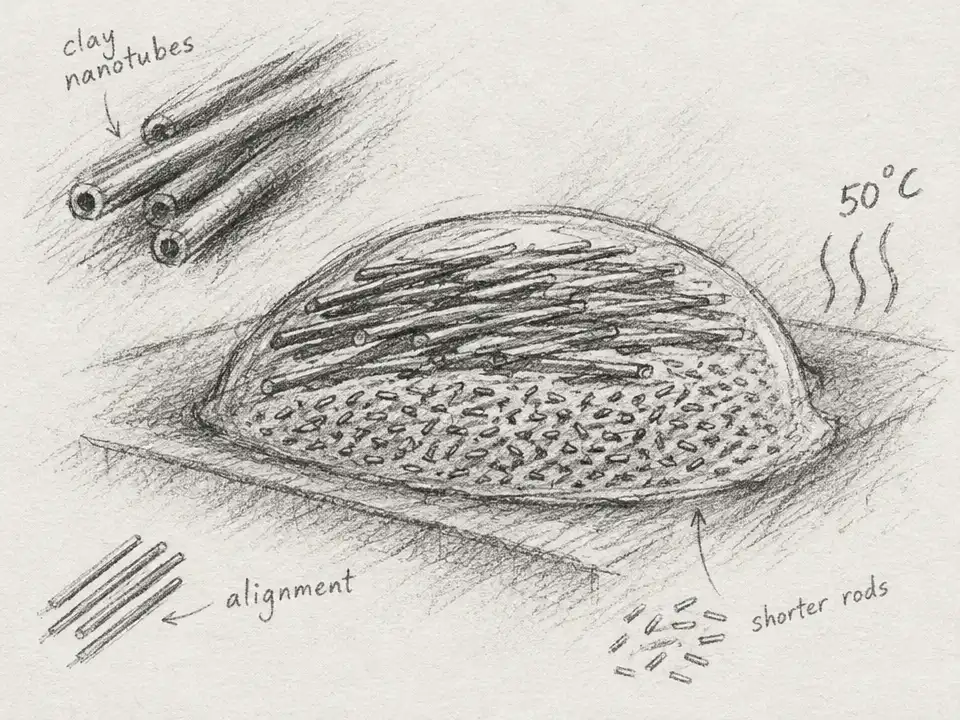
A heated droplet sorted polydisperse clay nanotubes into layers, revealing a route to aligned coatings—and a fluid-physics mystery.
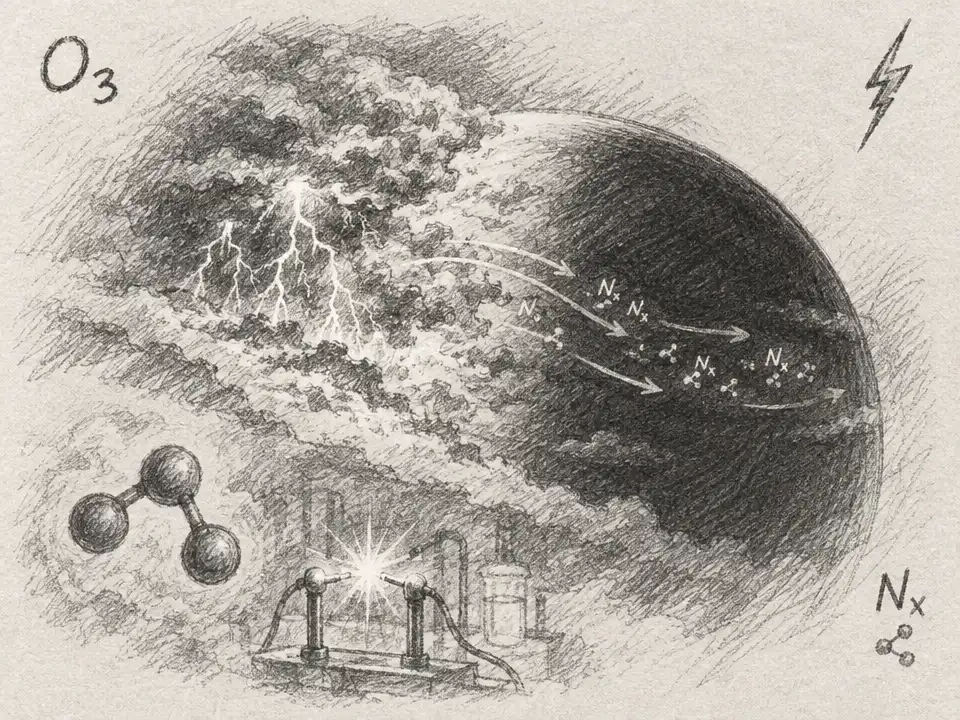
Alien lightning may erase ozone clues—or create misleading ones. Lab experiments and climate models show why each planet needs context.
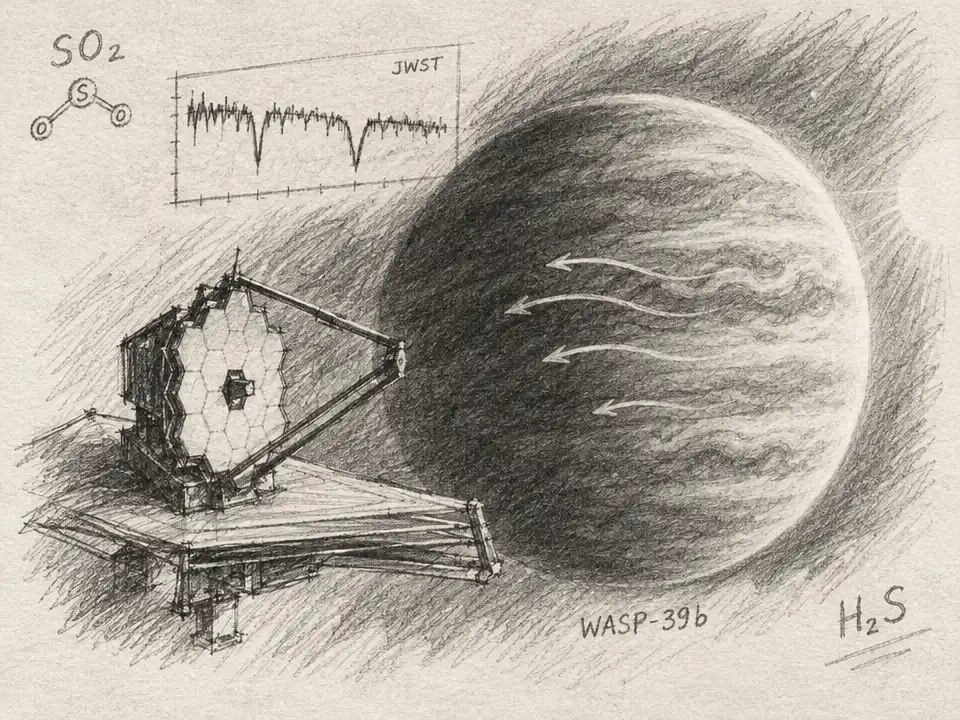
JWST spotted sulfur dioxide on the hot exoplanet WASP-39b, revealing how starlight and winds can reshape an alien atmosphere.
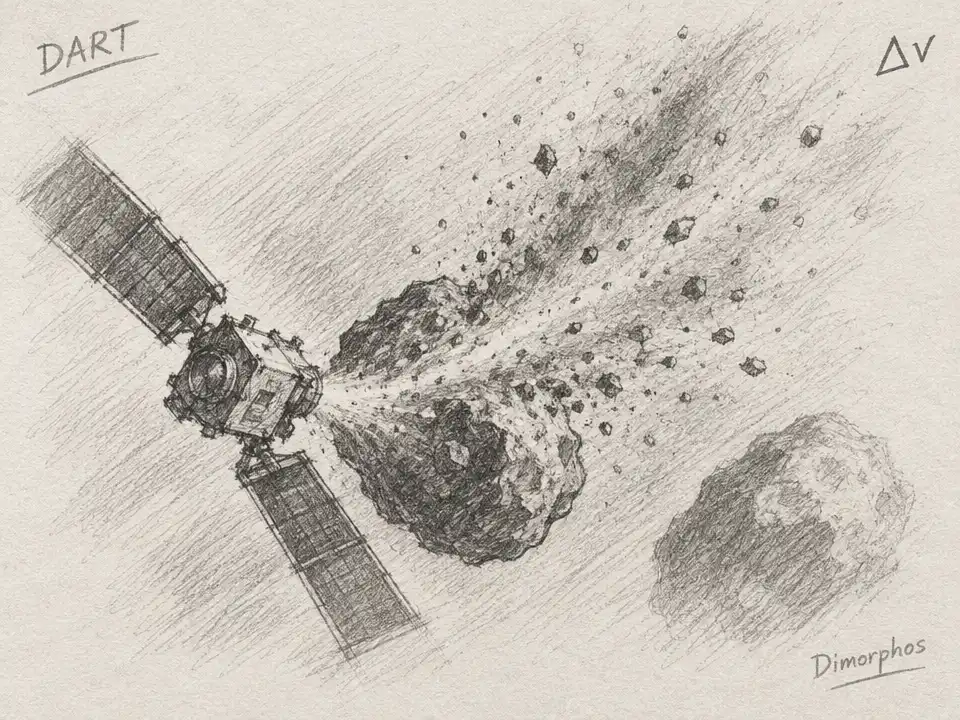
DART shortened Dimorphos’s orbit by 33 minutes. The asteroid’s escaping debris supplied a surprising extra push.