Most telescopes gather light that has traveled across space. But what if a clue to the Milky Way’s invisible structure arrived not as light from the sky, but as a faint signal detected in a laboratory?
That is the possibility explored by physicists Jae Hyeok Chang and Stefano Profumo. They ask what could happen after a hypothetical discovery of axions, particles that may make up dark matter. Instead of treating a detection as a simple yes-or-no result, researchers might coordinate several detectors around the world and study the signal’s changing pattern. The goal: learn how dark matter moves through our corner of the Galaxy.
The proposal is a forecast, not a report of a discovery. No axion stream has been observed, and the authors do not claim that a global detector network is already doing this kind of astronomy. Their paper maps out what measurements might become possible if an axion signal is found and suitable instruments can share precise data.
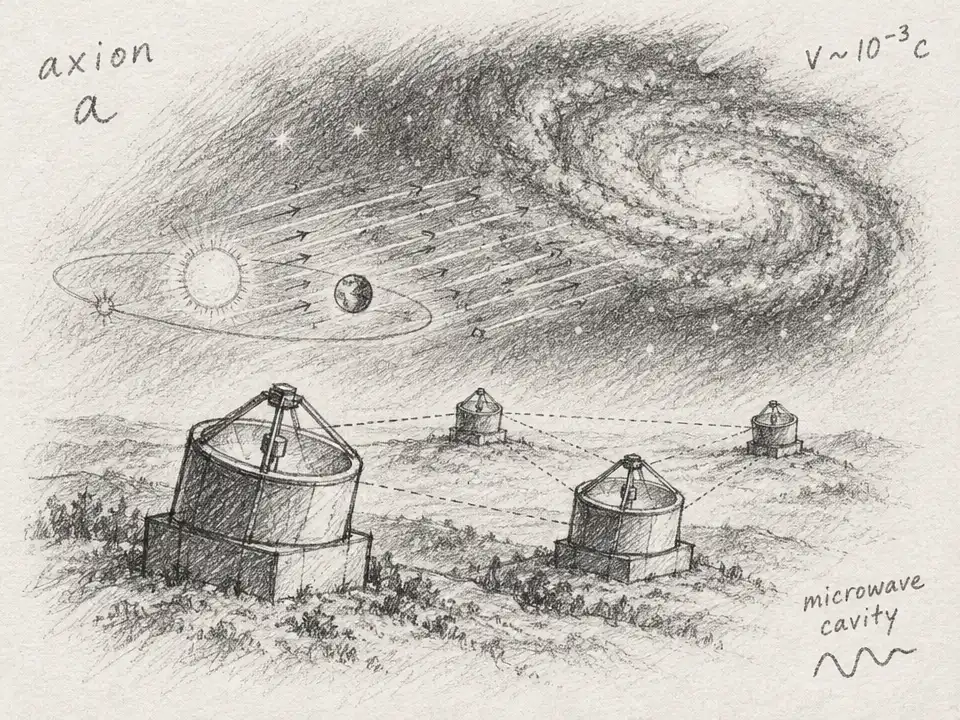
Axions are one candidate for dark matter, the unseen mass whose gravity shapes galaxies and larger cosmic structures. Some models allow axions to gather into small gravitationally bound clumps called miniclusters. A passing star could pull material from one of these clumps; over time, the Milky Way’s gravity could stretch the loose material into a long, narrow stream. Earth might pass through such a stream without anything visible happening in the sky. Yet axions in it would be moving past us.
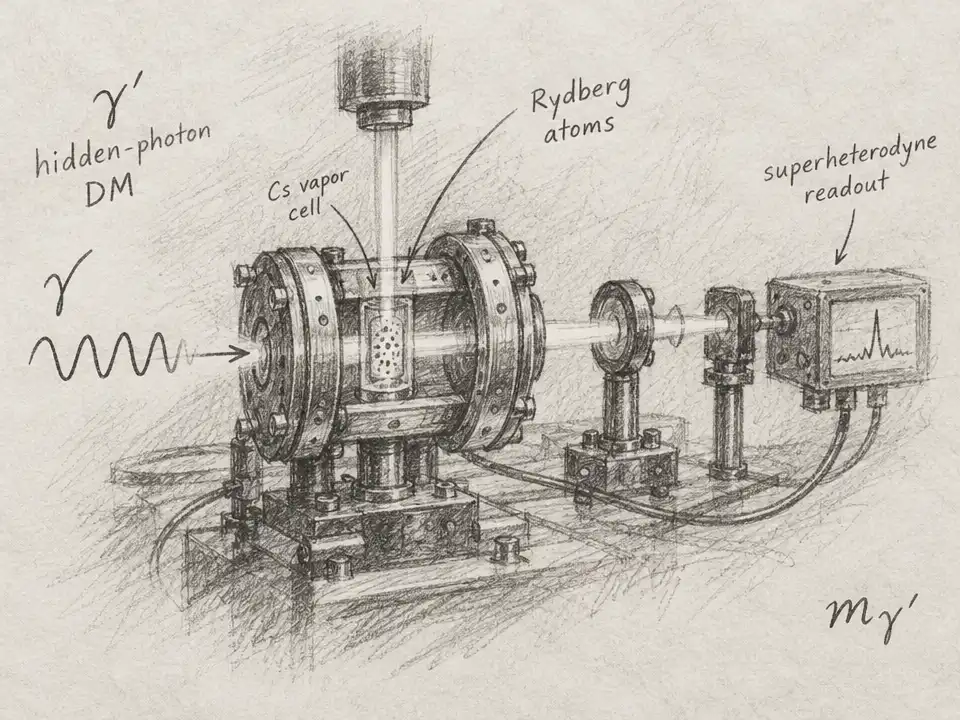
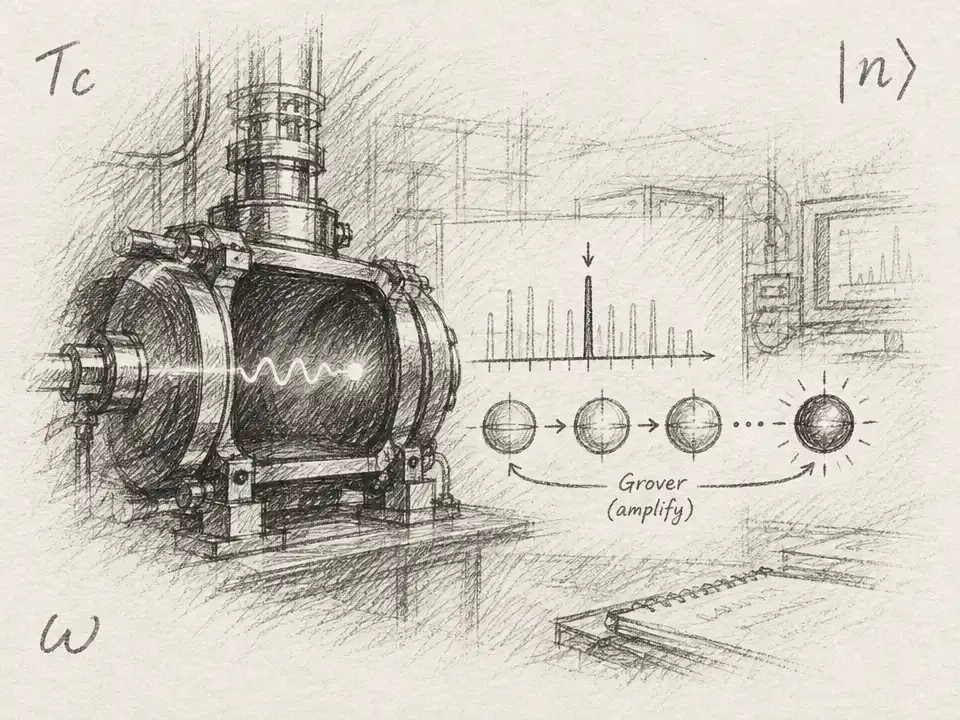
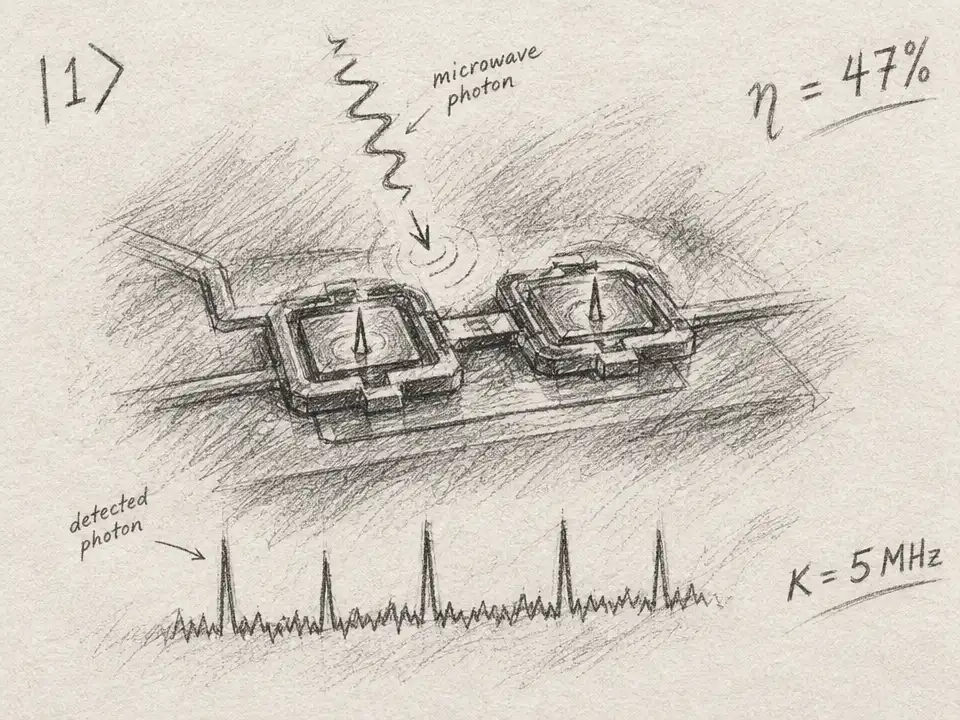
Here is the shift in perspective: a detector on Earth could, in principle, sense not just the presence of a particle, but the texture of a dark-matter flow. The proposed instruments are microwave-cavity experiments, or haloscopes. A strong magnetic field inside a resonant cavity could allow axions to convert into photons. The cavity is tuned to a narrow range of frequencies, rather like a radio receiver listening for an exceptionally quiet station.
A single receiver could measure the signal’s spectrum: how its power is distributed across frequencies. That shape carries information about axion speeds along the direction of the flow. But two streams can have similar speed distributions while arriving from different directions. The spectrum alone misses part of the map.
Chang and Profumo’s answer is to compare the signals at separated sites. If the same axion field reaches two detectors, their measurements may share a relationship in phase—a measure of how the waves line up—and in coherence, or how consistently the signals match. The separation between detectors acts like a baseline. As Earth rotates, the baseline turns relative to the incoming flow. A stream with a wider spread of arrival directions loses coherence across some separations more quickly than a narrower one.
In this way, spectroscopy and cross-comparison do different jobs. The frequency line can reveal how much the axions’ speeds vary along the flow; the pattern of correlations between sites can reveal how much their directions vary across it. Together, those clues could expose whether the stream’s internal motions are stretched more in one direction than another—an imprint of its history and of the Galaxy’s gravitational shaping.
To test the idea, the researchers modeled a four-site network using approximate locations for experiments in Seattle, Daejeon, New Haven, and Perth. Their illustrative case assumed a 10 GHz signal, a bulk flow speed of 300 km/s, and internal velocity spreads of 0.10 m/s along and across the flow. They considered two sidereal days of observing under idealized conditions, including future receiver sensitivity and carefully controlled timing. These are chosen benchmark values for a forecast, not measurements from operating experiments.
In that scenario, the modeled line would have a width of 3.3 mHz. A single receiver could constrain the along-flow spread but, at leading order, could not measure the across-flow spread from the spectrum alone. Combining signals from all four sites, the forecast gives local one-standard-deviation uncertainties of 0.0057 m/s along the flow and 0.017 m/s across it, assuming the axion mass and bulk speed are fixed. The network’s advantage is not simply more listening time: it can access a different dimension of the signal.
That advantage depends on painstaking coordination. The predicted signal is so narrow that motion matters: Earth’s rotation could create a relative Doppler shift of about 12 Hz between Seattle and Daejeon in the example, far larger than the modeled line width. Researchers would need to correct for that motion and preserve the relative timing of measurements. The paper estimates that keeping additional unmodeled coherence loss below 1% would require residual phase stability equivalent to about 2.3 ps of differential timing jitter at 10 GHz. These requirements belong to the proposed scenario; the authors explicitly assume future performance rather than established specifications.
Even a successful measurement would not instantly reveal a stream’s full biography. Different directional solutions can fit the same phase pattern, and a narrow local uncertainty does not guarantee that the correct solution has been identified. The stream’s density, its interaction with the detectors, and the axion-to-photon conversion strength also affect how the signal should be interpreted. A measured velocity spread alone cannot uniquely determine the stream’s age or the mass of the clump it came from.
Still, the idea recasts a laboratory experiment as a possible observatory. An ordinary telescope looks outward by collecting photons; this network would look for a pattern in the invisible material passing through Earth. If axions are real and a stream crosses our path, their faint microwave signal might carry traces of how dark matter gathered, broke apart, and moved through the Galaxy. The first clue would be a line on a spectrum. The larger discovery could be a map of motion in a world we cannot see.