Imagine looking at a distant city through a telescope and trying to decide which buildings are finished. Some have the clean outline of a tower; others are scattered, crowded, still under construction. Now imagine two careful observers studying the same image—and sorting most of its buildings into different categories.
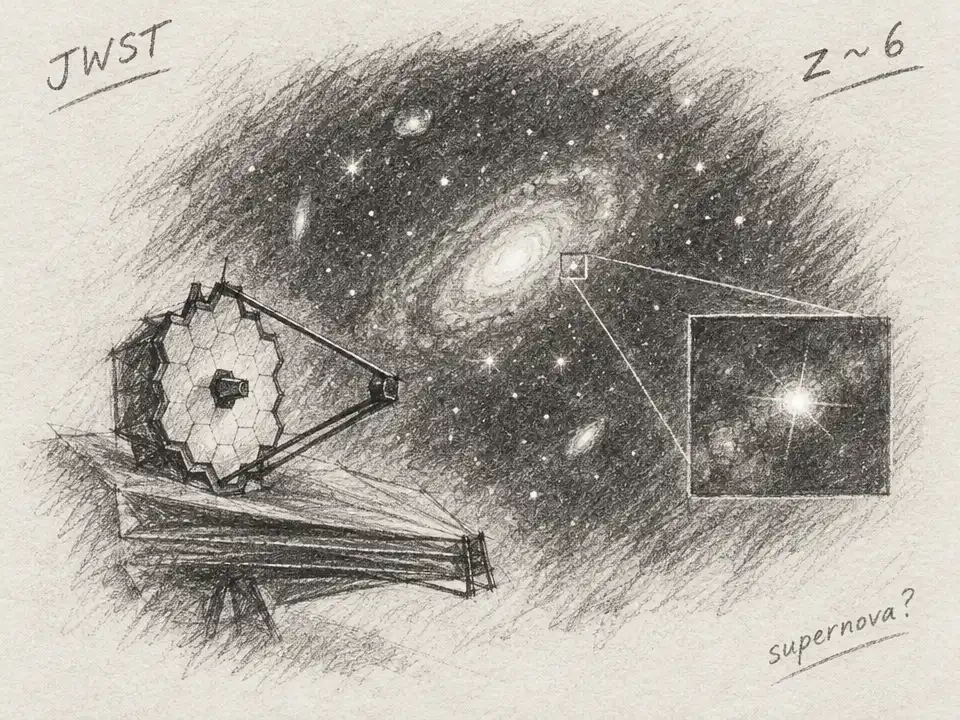
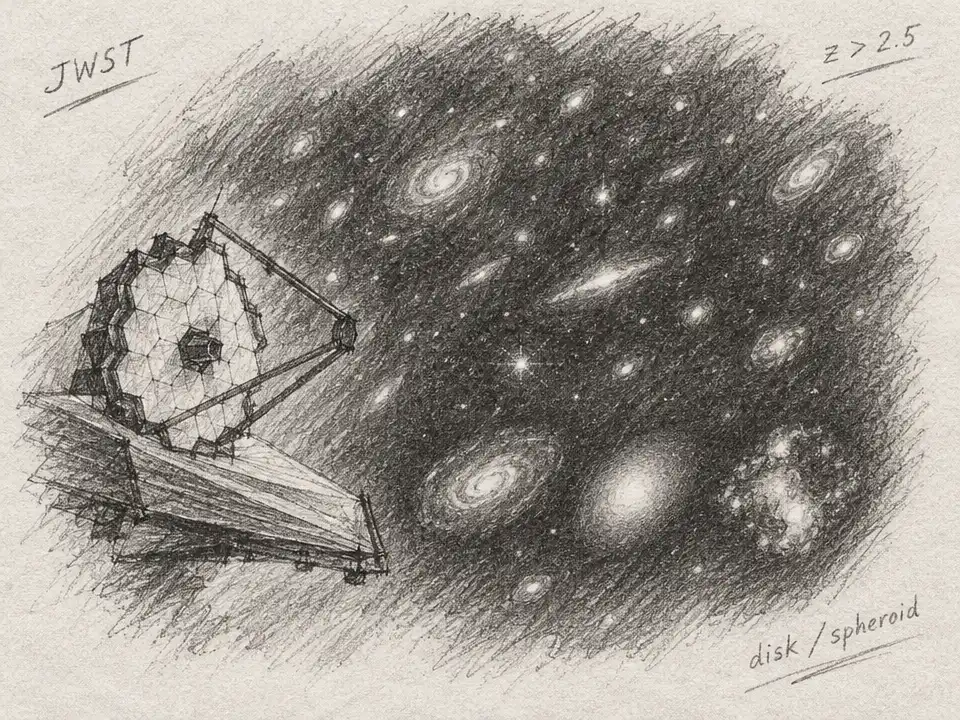
That is the surprise in a new study of galaxies seen by the James Webb Space Telescope. Astronomers expected sharper infrared images to help settle a basic question: which faraway galaxies are orderly disks, like the broad shape of the Milky Way, and which are rounded spheroids? Instead, two sophisticated ways of reading the same galaxy images increasingly disagree as they look farther back in time.
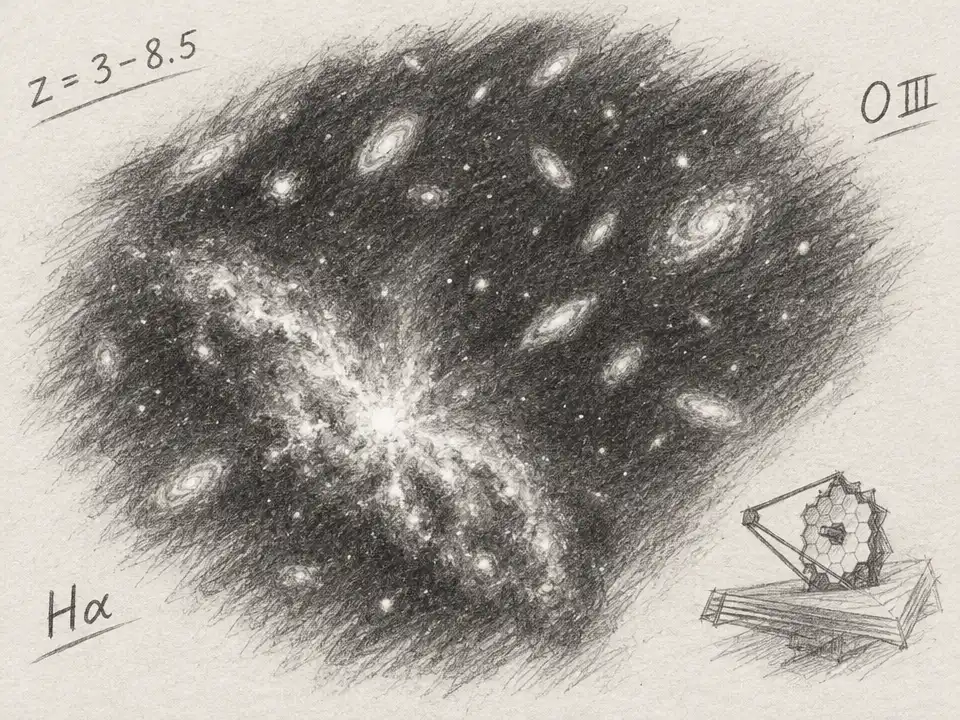
The researchers analyzed 15,567 JWST-observed galaxies, with stellar masses above one billion times the Sun’s mass, spanning a broad range of cosmic history. Their images were chosen to show visible-light wavelengths from each galaxy’s own frame of reference, which helps reveal the distribution of older stars rather than only the brightest young star-forming regions.
Classifying a galaxy is not as simple as tracing its outline. One approach fits the light with a smooth mathematical profile, then uses the fit and other measurements to assign a familiar label. Another measures how the light is actually spread across the image: how concentrated it is, how uneven, how lopsided, and whether bright regions are scattered across it. The team combined several such measurements with machine learning, training its system on the clearest examples of disks and spheroids before asking it to classify the broader sample.
For galaxies at relatively modest distances, the methods broadly agreed. But beyond a redshift of 2.5—a way of describing light stretched by the expansion of the universe—their answers split. The profile-fitting approach tended to call more galaxies disks. The team’s non-parametric system, which pays closer attention to clumps and the distribution of light, assigned substantially more to the spheroid category.
The mismatch was not a tiny handful of borderline cases. Among galaxies above that redshift, about 42 percent received matching disk-or-spheroid labels from both approaches. Another 4 percent were called irregular by both. Roughly 54 percent fell outside those clear agreements. The share classified as mixed or uncertain grew toward earlier times, reaching close to 70 percent in the highest-redshift bin.
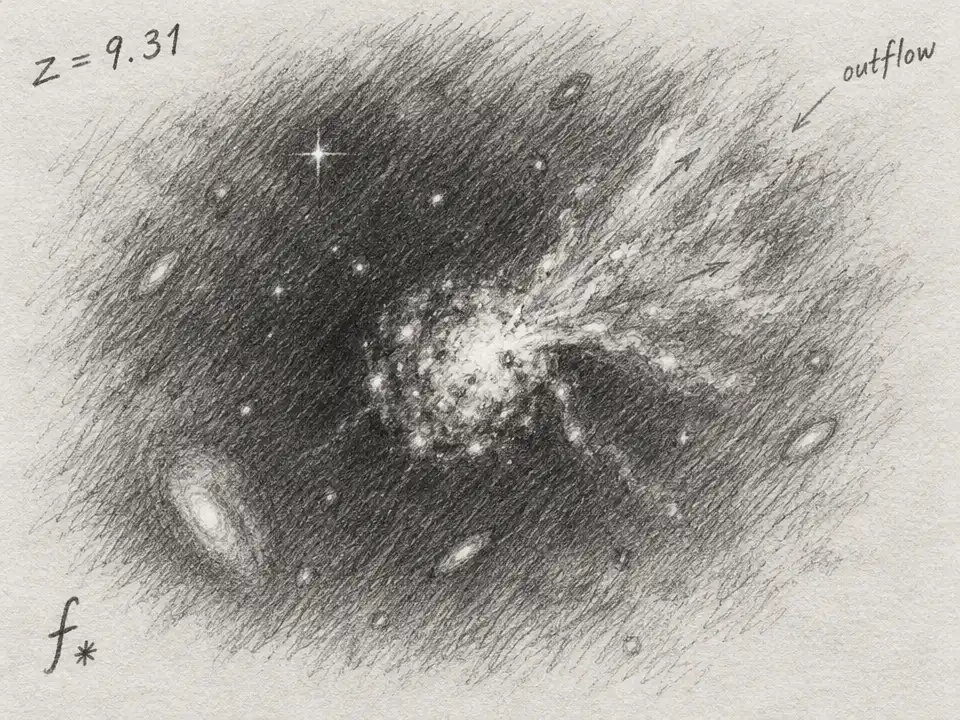
Here is the twist: the researchers argue that this disagreement may be telling us something about the galaxies, not merely exposing a faulty classifier. A young galaxy can be compact, clumpy, asymmetric, and still rearranging itself. A smooth profile-fitting method can emphasize its overall light distribution; a measurement of concentration and unevenness can emphasize its knots and irregular structure. Both can be internally consistent while giving different answers to the question “What shape is this?”
The team put its own classification method through checks. When models trained on JWST images were applied to simulated galaxy images—and vice versa—about 95 percent of classifications stayed the same. In tests using simulated galaxies viewed from different directions, labels were stable across roughly 81 to 82 percent of projections. The researchers also imposed a minimum image-quality threshold, requiring at least 100 usable pixels per galaxy, and found that the rise in disagreement was larger than the changes in image sampling across the relevant redshift range.
Those checks make the finding more interesting, but they do not settle which label is right. The authors acknowledge that there is no reliable ground-truth catalog of individual early galaxies against which to verify the classifications. The consistency tests show that their method behaves similarly across observed and simulated data and viewing angles; they cannot prove that a given distant galaxy is truly a disk, a spheroid, or something else. Nor does the study directly measure how each galaxy’s stars and gas are moving.
That distinction matters. “Morphological indeterminacy” is the researchers’ name for a population that the two methods do not classify in the same way. It is not a newly discovered kind of object with a confirmed physical boundary. Their proposal is that many early galaxies may not yet fit neatly into categories developed to describe more settled galaxies nearby. The discrepancy could therefore act as a clue to a period of assembly—when galaxies are gathering material and their structure is still taking shape.
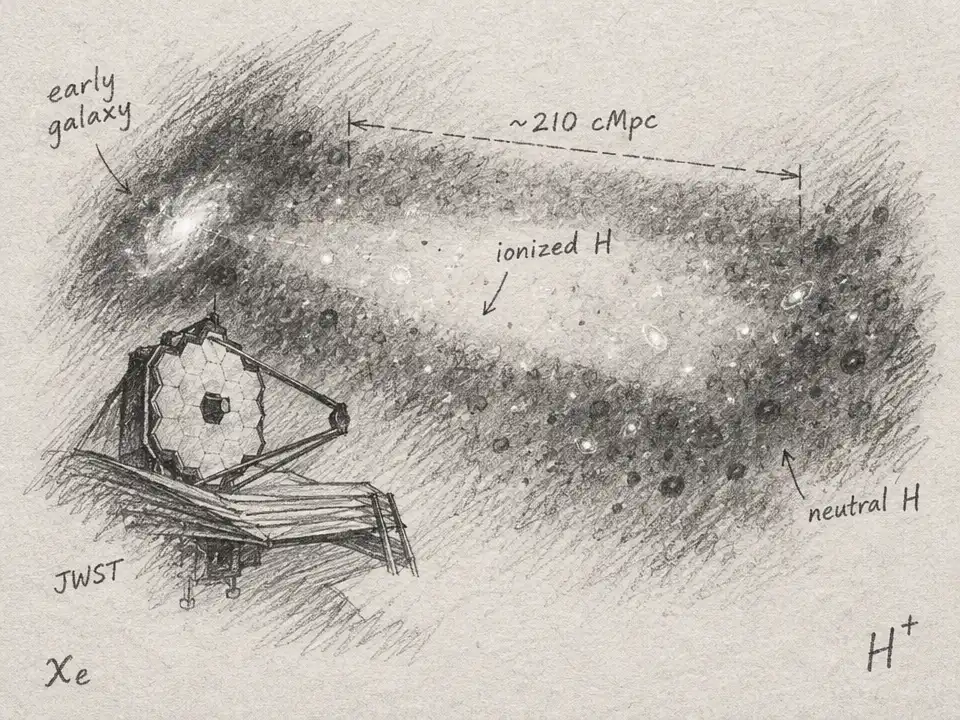
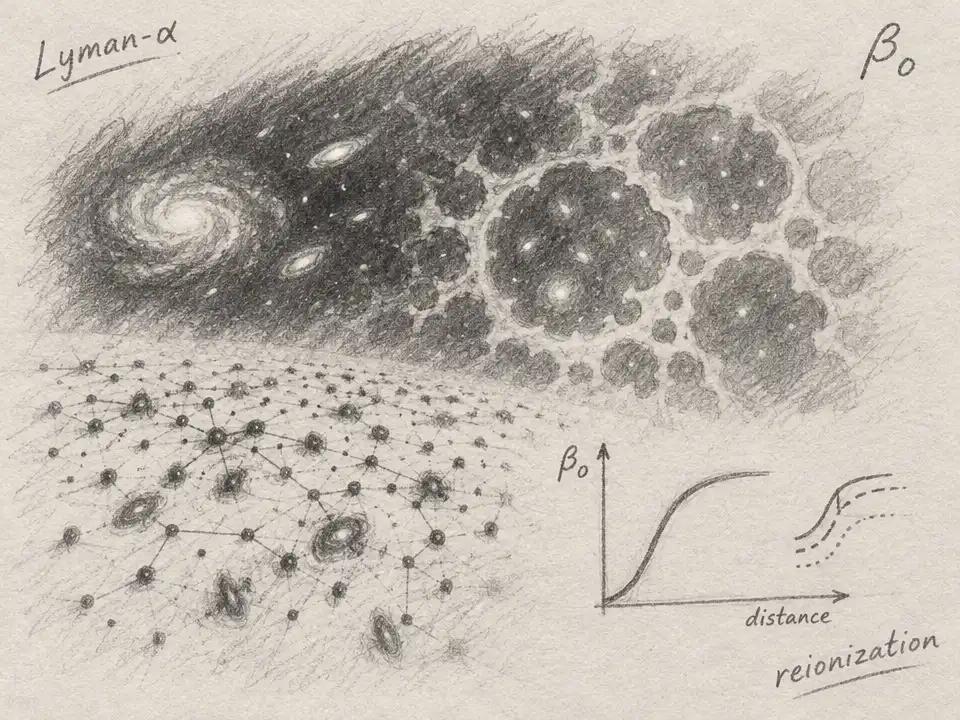
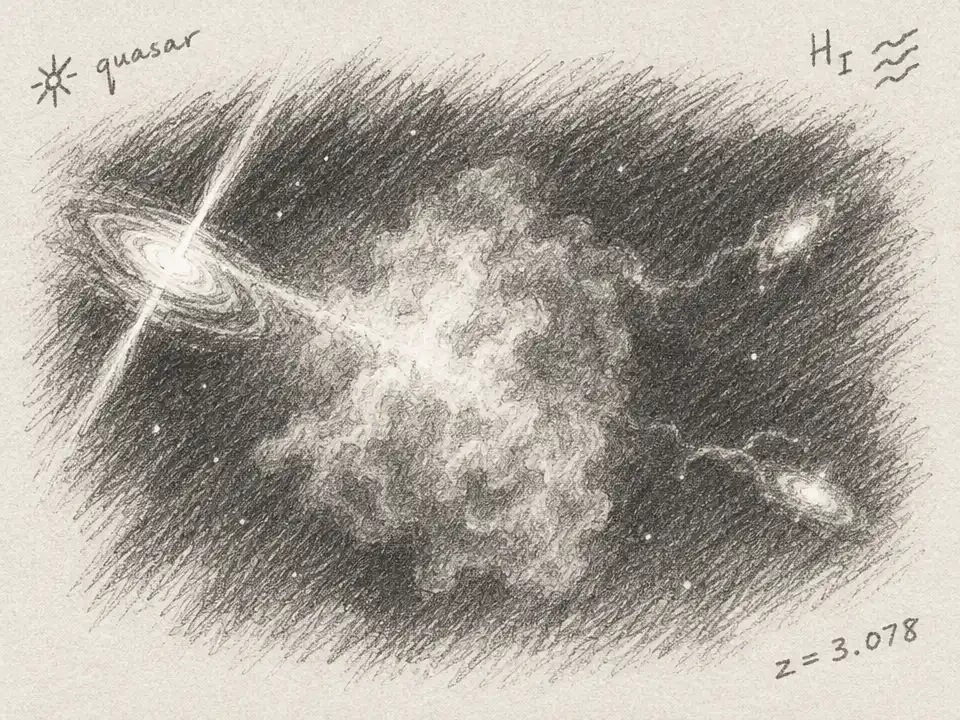
The idea fits a broader picture in which galaxies grow through a long sequence of accretion, interactions, internal disturbances, and gradual settling. But this study’s main evidence comes from images of starlight, not a direct movie of that process. The authors point to other observations of extended gas around distant galaxies as useful context, while noting that gas and stars need not share the same structure. A bright stellar core can be only one part of a larger, more active system.
For years, better images seemed likely to make galaxy labels more certain. JWST has delivered an astonishingly detailed view, but clarity has not made every early galaxy easier to name. Instead, the study suggests that the disagreement itself may be worth measuring: perhaps the universe’s first galaxies do not simply come in miniature versions of today’s familiar shapes. Some may still be in the middle of becoming them.
The work is an arXiv preprint submitted to the journal Monthly Notices of the Royal Astronomical Society. Its interpretation—that classification disagreement traces a physical stage of galaxy assembly—remains a proposal to test, not a settled conclusion. The next step is to pair these shape measurements with evidence about motion and gas, asking whether galaxies that confuse the classifiers also look unsettled in independent ways.