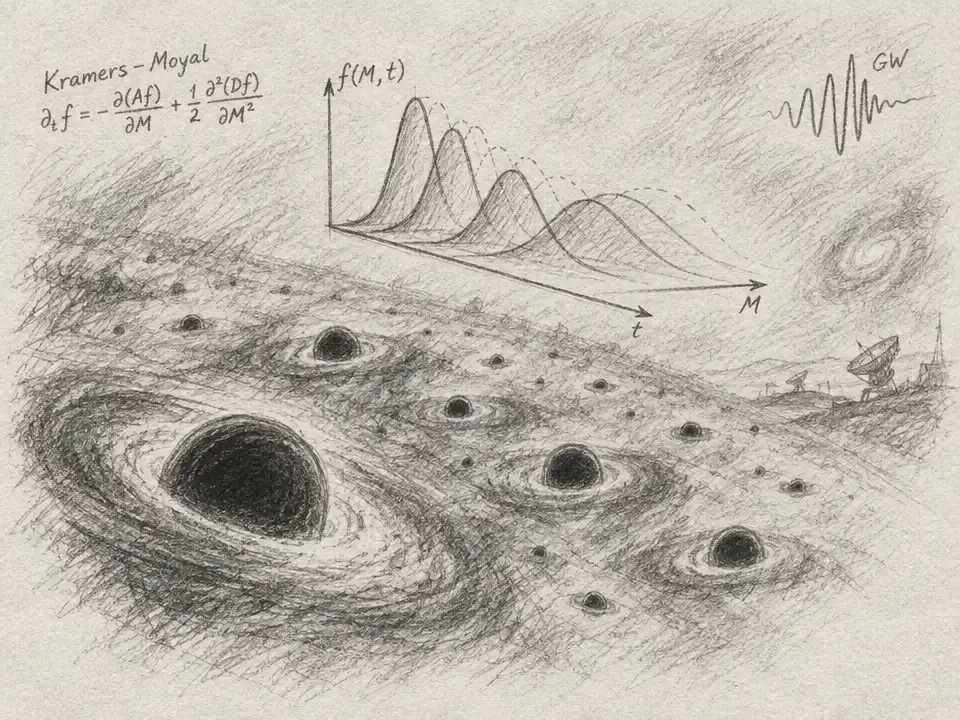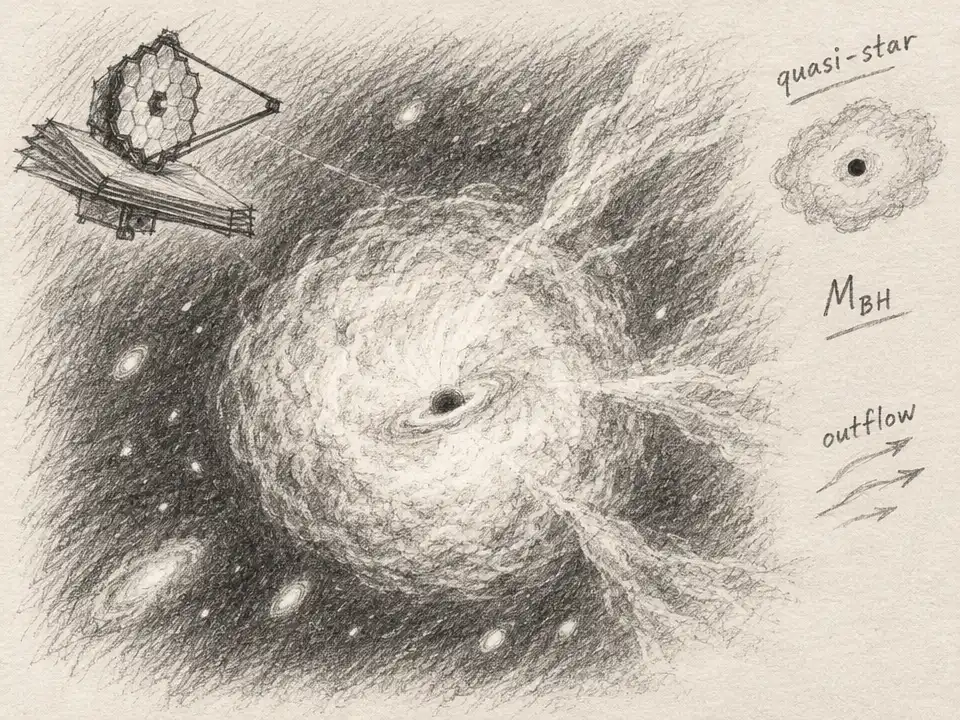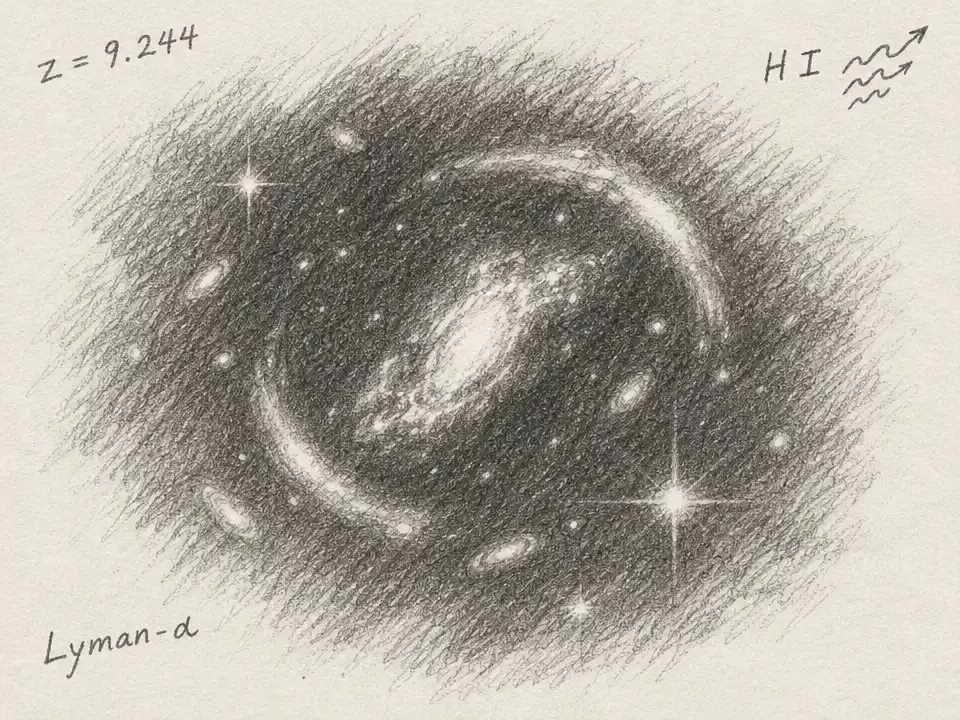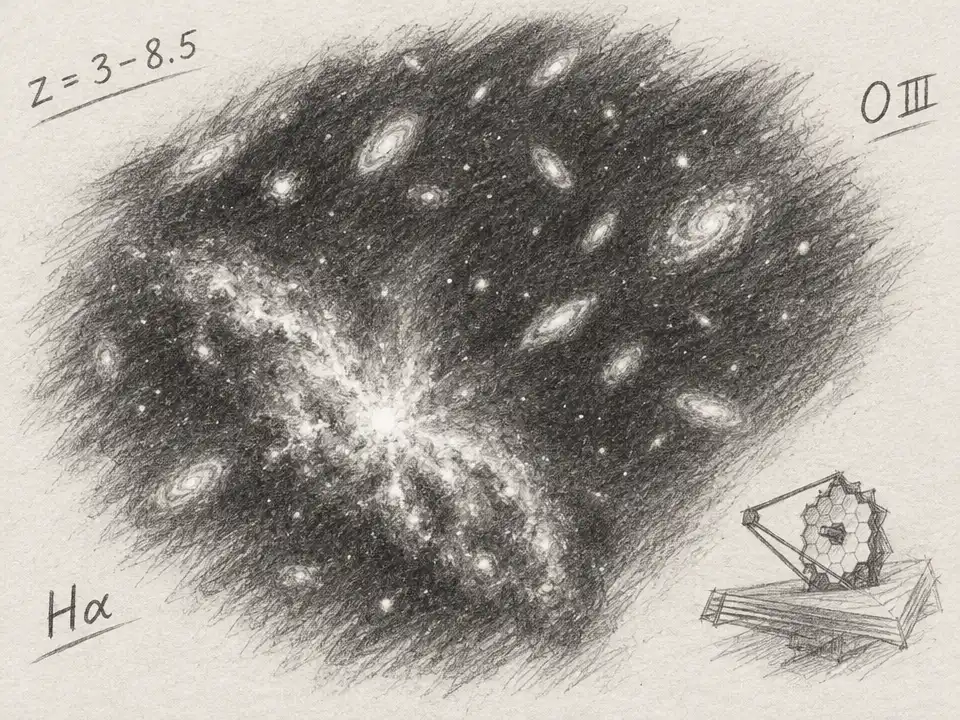
At the edge of cosmic dawn, astronomers face a timing problem. The James Webb Space Telescope has found evidence for black holes more than a million times the Sun’s mass when the Universe was about 500 million years old. Somehow, these giants appeared remarkably early. Did they begin as unusually hefty seeds, or did small black holes grow at extraordinary speed?
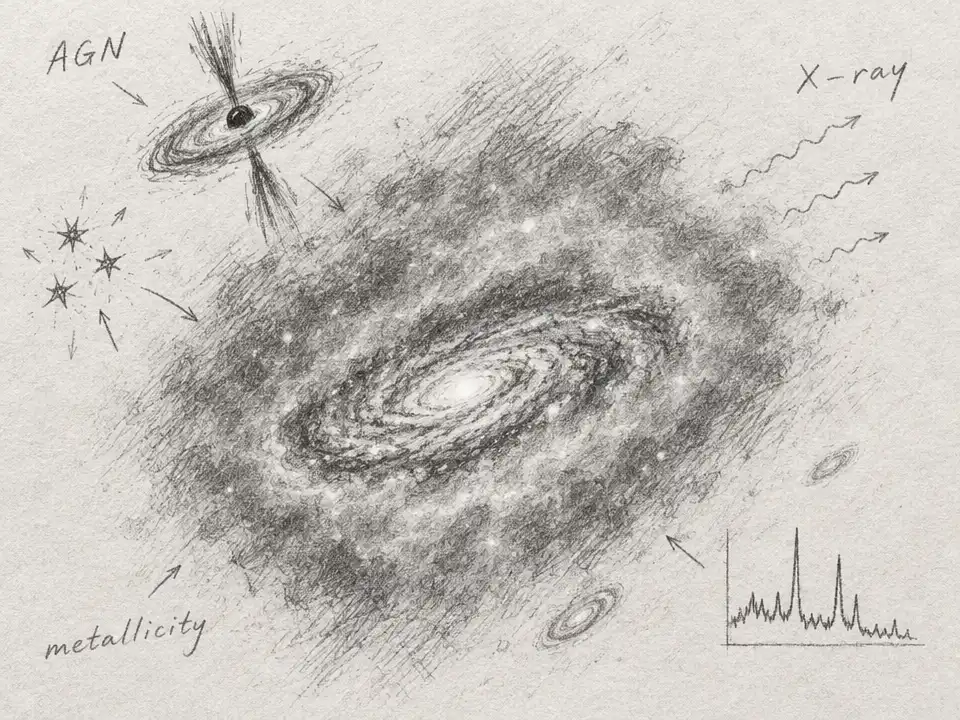
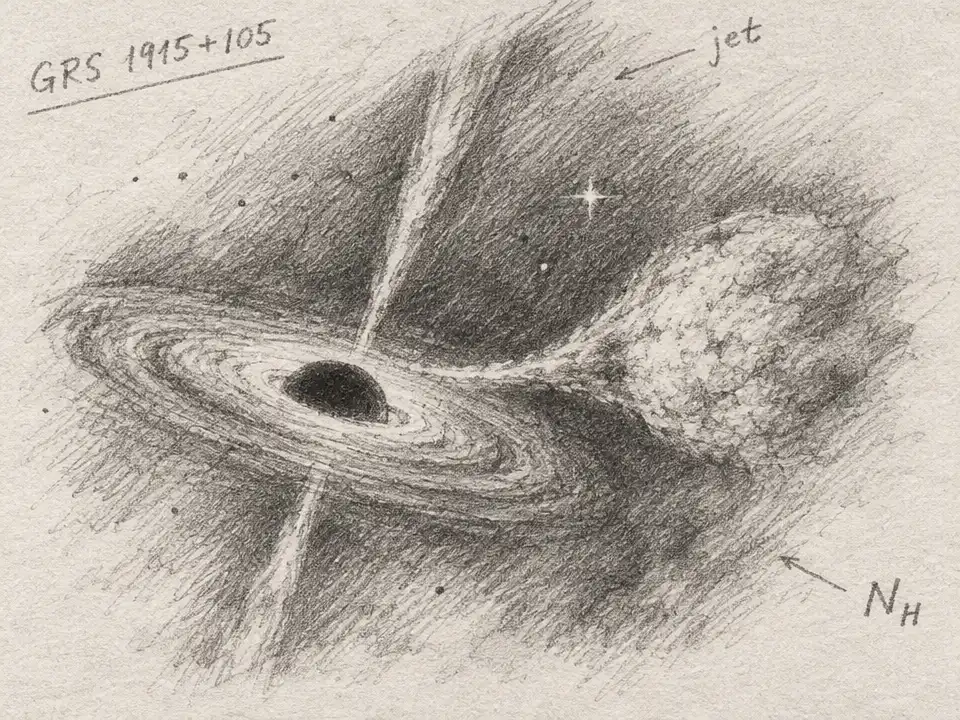
A September 2026 white paper sketches a way to investigate: a proposed X-ray observatory that would follow Chandra’s sharp vision into the next generation. Its target is not the black holes’ visible glow, but X-rays produced as matter falls toward them. Those X-rays can reveal active black holes even when dust hides much of their light at other wavelengths.
The distinction matters because astronomers have two broad origin stories to test. In one, a massive cloud of gas collapses directly into a heavy black-hole seed. In the other, a remnant of an early star starts smaller, then grows through periods of exceptionally fast, super-Eddington feeding. Both paths might build enormous black holes, but they predict different populations in the young Universe.
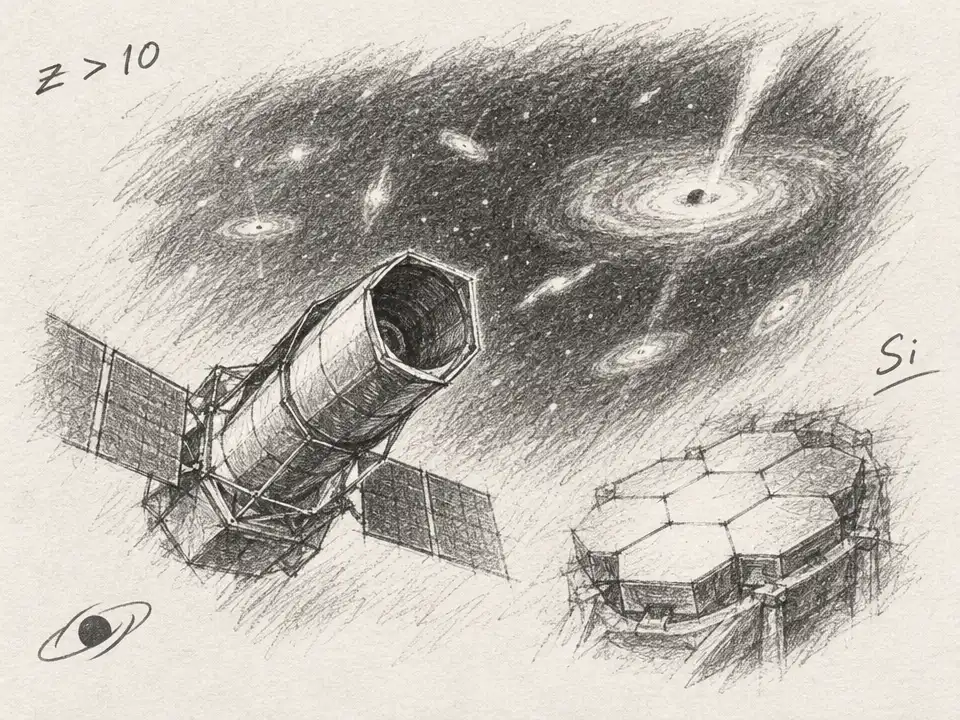
Counting is the key. The paper proposes measuring how many bright, accreting black holes exist at redshifts above 10, and how that abundance changes between roughly redshift 8 and redshift 10. The competing seed models predict different patterns over that span. A large, well-characterized census could therefore narrow which route dominated—and help show whether black-hole growth and galaxy growth were already linked near cosmic dawn.
The proposed survey would search for X-ray sources with luminosities above 5 × 1042 erg s−1 at redshifts beyond 10. One deep-field strategy aims to cover a volume of 106 Mpc3, reaching a 0.5–2 keV flux threshold of 2 × 10⁻¹⁸ erg s−1 cm−2 across redshifts 10 to 12. Under the paper’s stated assumptions, that survey would require about 20 Ms of exposure for one square degree of sky. This is a long, deliberate search—not a quick snapshot.
And the most informative result might include what the telescope does not find. The authors note that X-rays, or their absence, could help distinguish formation scenarios. But a blank patch of sky would not automatically mean there were no black holes: distance, faintness, and the survey’s sensitivity all shape what can be detected. The promise lies in comparing a carefully measured population, including non-detections, with what each model predicts.
The concept is not one fixed spacecraft. The white paper lays out three possible versions, each with a different balance of deep imaging, wide coverage, and rapid response. All aim for much greater reach than Chandra: more than ten times its sensitivity and more than 50 times its survey speed. The designers envision sharp X-ray images, with angular resolution around one to two arcseconds, so crowded sources do not blur together just when the early-Universe census needs them separated.
That combination is the opportunity—and the price. The mission depends on large, precise mirrors made from segmented silicon. The paper describes promising progress, but also a stubborn engineering obstacle: stresses introduced while mounting the mirror segments can degrade their performance. And the industrial feasibility study needed to establish whether those mirrors can be produced at scale has not been budgeted or initiated. Building one excellent segment is not the same as manufacturing and assembling a telescope’s worth.
The authors outline a path toward a decision point around 2030 and a possible launch in the late 2030s. Those dates describe a proposed development route, not a guarantee that the observatory will fly. Its science would also depend on trade-offs: a telescope optimized for the deepest fields may not be the best one for rapid, wide-area searches.
If the mirrors, camera, and survey strategy come together, the payoff would be a new way to interrogate the first generation of black holes—not by guessing from their later descendants, but by counting their growing ancestors while the Universe was still young. The frontier is clear. The difficult part is building an instrument precise enough, and surveying long enough, to make that history visible.