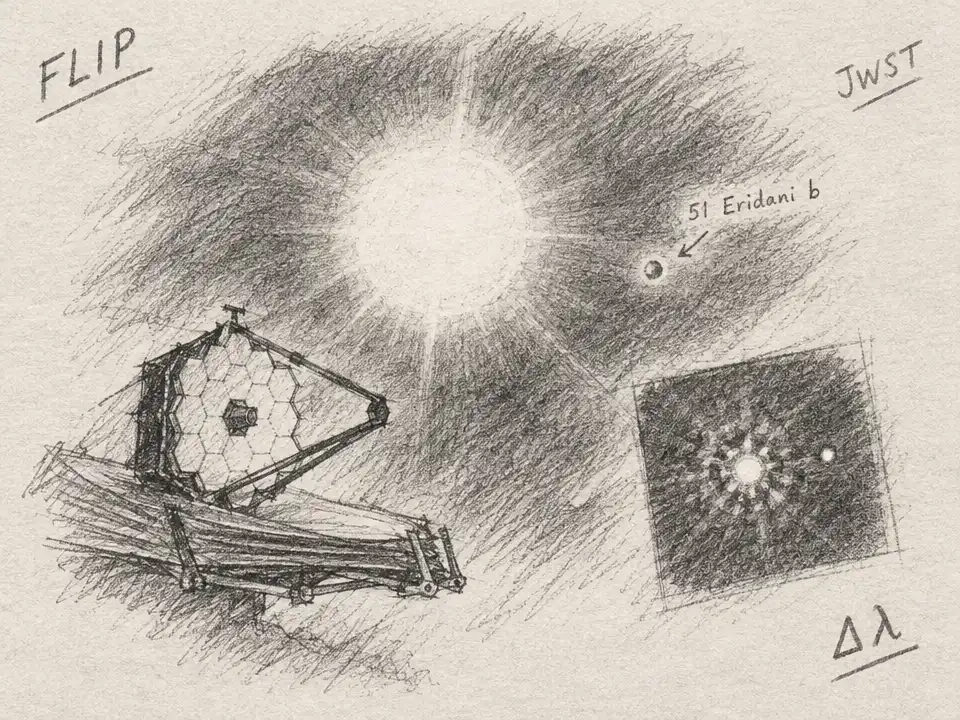
To photograph a planet beside a star, a telescope has to solve an unfair lighting problem: the star can be about 100,000 times brighter than the young giant planet nearby. Its glare spreads across the image, and even slight changes in the telescope can reshape that glare. The planet is still there, but it can disappear in the leftover light.
A common fix is to take a picture of a nearby reference star, then use it to estimate and subtract the unwanted glow. That works best when the telescope behaves the same way for both observations. In practice, pointing shifts and tiny changes in the optics make the star’s image change, too. Subtract the reference image, and some starlight remains. Push the subtraction too hard, and the planet may get erased along with it.
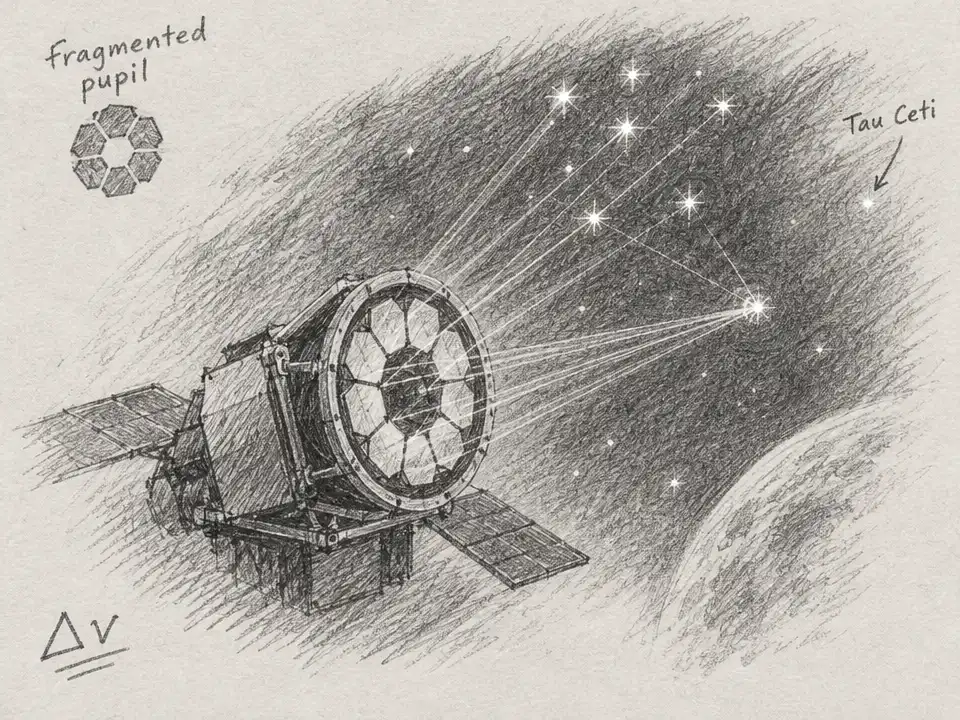
A new method called FLIP takes a different route. Instead of asking only which reference image most resembles the star’s glare, it builds a physical model of how light travels through the telescope and camera. The model predicts the star’s image, including distortions from misalignment, changes in the telescope’s mirrors, and variations in how individual detector pixels respond.
Then the researchers adjust the model until its predicted image matches the JWST observation. It is a little like tuning a detailed optical replica until it reproduces the telescope’s own quirks—not just its ideal design. The team first calibrates the model against a reference-star observation. They then make a more limited set of adjustments to fit the planet-hosting star’s image, accounting for differences between the two observations. That second step matters: a telescope does not have to stay perfectly unchanged if the image analysis can model how it shifted.
FLIP uses automatic differentiation to calculate how changes to the model affect its output, allowing an optimization routine to tune around one million parameters. On a single NVIDIA A30 graphics processor, the two stages took about 20 to 45 minutes altogether. But flexibility creates a danger. A model that can explain the star’s glow too well might also explain away a real planet.
To guard against that, the researchers inserted artificial planets into the data and tracked how clearly the method recovered them as the model changed. If the artificial planets started to fade, that was a warning the optimization might be removing planets as well as starlight. The team used the point where those test signals reached their strongest recovery or leveled off to decide when to stop. The injected planets were a practical check on whether a cleaner-looking image was also a more truthful one.
The researchers tested FLIP on real James Webb Space Telescope images taken with its NIRCam instrument, comparing its performance with a standard subtraction method. Across the observations, FLIP improved detection sensitivity by factors of 2 to 15. One notable result came from 51 Eridani b, a known giant planet. In a filter centered at 4.3 micrometers, the team recovered it with a signal-to-noise ratio of 6.3, where the standard processing had produced no detection. This was the first image of the planet at that wavelength.
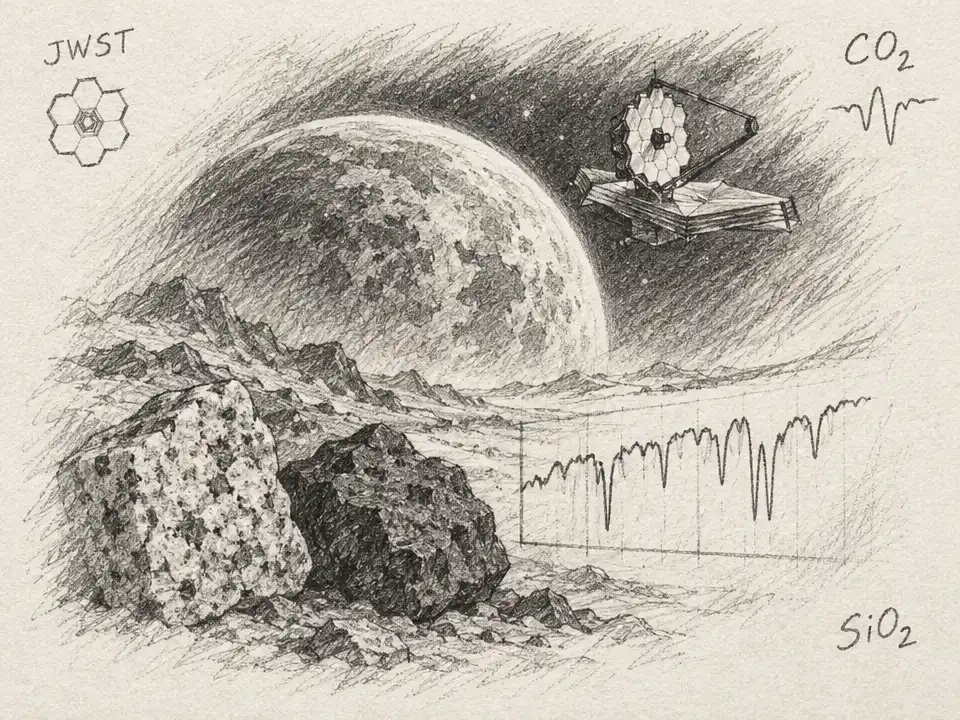
That wavelength falls in a region associated with carbon dioxide absorption in planetary atmospheres. The new image does not, by itself, measure carbon dioxide or settle what the planet’s atmosphere contains. Rather, it gives researchers a new measurement to work with: future analysis can use its brightness at 4.3 micrometers to help investigate the planet’s atmosphere and history. Earth’s atmosphere blocks this wavelength for ground-based measurements, making space-based observations especially useful.
The team also tested the method on observations of TYC 5899, a star with no known planet in the data. In this case, they added simulated planets to see how well each technique could recover them. The reference-star observations had been made four months before the target observations—a long gap for a telescope whose optical state can change. FLIP still showed substantial gains in sensitivity, reaching about 15 times better sensitivity than the standard method at 0.5 arcseconds in this dataset. The planets in this test were simulated, not new discoveries.
The result is promising, but it is not a magic eraser for every source of noise. FLIP did not reach the photon-noise limit—the idealized floor set by the light and detector noise in the observations—in any of the datasets. Its models also need further work, including better treatment of detector behavior and clearer estimates of the telescope changes they are fitting. At some wider separations, the standard method performed better in certain tests, partly because FLIP removed more of the injected planet signal.
Still, the central idea changes what telescope stability might mean for planet hunting. A future observatory designed to image Earth-like planets would face extremely demanding requirements: its optics must remain steady enough to separate a faint world from its star. The researchers suggest that physics-based image modeling could ease some of that burden, if it can be extended to the much more challenging contrasts involved. That possibility remains to be tested. For now, FLIP shows that a telescope’s small imperfections need not be only obstacles. Modeled carefully, they can become part of the information used to uncover a planet hiding in the glare.