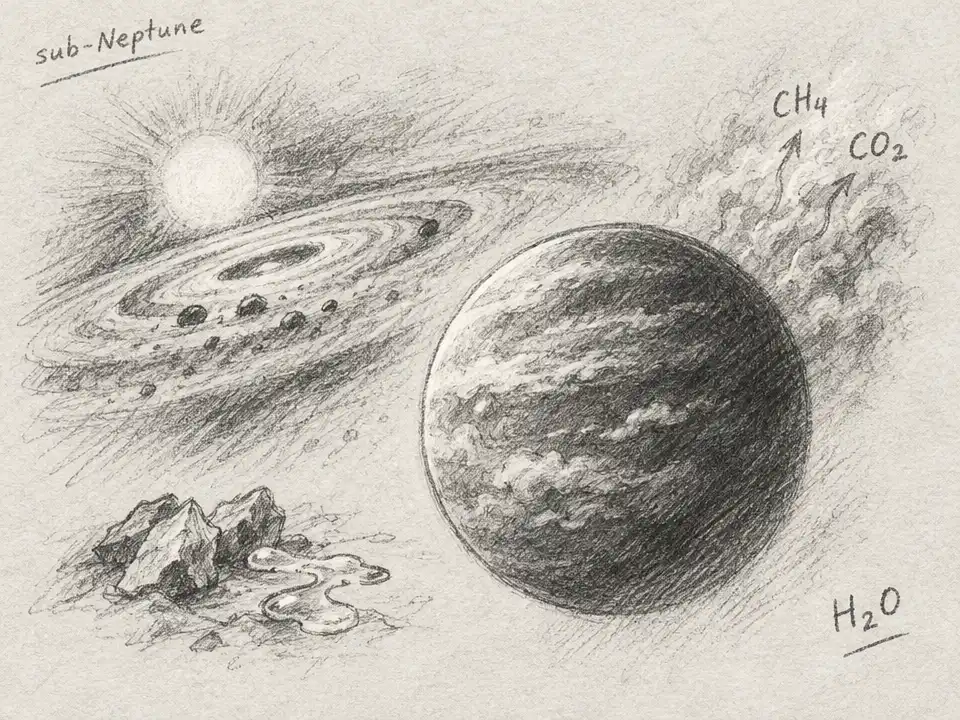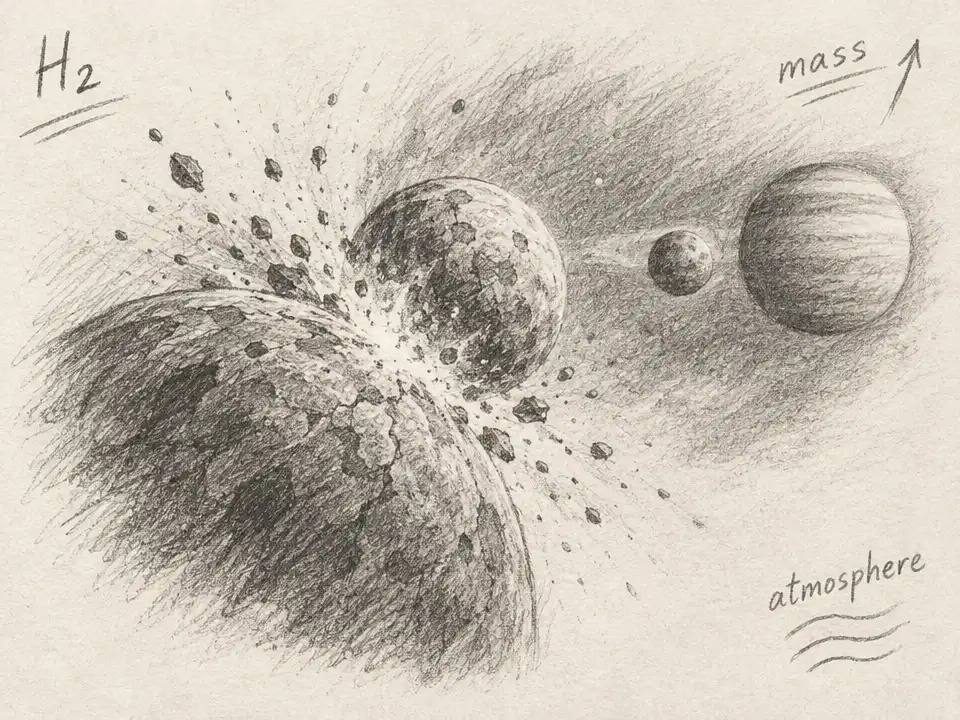
A distant planet offers astronomers a frustratingly small set of clues. They may be able to estimate its mass and radius, but those numbers do not reveal what lies beneath its surface. A world with a thick atmosphere, one rich in water, and one built from unfamiliar rock can sometimes fit the same measurements. To interpret the clues, researchers need models that allow for more than the materials found inside Earth.
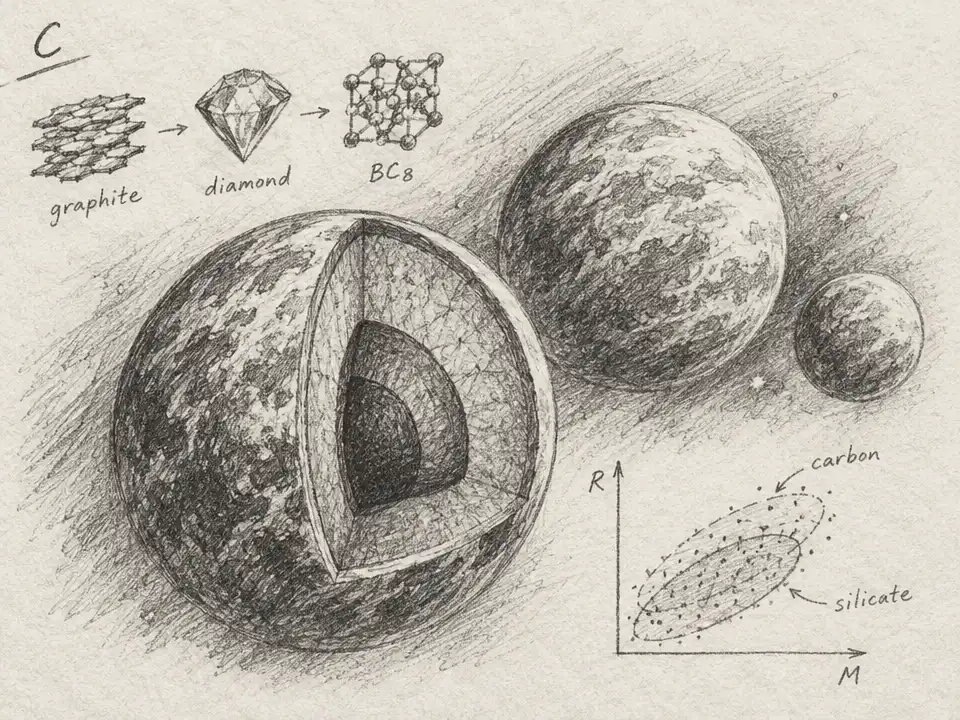
A new extension to the planetary modeling code MAGRATHEA adds an unusual possibility: a mantle made of carbon. Instead of treating carbon as one uniform substance, the model tracks three forms that could exist under different conditions inside a planet: graphite, diamond, and a high-pressure form called BC8. The result is a new way to test how carbon-rich interiors would affect the planets astronomers try to characterize.
The tool is not a telescope, and the team did not discover a carbon planet. It is more like a virtual laboratory. Researchers specify a planet’s layers and conditions, and the program calculates how pressure, temperature, and density change through its interior. Those calculations depend on equations describing how each material behaves when squeezed and heated. Until this update, MAGRATHEA’s default mantle was based on silicon-rich minerals—the kind of rocky material familiar from Earth.
That familiar starting point is useful, but it can quietly narrow the answers researchers consider. If astronomers compare a planet’s measured size and mass only with models built around silicate rock, they may overlook other interiors that could produce similar measurements. The new carbon option lets researchers ask a more open question: if a planet contained carbon-rich rock instead, what would its structure and size look like?
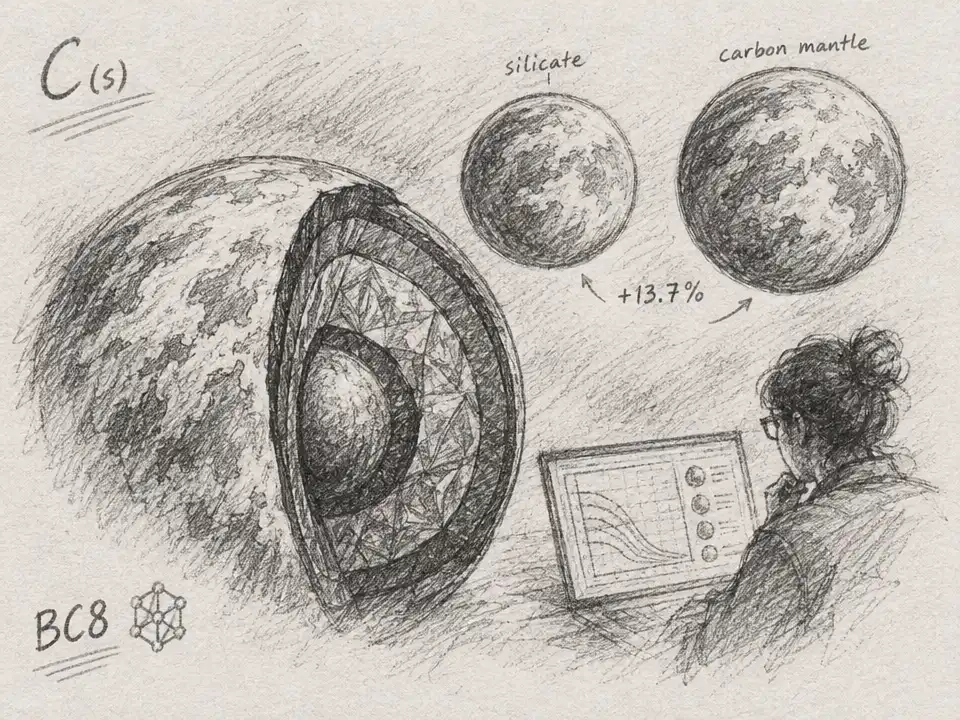
In the simulations, carbon changes form as conditions deepen. Graphite occupies the outermost part of the modeled carbon mantle; diamond lies below it, where pressure is greater. BC8 appears only in the model’s more massive carbon planets, above 10 Earth masses. It is not a familiar gemstone-like layer: BC8 is a different crystal structure of carbon, included because it may matter under the intense pressures inside larger worlds.
To check the new setup, the researchers modeled planets across a range of masses and temperatures, including examples with Earth-like proportions of core and mantle. In one set of one-Earth-mass simulations, carbon-mantle planets came out between 1.047 and 1.058 Earth radii. Those are computer-generated results, not measurements of a known planet. They show how the added material model changes the predicted structure under the conditions the researchers tested.
The comparison with silicate-mantle planets makes the difference especially clear. For simulations from 0.1 to 20.1 Earth masses, the carbon planets were larger at a given mass. At the high-mass end, their radius was up to 13.7% larger. In the model, carbon’s resistance to compression helps explain the larger size. That difference is substantial enough to alter how a planet’s measured mass and radius might be interpreted.
But the new model does not turn size into a simple composition test. The researchers note that, except in the most extreme cases, the predicted radii are not enough to distinguish carbon-rich planets from silicate-rich ones. A planet that looks larger than expected under one set of assumptions is not automatically a carbon world. Other combinations of interior structure and surface conditions can complicate the picture, too.
There are other boundaries to what the tool can do. MAGRATHEA represents planets as spherical, layered interiors, and this new version offers carbon as a mantle option rather than a complete menu of every possible mixture. The researchers describe adding a mixing algorithm in future work, which could allow users to combine carbon and silicon carbide in different proportions. Until then, the code helps explore a specific alternative, not every possible recipe for a rocky planet.
That distinction is part of the value of the work. A good model does not identify a planet from a single clue; it helps researchers see which interpretations remain plausible and what additional evidence would be needed. By putting graphite, diamond, and BC8 into the same interior-calculation framework, the team gives astronomers a way to test how an unfamiliar planetary recipe could reshape the clues they already measure. The planet’s radius still does not reveal its interior by itself. But now, one more kind of world can be included in the comparison.