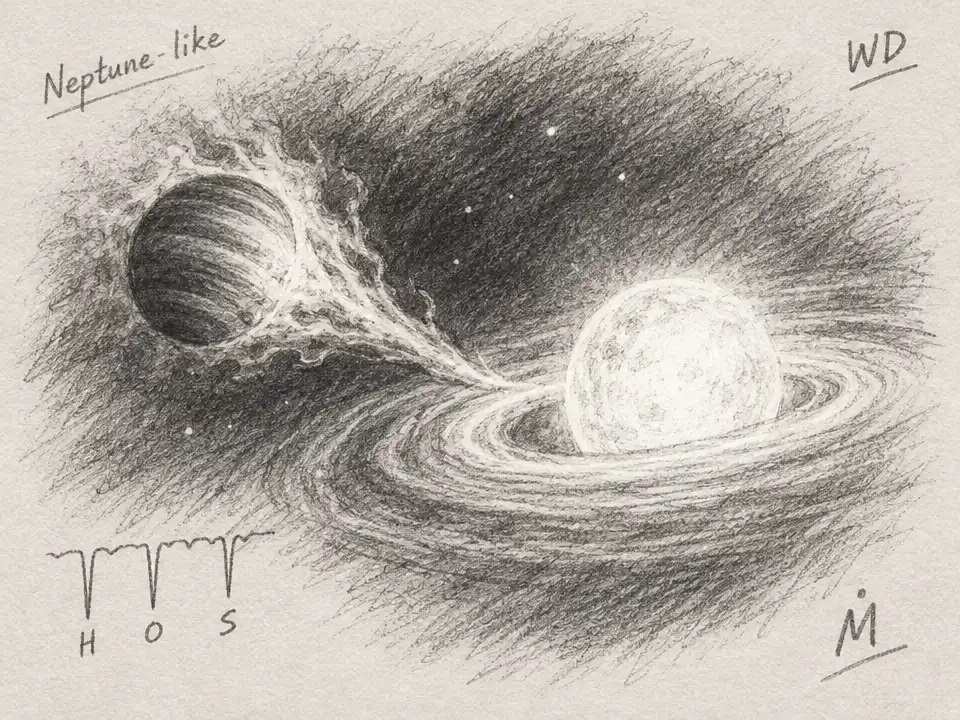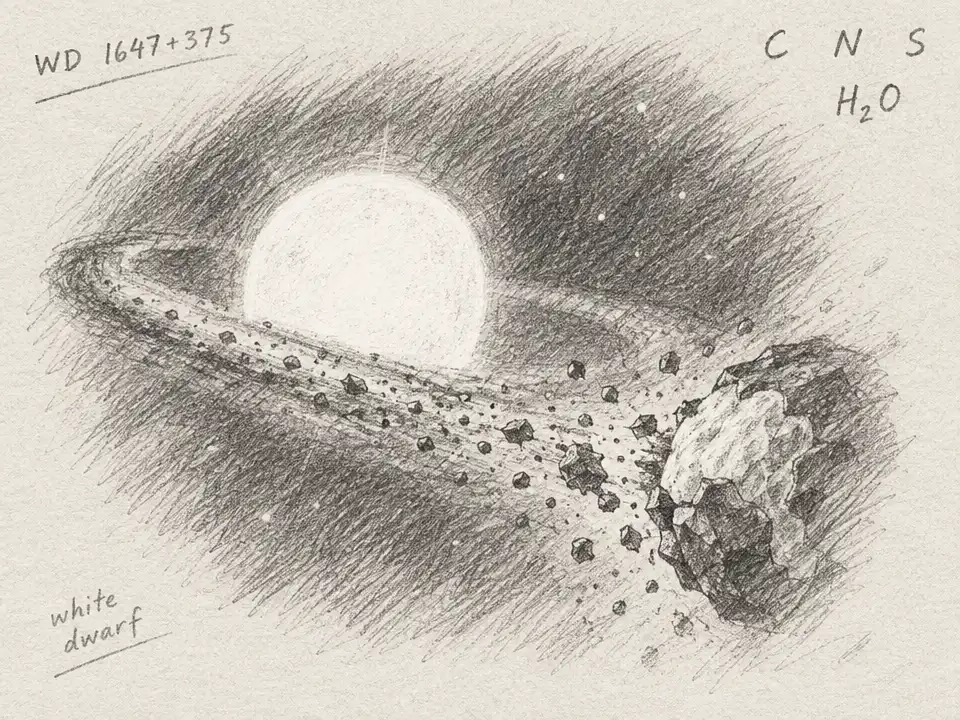
A white dwarf is a star reduced to its compact, blazing core. It has no planet-sized surface to walk across, no ocean to sample, no icy moon to photograph. Yet one white dwarf has offered astronomers something close to a chemical report from a world they never saw: evidence of a body rich in water, carbon and nitrogen, now being consumed by the star.
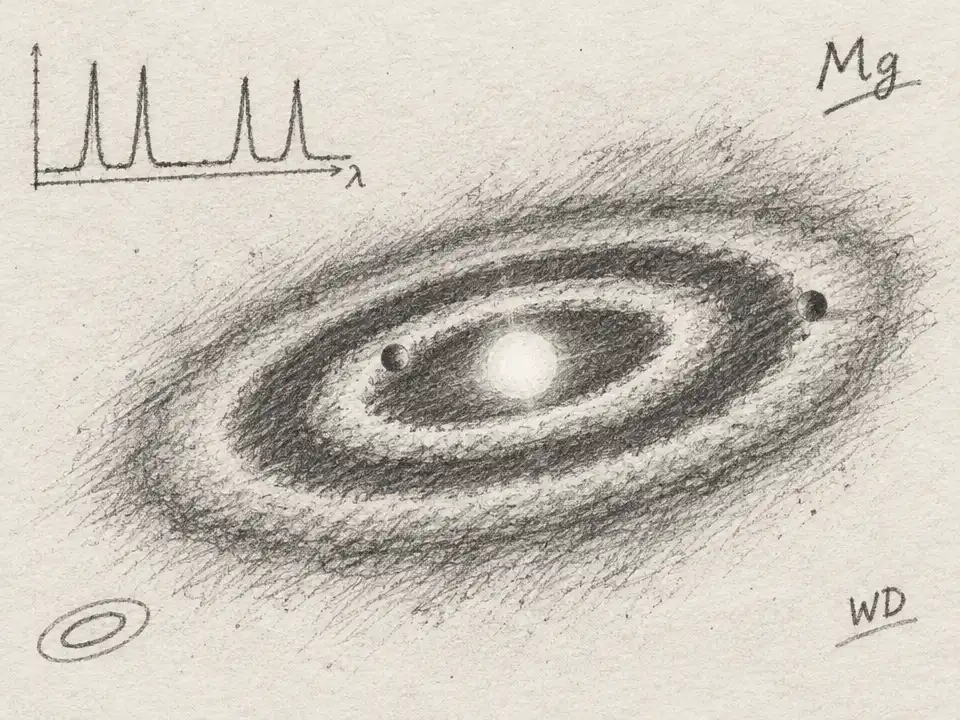
The clue was not a picture of the body, but a set of faint fingerprints in the star’s light. Researchers used ultraviolet observations from the Hubble Space Telescope, along with optical data, to study WD 1647+375. The white dwarf’s atmosphere showed carbon, oxygen, nitrogen, sulfur and other elements. Their pattern pointed away from ordinary dry rock and toward an icy object resembling bodies in the Kuiper Belt, the distant region of our own solar system that holds Pluto and many smaller worlds.
Why would a star’s atmosphere tell us what a planetesimal was made of? A white dwarf’s gravity is so strong that heavy elements sink beneath its visible atmosphere. In this warm, hydrogen-rich star, those elements do not linger for long: they settle out on timescales of days. So when astronomers spot them in the atmosphere, the metals are a sign of recent replenishment. Something containing those elements must be falling onto the star.
That gives researchers an unusual kind of sample. They cannot collect a piece of the body, but they can measure the light absorbed by atoms in the star’s atmosphere. Different elements leave different marks. By modeling those marks—and accounting for how quickly each element sinks—astronomers estimate the composition of the material being fed to the white dwarf. It is a little like identifying a meal from its trace ingredients, except the “kitchen” is a stellar atmosphere and the ingredients have been delivered by a shattered planetary body.
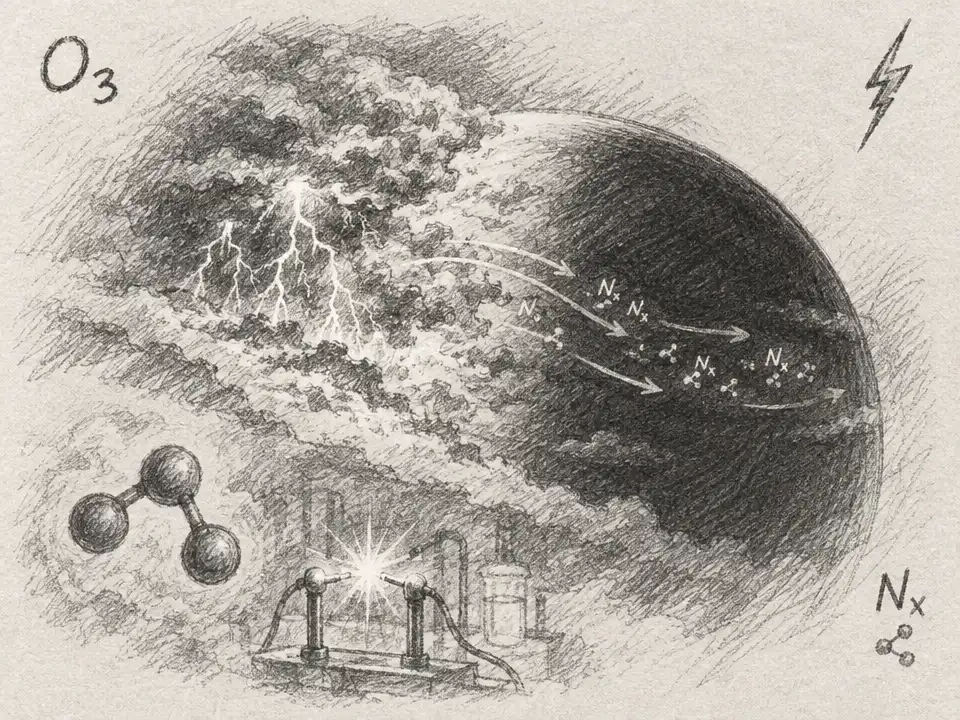
One element made the case especially intriguing: nitrogen. The team measured a nitrogen mass fraction of about 5%, alongside carbon and sulfur. Nitrogen is not a usual giveaway of dry, rocky debris. In combination with the oxygen excess, it strengthens the comparison to icy bodies and primitive material from the outer reaches of planetary systems. The researchers argue that the debris could be a comet-like object or a fragment from the surface of an icy dwarf planet.
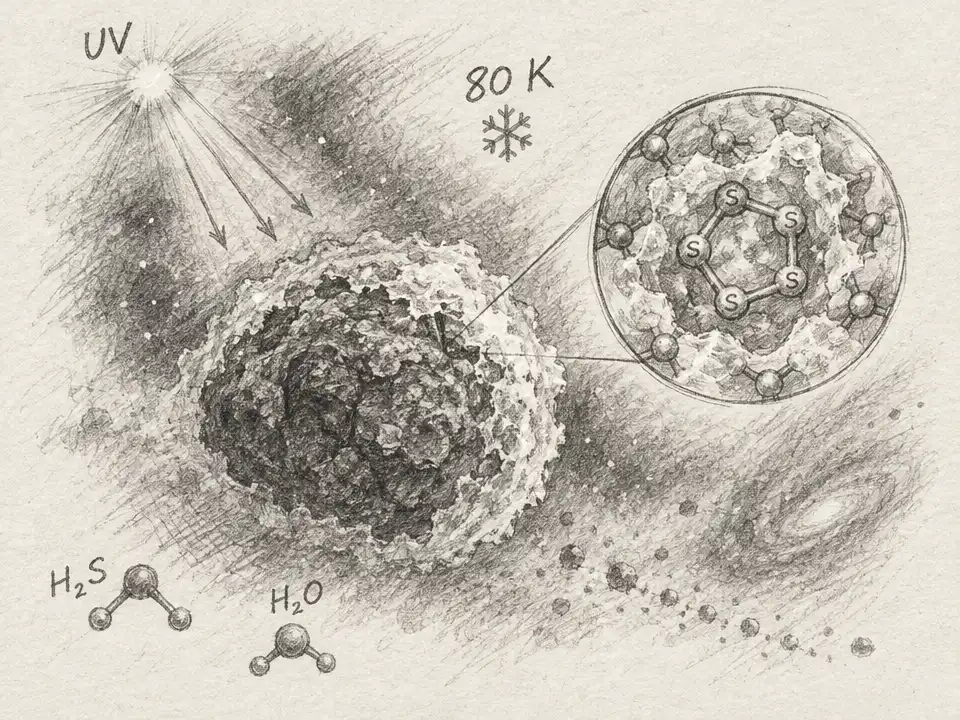
Oxygen supplied the strongest clue to the body’s water. Oxygen can be locked into rock-forming minerals, so its presence alone does not prove that a body held ice. The team compared the measured oxygen with the amount expected in minerals and found a substantial excess. If that excess arrived as water, their estimate puts water at roughly 64% of the object’s mass, with a water-to-rock ratio of about 2.45. In other words, the inferred body was not simply a wet rock; water may have outweighed its rocky material by more than two to one.
There is an important catch: astronomers did not watch an icy world intact. They inferred its composition from matter now falling into the star, and the exact identity of the parent body remains open. The nitrogen-rich chemistry favors a Kuiper Belt-like fragment, possibly from an icy dwarf planet’s outer layers. But chemical evidence alone cannot settle whether the object formed around the star that became WD 1647+375 or wandered in from interstellar space.
A second study of three other white dwarfs shows why such forensic readings need care. The researchers found debris with strikingly different recipes: one body was rich in iron and nickel, another looked more like carbonaceous rock, and a third contained a large amount of oxygen consistent with ice. Their models also suggest that a star’s brightening late in life can heat and strip material from some orbiting bodies. The debris reaching a white dwarf may therefore preserve a world’s history while also carrying the scars of its star’s transformation.
That makes these stars more than cosmic graveyards. They are laboratories where the remains of distant planetary systems can be examined atom by atom. The method cannot yet draw a map of the lost world or tell us exactly where it formed. But in the case of WD 1647+375, a few spectral fingerprints have revealed a striking possibility: somewhere beyond our solar system, an icy body may have carried a reservoir of water into the final chapter of its star’s life.