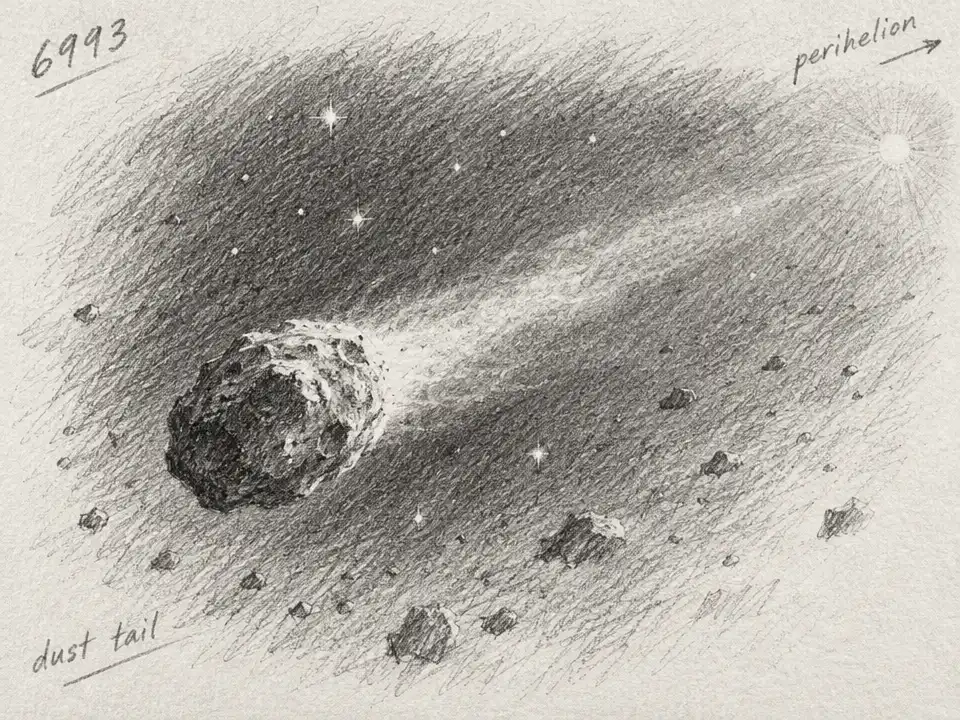
Imagine a comet arriving with a chemical gift: hydrogen cyanide, a small molecule that laboratory experiments use to build ingredients for life. The comet has crossed the darkness, but its delivery is not finished. First it must survive Earth’s atmosphere. Then it must hit the ground without its cargo being cooked away. And whatever remains must stay concentrated long enough for chemistry to get going.
A new study follows that perilous journey in computer simulations—and finds that Earth’s early comet bombardment was a surprisingly poor delivery service. Even in a deliberately favorable scenario, the typical simulated history had no comet deliver enough hydrogen cyanide to a patch of exposed land to reach a concentration used in prebiotic chemistry experiments. The result challenges a familiar possibility: that comets supplied early Earth with a crucial starter kit.
The stakes are not just about where Earth’s ingredients came from. The researchers’ comparison of Earth, Mars, and Venus suggests that a planet’s atmosphere and gravity can change the odds dramatically. Mars, in their models, is a more promising place for comet-borne chemistry than Earth—not evidence that life began there, but a clue about what kinds of worlds might be better at receiving the raw materials.
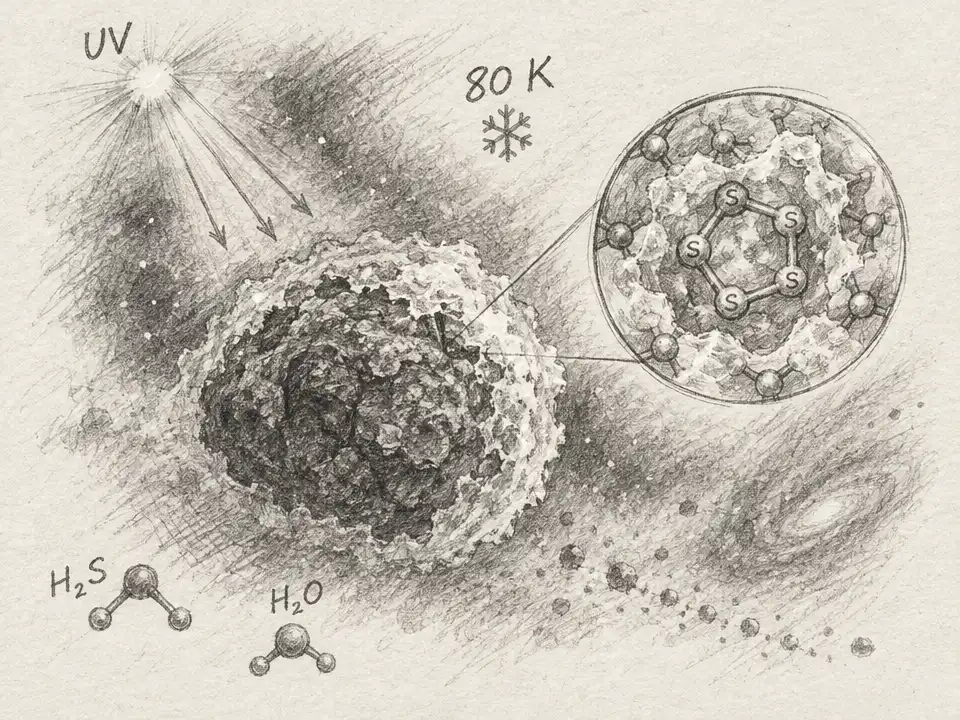
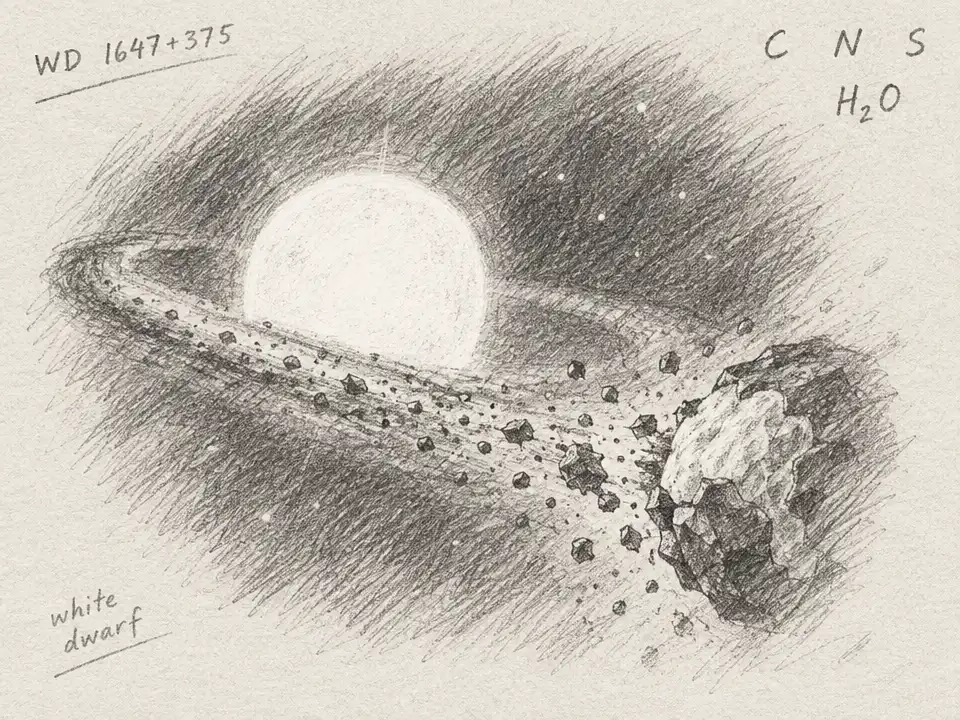
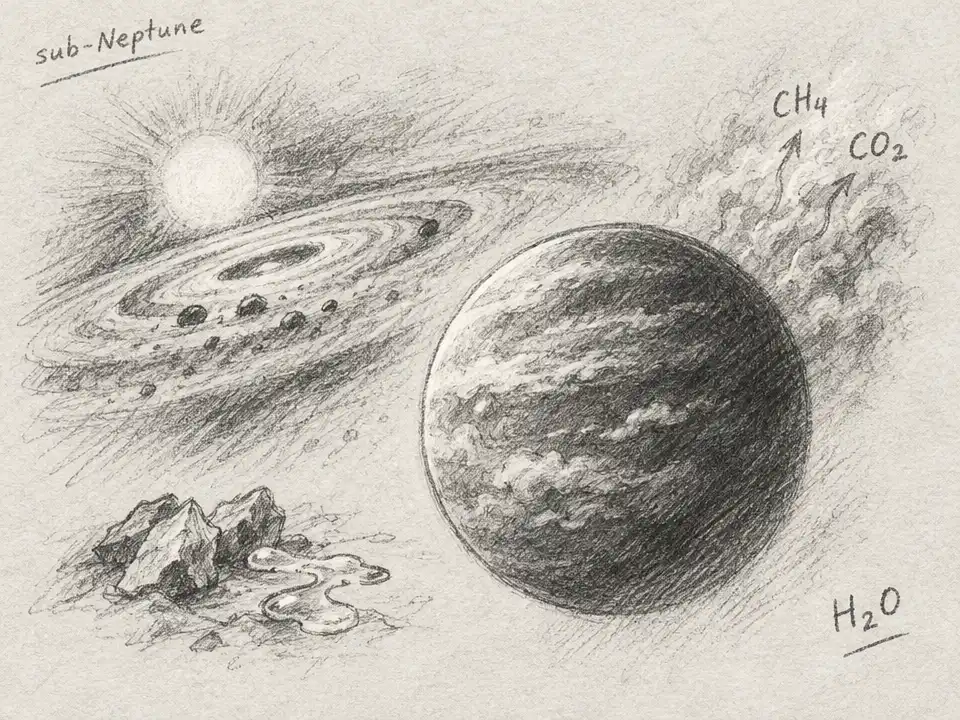
Hydrogen cyanide, or HCN, matters because its chemical structure can help drive reactions that produce building blocks such as sugars, nucleobases, and nucleotides. Comets contain HCN alongside a variety of other organic compounds. But a molecule present in space is not automatically useful on a planet. The question is whether enough of it can arrive intact, in one place, at the right time.
To test that, the team combined models of short-period comet histories with simulations of atmospheric entry and impact. They followed the changing population of comets approaching the inner Solar System, then used Monte Carlo simulations to sample possible bombardment histories in time bins of one million years. For each modeled impact, they considered whether the comet reached the surface and how much HCN could survive the collision.
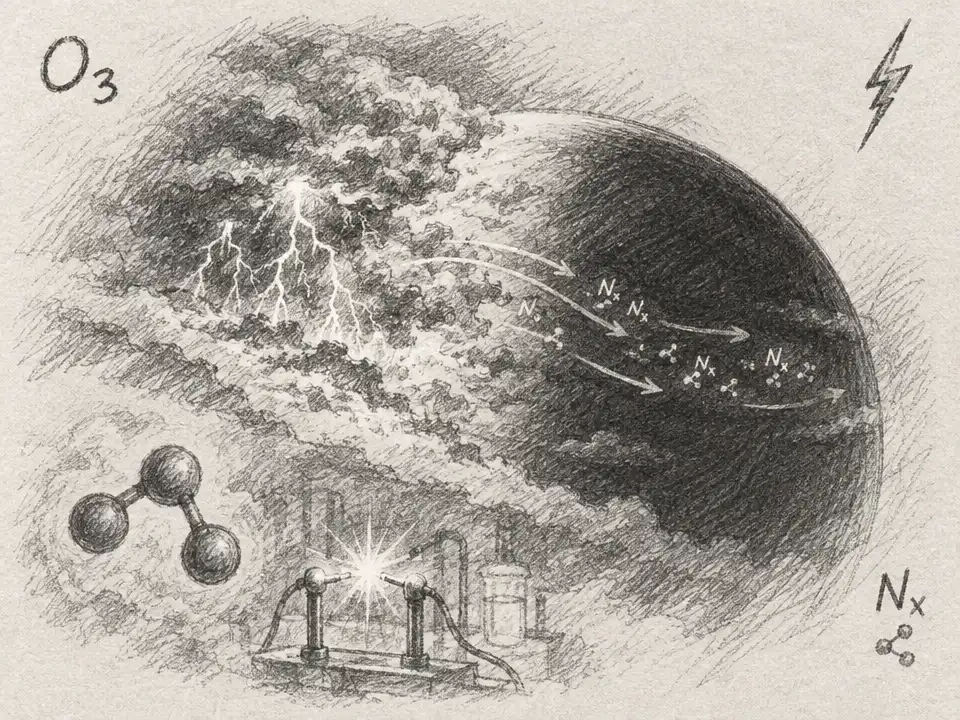
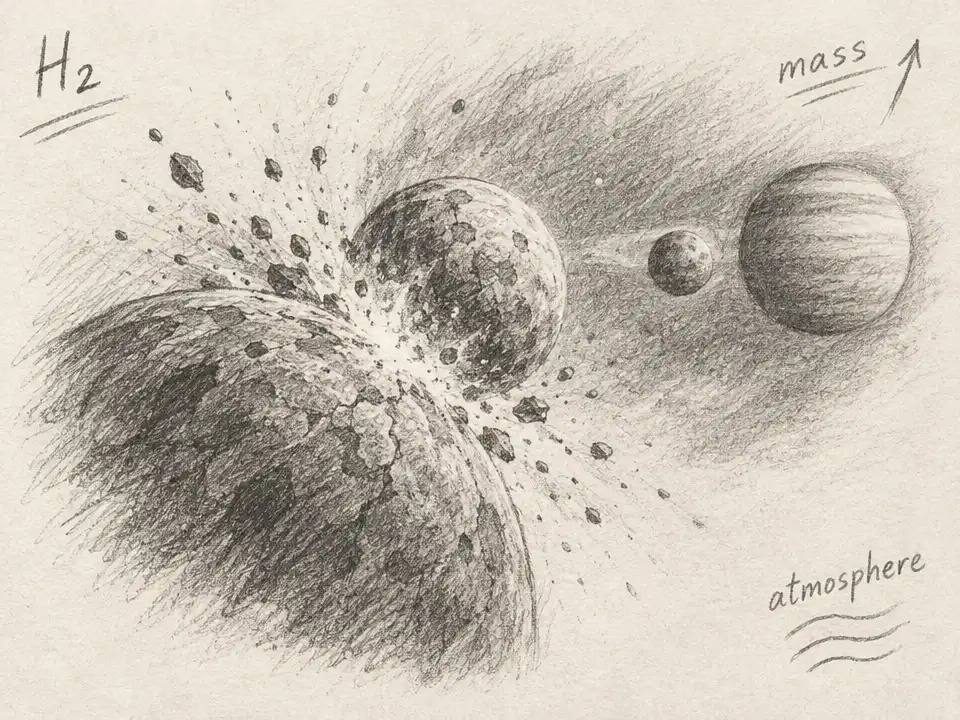
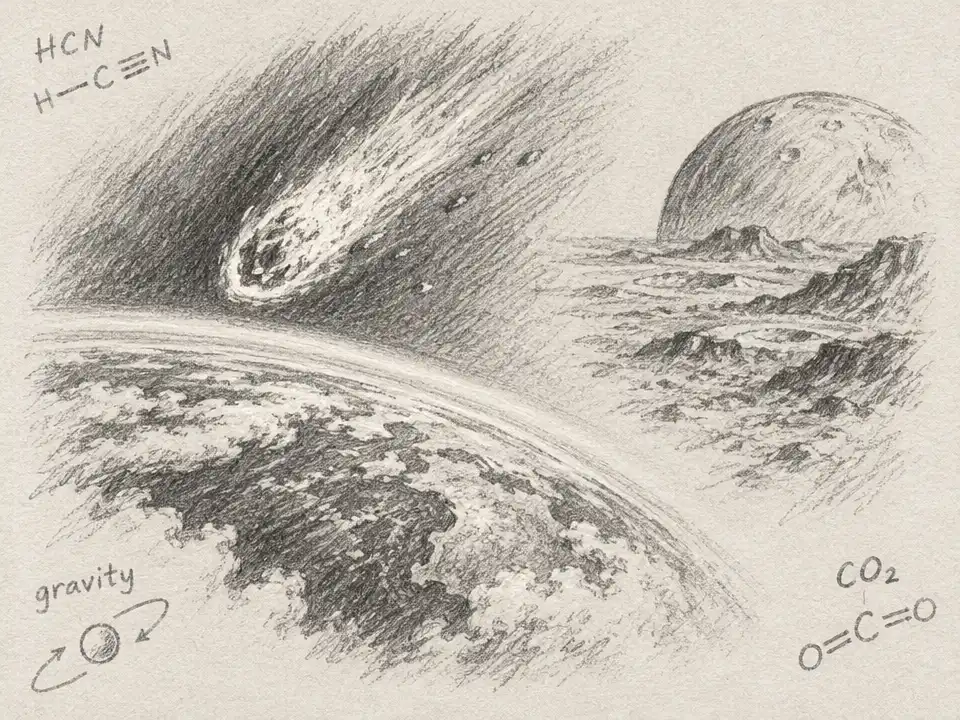
The atmosphere acts like a filter, but not a simple shield. Comet nuclei are porous and mechanically weak. Smaller than about 100 meters, the modeled comets broke apart high in the atmosphere, scattering their material over a wide area instead of concentrating it at a landing site. Larger comets had a better chance of reaching the ground, but their speed and impact angle still mattered. The atmospheric passage could slow some comets, which helps fragile molecules survive the collision; yet the entry conditions that preserve a comet and those that preserve its HCN do not often line up.
That mismatch is the central snag. The study estimates that Earth received more than 100,000 comets larger than 100 meters during the early period of intense bombardment. But the impact speeds of short-period comets were generally high. In the simulations, concentrated HCN delivery depended on a narrow combination: a low-speed impact, at a steeply slanted angle, with the comet still intact. Such lucky arrivals were most likely when the comet flux was at its peak, early in Earth’s history.
The researchers set the threshold for a potentially useful local supply at 10 millimolar, based on laboratory work. They also made choices intended to favor the comet hypothesis: they adopted a one-bar early atmosphere to help comets survive and, in the most generous local calculation, treated the surviving HCN as diluted only in the comet’s own water ice. Even with those advantages, the median number of impacts delivering that concentration was zero. Fifty-four percent of their simulated Earth histories had no successful impact at all.
On a global scale, the modeled delivery looks weaker still. The total HCN that survived intact would amount to a maximum concentration of about 0.75 micromolar if mixed into one Earth ocean—far below the 10 millimolar experimental benchmark. That comparison does not mean every useful prebiotic reaction needs precisely the laboratory concentration, or that HCN was the only possible route to life. It shows how difficult it is to turn cometary abundance into a concentrated, chemically useful reservoir on a planet.
There is another clock after touchdown. A crater can disrupt nearby groundwater, while rain and runoff dilute surviving chemicals. The study estimates that these processes could reduce a local HCN supply on a timescale of days to weeks. So even a rare successful delivery would leave a short window for further chemistry, and a single comet would not bring every ingredient a chemical network might require. The authors’ calculations suggest that relying on comets as a necessary first step makes the path to life unlikely, though they stress the uncertainty in the assumptions behind any estimate of life’s emergence.
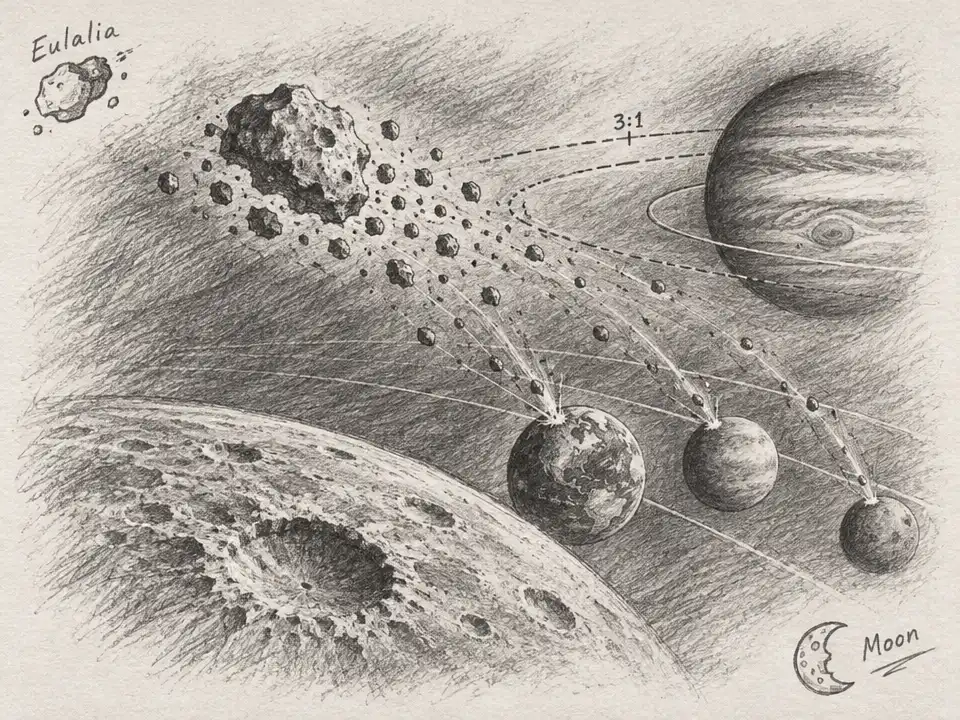
Then comes the surprise in the planetary comparison. Under the study’s modeled conditions, Mars received about 744 impacts delivering more than 10 millimolar HCN, compared with 87 for Earth and 24 for Venus. Those are model estimates that do not account for how much exposed land was available on each world. When the researchers gave Mars a one-bar atmosphere, its estimated number fell to 448—still more than five times Earth’s comparison value.
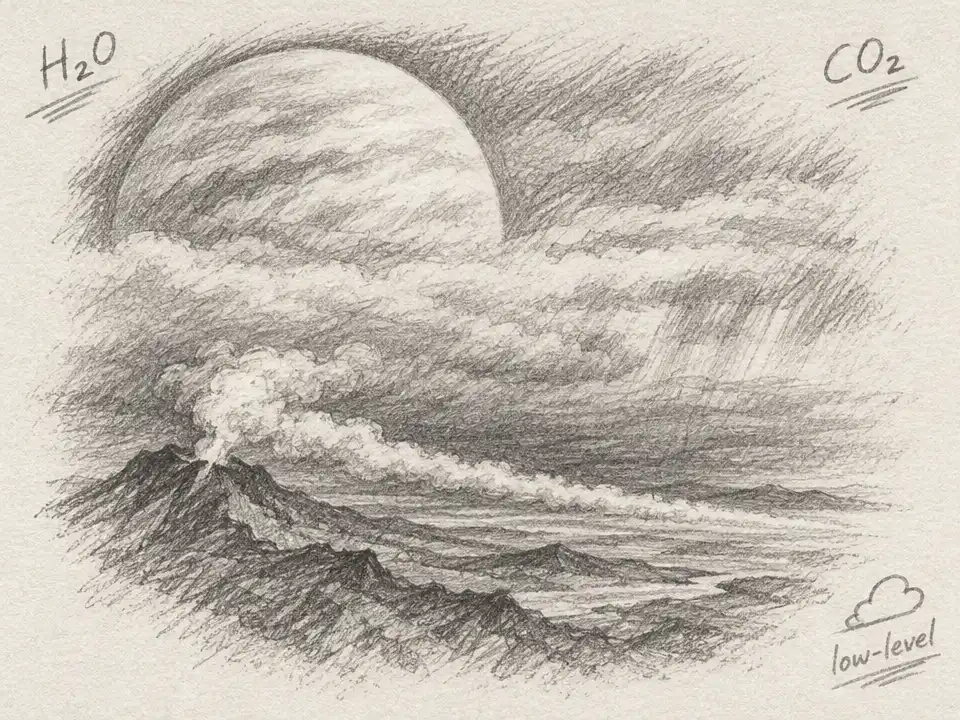
Mars’s advantage comes from a gentler arrival. Its lower gravity and greater distance from the Sun help produce slower comet impacts, while its thin atmosphere lets many comets reach the ground. Venus is the opposite case: a dense atmosphere can destroy even kilometer-scale comets, and its modeled average impact speed is higher than Earth’s. The same atmosphere that protects a planet in some circumstances can also become a barrier to chemical delivery.
This is a map of possibility, not a verdict on Martian life. The Mars comparison uses modern atmospheric conditions because its ancient environment is uncertain, and it does not establish that suitable dry land existed. On early Earth, accounting for limited exposed land already pushes the median number of locally successful deliveries down to zero. A wet Mars could face a similar dilution problem. The models also likely overestimate HCN survival during impact: they omit some destruction pathways and do not fully account for how a comet’s strength and porosity can raise impact temperatures.
The larger lesson is that a world’s habitability may depend partly on the mechanics of receiving its ingredients. A useful comet must come from the right reservoir, find its way inward, survive a planet’s atmosphere, arrive slowly enough to preserve fragile molecules, and land where those molecules can persist. That is a steep list of requirements. The possibility worth carrying forward is that some planets may meet more of them than Earth did—not because impacts guarantee life, but because the journey from space to usable chemistry is different on every world.