A worm under a microscope has an inconvenient habit: it moves. A quantum sensor has an equally inconvenient requirement: it needs microwave pulses to take a reading. Those pulses can heat the watery world of a living organism. To measure biology without changing it, researchers had to solve both problems at once—holding a tiny animal still while keeping the measurement gentle enough for life to continue.
Their test subject was Caenorhabditis elegans, a transparent soil-dwelling nematode widely used in biology. Its small, see-through body makes it a promising place to try nanoscale measurements. But a worm can move at roughly millimeters per second, fast enough to blur a delicate reading. And the usual ways of stopping it can distort the very biology researchers hope to observe: chemical fixatives alter cellular structures, while some anesthetics interfere with metabolism.
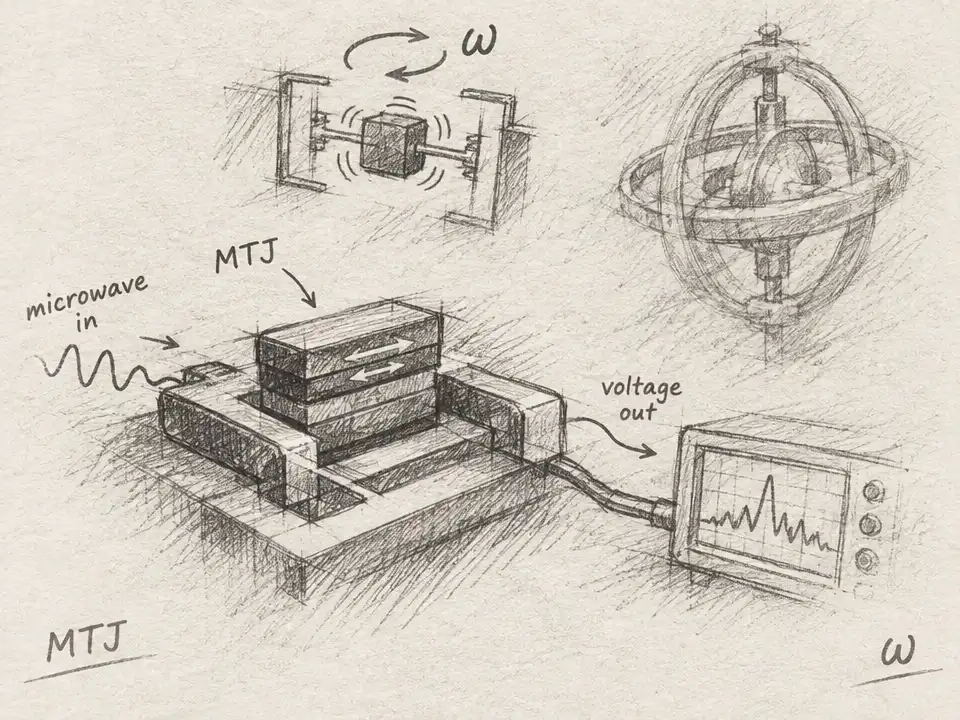
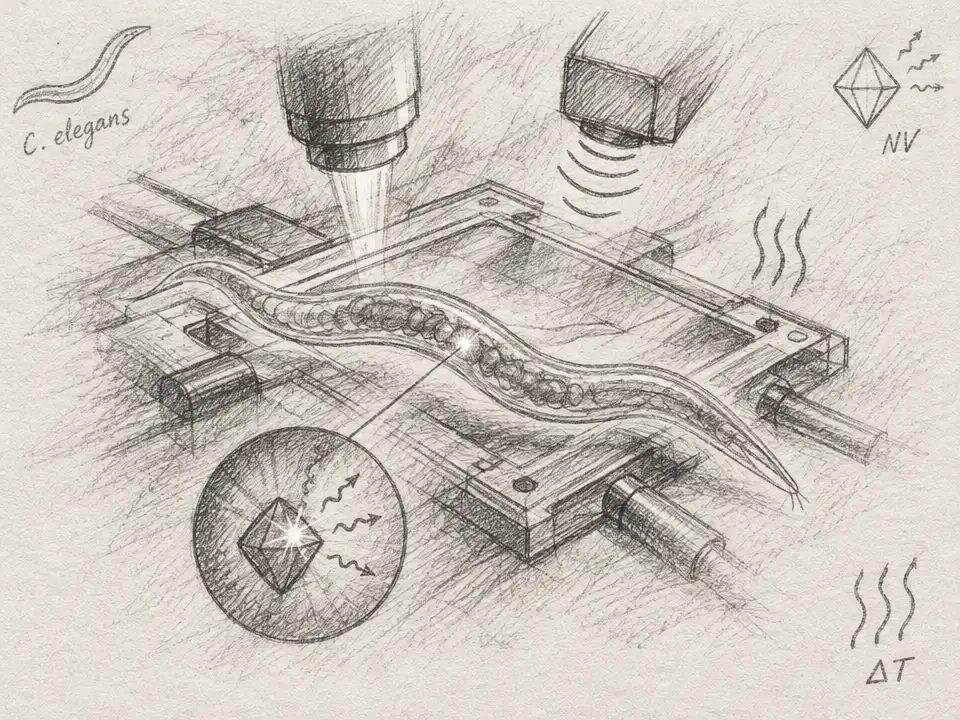
The team’s solution was a small instrument called Q-BiC, short for Quantum Biosensing Chip. It combines a clear imaging area with a microwave antenna, tiny heaters, and a sensor that tracks the chip’s overall temperature. The arrangement brings several pieces of equipment onto one platform: light can reach the specimen, microwaves can reach the sensor, and the experimenters can monitor and adjust background heat.
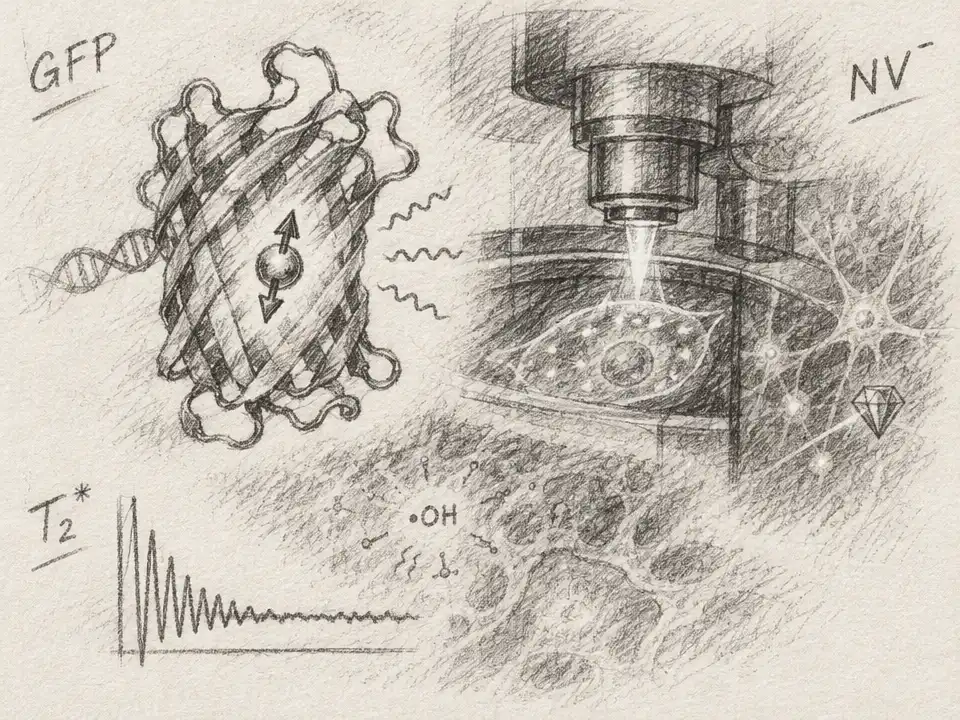
The quantum part begins inside nanodiamonds. Each contains a nitrogen-vacancy center: a nitrogen atom beside an empty spot in the diamond’s crystal structure. The defect behaves like a tiny, light-addressable spin. Shine light on it and apply microwaves, and the spin’s response can be read through changes in the diamond’s fluorescence. Because that response shifts with conditions around the defect, it can serve as a local probe—in this work, a route toward temperature sensing.
But the microwave pulse is not a neutral observer. Water absorbs energy in the relevant frequency range, so an intense signal can warm a biological sample. That creates a measurement trap: a sensor might report a temperature change caused not by the cell’s own activity, but by the instrument trying to measure it. Q-BiC’s built-in temperature detector helps researchers track broad, chip-level warming separately from the nanodiamond’s local signal. The chip’s temperature control could hold its reading steady to within about 30 thousandths of a degree, giving the experiment a more stable baseline.
The researchers first tested the practical limits in HeLa cells. They watched tiny intracellular vesicles, whose movement can slow when cells are in trouble. Under their experimental conditions, microwave powers up to 21.8 dBm produced no significant change in vesicle motion over as long as four hours. At 25.6 dBm, motion fell sharply, and cells close to the antenna died. The result made the constraint concrete: more microwave power may strengthen the signal, but there is a point where the measurement starts damaging its subject.
For the worm experiment, the team injected nanodiamonds into the distal arm of an adult animal’s gonad. Instead of anesthetizing it, they placed it in a narrow agarose trench containing tiny plastic beads. The setup held the worm in position beside the chip’s microwave line while leaving it alive and non-anesthetized. The researchers then detected the nanodiamond’s microwave-driven optical response in the immobilized animal—a key step toward taking quantum measurements inside a living organism without first shutting down its normal activity.
They also checked whether the procedure itself stressed or killed the animals. A genetically encoded fluorescent reporter glows in response to stress, allowing the team to compare worms exposed to different microwave powers. At 21.5 dBm, they found no significant stress signal by this measure. At 22.3 dBm, all six tested worms died, compared with low lethality across the other microwave conditions. Those figures describe this particular setup and small test group, not a universal safety threshold. But they show why the team measured biological effects instead of assuming that a chip cool enough for a cell dish would also be safe for a whole animal.
There is an important distinction between what the demonstration achieved and what it may eventually enable. The researchers recorded the nanodiamond’s optical spin signal in a living worm; they did not produce a map of the worm’s internal temperature or identify a hot spot in a particular organelle. The work establishes a way to bring the sensor into a living, unstressed animal under tested conditions. It does not yet answer what that sensor will reveal about the animal’s biology.
That next question is where the method could become valuable. Cells are not uniform bags of fluid: their interiors contain structures with different physical conditions. The team points to future work targeting particular cell compartments and measuring properties such as temperature and viscosity. If researchers can place nanodiamonds near chosen structures and keep the animal healthy during measurement, they may be able to watch local biological changes without averaging them into a single whole-cell reading.
For now, the achievement is a carefully engineered truce. The worm must stay still, but not be anesthetized; the quantum defect needs microwaves, but not enough to cause harm; and a local measurement needs a global temperature check so the instrument does not mistake its own heating for biology. Q-BiC does not yet turn a living worm into a nanoscale temperature map. It shows how the door to that kind of experiment might be opened without asking the specimen to stop being alive.