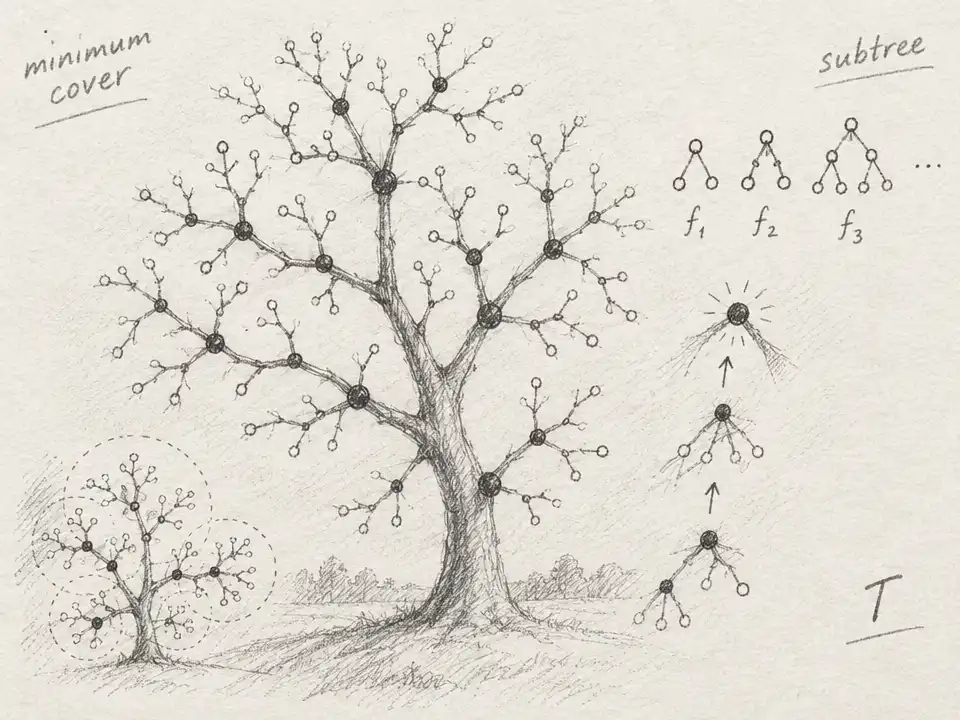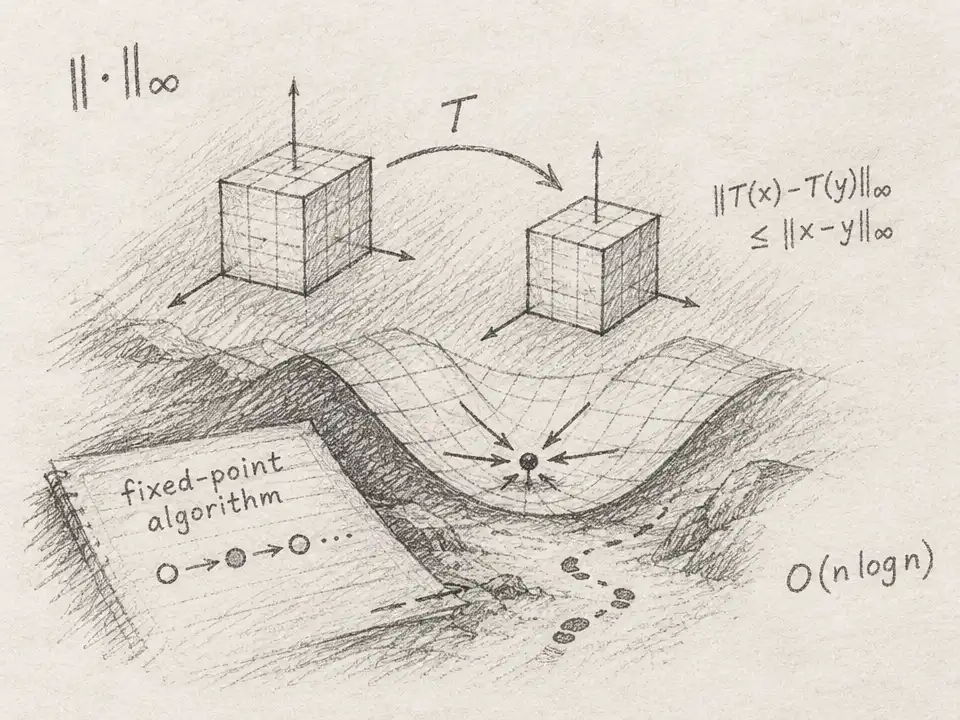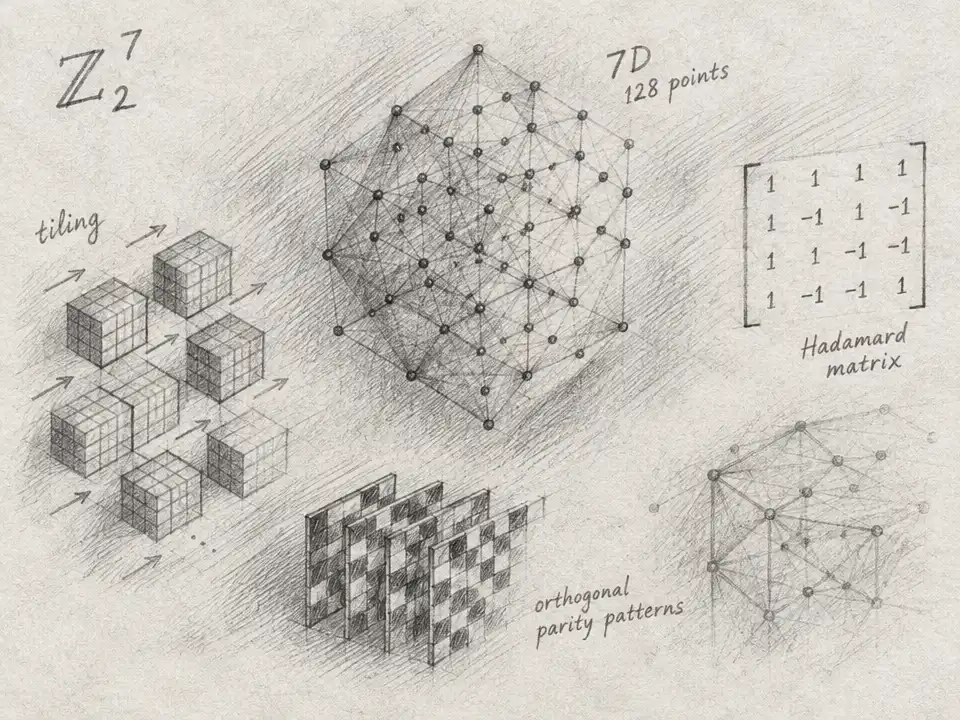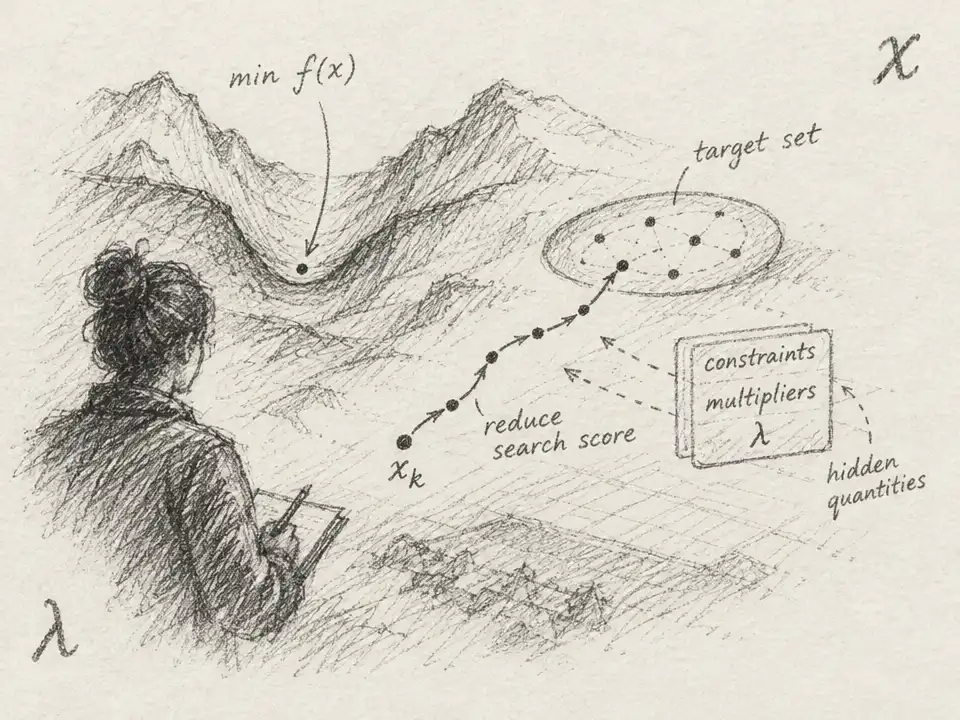
Imagine choosing from a parade of applicants, investments, or other valuable opportunities—but you can’t see who is coming next, and once you pass on someone, they are gone. There is one more complication: the choices must fit together. Accepting one may make another unusable. A new mathematical result shows how to meet a surprisingly strong selection guarantee even when those conflicts are revealed one arrival at a time.
The setup belongs to the matroid secretary problem, a broad family of online decision puzzles. Each arriving item has a weight, revealed when it appears, and the goal is to assemble the heaviest possible collection without breaking a rule of independence. In a network, for example, the rule might forbid choosing edges that complete a loop. Matroids capture many such systems with a shared mathematical structure: some combinations are independent, others are not.
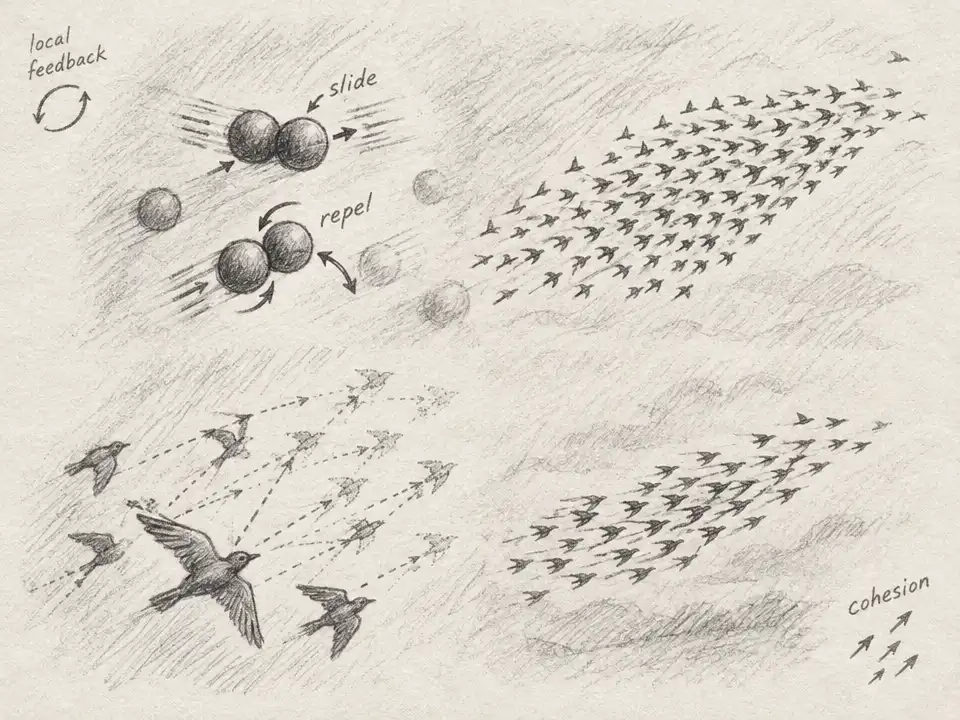
The “secretary” part adds the pressure. Items arrive in uniformly random order, and every decision is irrevocable. The classic version asks you to pick one best applicant. A celebrated strategy is to watch an initial group go by, use it to set a benchmark, then choose a later arrival who beats that benchmark. The optimal success chance is known as one over e, or about 37 percent.
For matroids, simply copying that strategy is not enough. An item that looks promising may consume room in a particular direction of the system, blocking something more valuable later. And a guarantee about total expected weight can hide an uneven outcome: an algorithm might perform well overall while giving one crucial member of the best possible set very little chance of being selected.
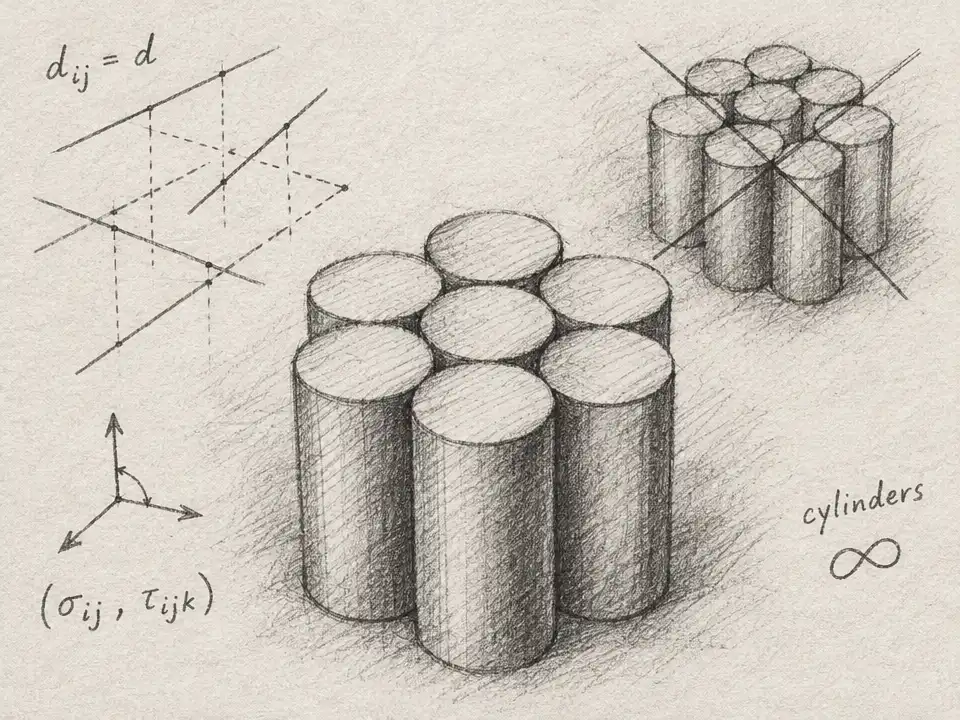
The paper proves a sharper statement for linear matroids, where independence can be represented by vectors: each item corresponds to a vector, and a collection is independent when none of its vectors can be built from the others. The algorithm selects an independent set while giving each element of a fixed optimal basis at least the classic one-over-e chance of selection. The authors also establish the result when the matroid is known in advance, and when vectors over a finite field are disclosed as items arrive.
The key is to reproduce the classic secretary strategy’s timing without letting dependencies wreck it. In the one-choice problem, the opening sample helps decide whether a later arrival is worth taking. Here, the algorithm aims to accept an item with the corresponding probability if it is among the best independent choices seen so far. But that target is only safe if the accepted vectors have not crowded out too many future possibilities.
So the algorithm keeps a kind of probability ledger. It tracks not just which items have been accepted, but the possible spans of their vectors and how likely each span is. A span is the space of directions those vectors can reach. For every subspace—a smaller region within that space—the proof controls the expected number of accepted directions lying inside it. This is the guardrail: it lets the algorithm be ambitious about taking good arrivals while monitoring how much freedom it has left.
Choosing the acceptance probabilities becomes a system of linear constraints. The algorithm must give each improving item the intended chance of acceptance, never accept a vector already contained in the selected span, and keep every subspace’s expected “occupancy” within its limit. The authors prove that these demands can all be satisfied together.
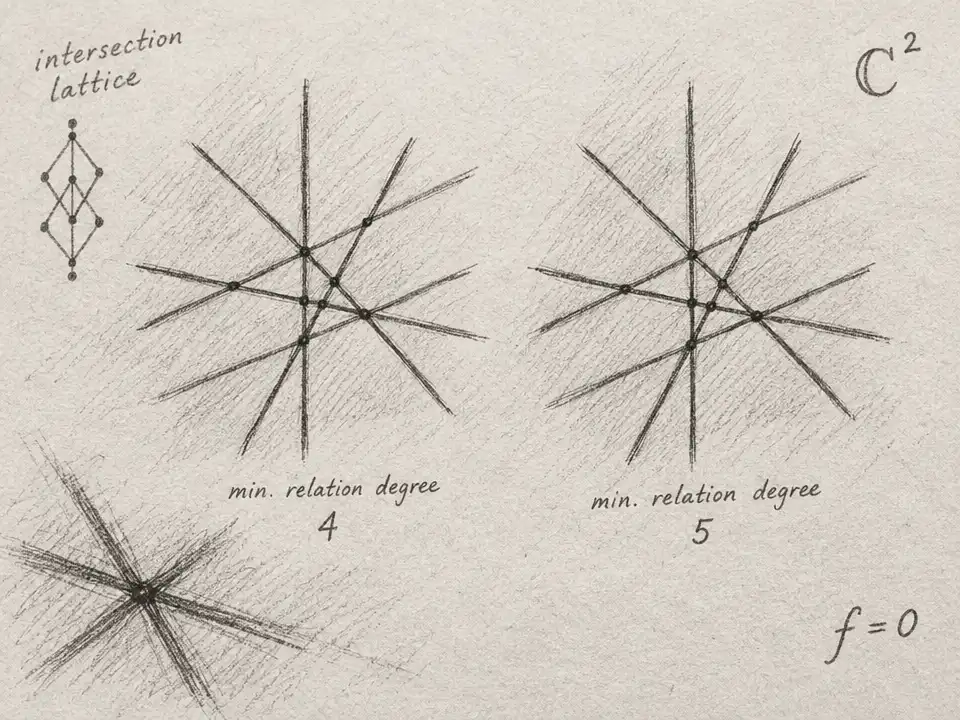
The unexpected step is a geometric simplification. At first, the constraints range over a complicated web of subspaces, many of which overlap without containing one another. The proof uses a technique called uncrossing: it shows that the hardest cases can be reduced to orderly chains of nested subspaces. Instead of wrestling with every possible pattern of overlap at once, the argument can focus on one sequence of increasingly large spaces. That structure makes the feasibility proof work.
There is a price for the guarantee. The algorithm stores information for many subsets of the arrivals and solves large linear programs as it goes. The paper proves that a suitable strategy exists, but does not claim a polynomial-time implementation. So the result settles a theoretical question for an important class of matroids without yet delivering a fast procedure ready for large real-world data streams.
The boundary matters, too. The paper extends its method beyond linear matroids to certain systems with a special modular geometry. But it does not settle the strong secretary conjecture for every matroid. The next frontier is therefore twofold: find a way to compute these careful probabilities efficiently, and discover whether the same kind of guarantee survives when the underlying dependencies are less cooperative.
That is the promise—and the cost—of the result. In a world where decisions must be made before the full picture arrives, it shows that strong fairness to every element of the eventual optimum can coexist with hidden dependencies. The proof’s map of subspaces makes that possible. Turning the map into a practical navigation tool remains the challenge.