In an AI model, a word is not just a word. It becomes a bundle of numbers that the model compares with other bundles to decide what matters next. That comparison—between pairs of inputs—is central to a technique called attention. A recent experiment took this abstract operation somewhere unexpected: into a beam of light, scattered through a cloudy material and measured by a camera.
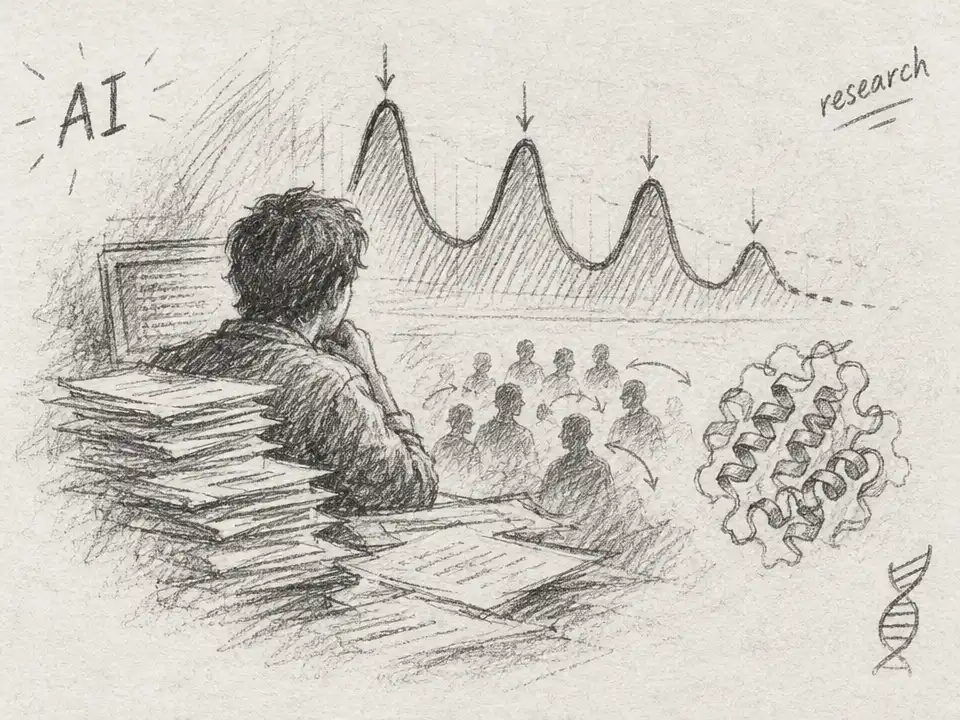
The study began with a broad challenge: explore optical computing for artificial intelligence. The researchers connected an AI research system, called Qiushi Discovery Engine, to a real free-space optics platform. Rather than follow a fixed recipe, the system moved among reading, proposing ideas, writing code, running measurements and checking whether its conclusions were supported. Its route led from a familiar problem in AI to a physical interaction hidden in the behavior of light.
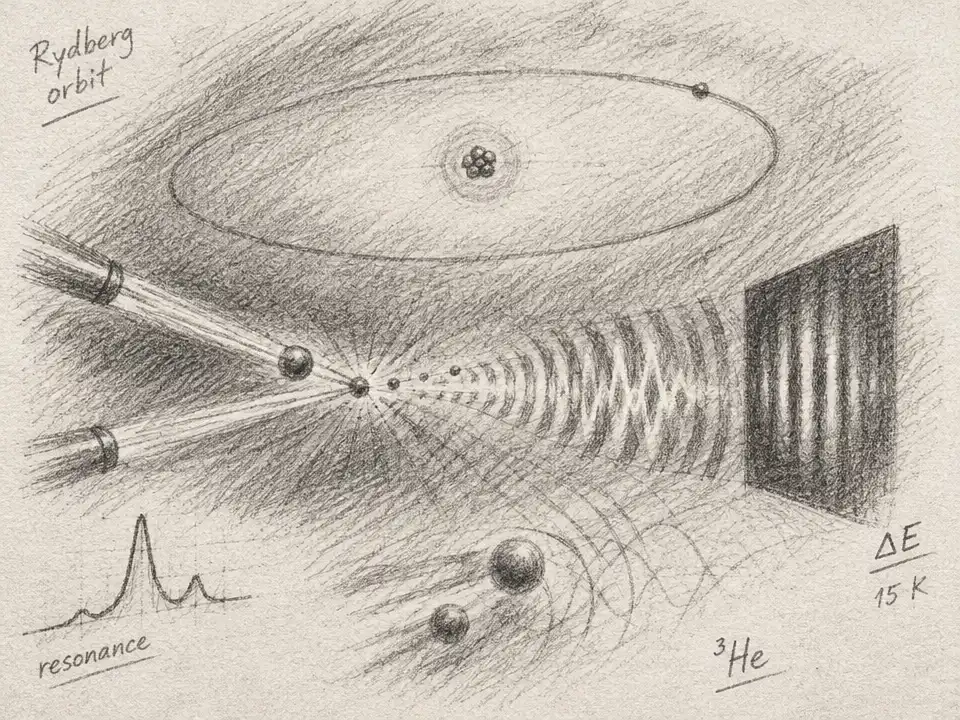
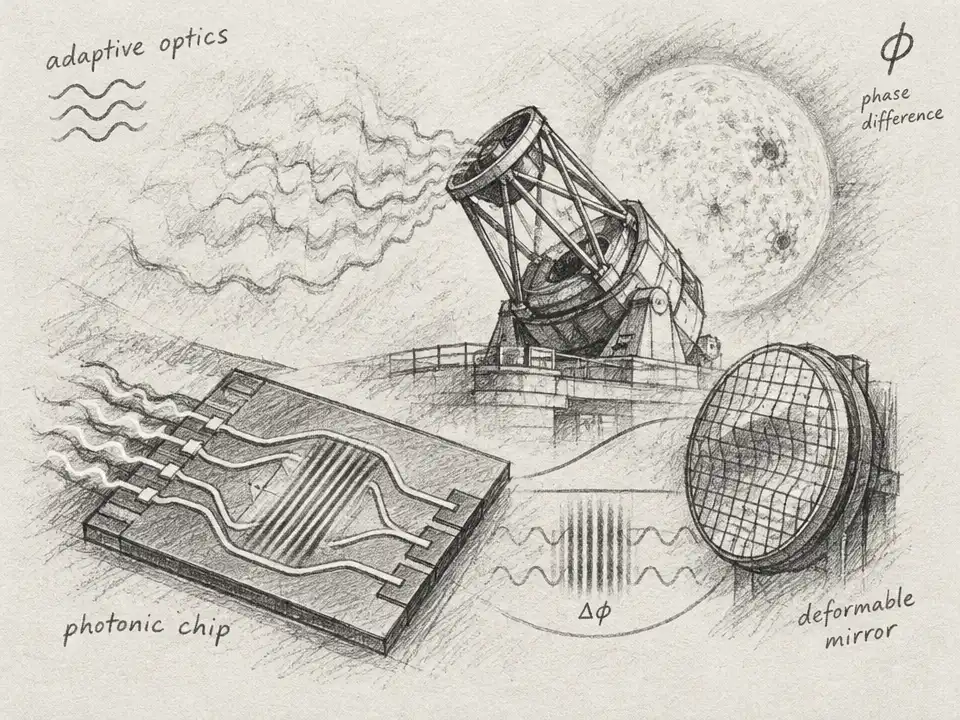
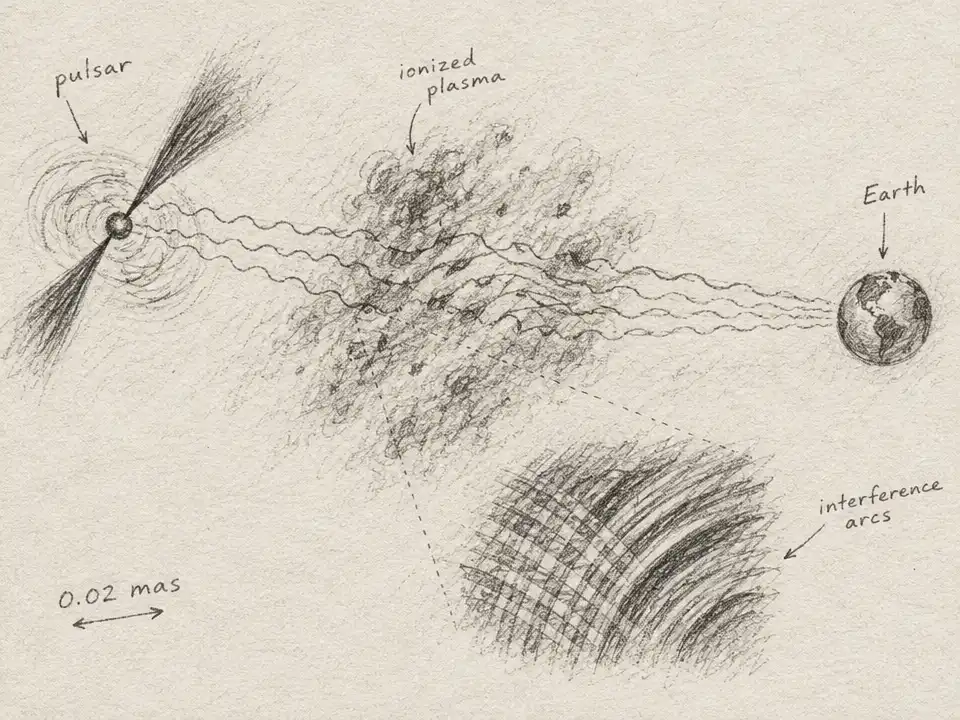
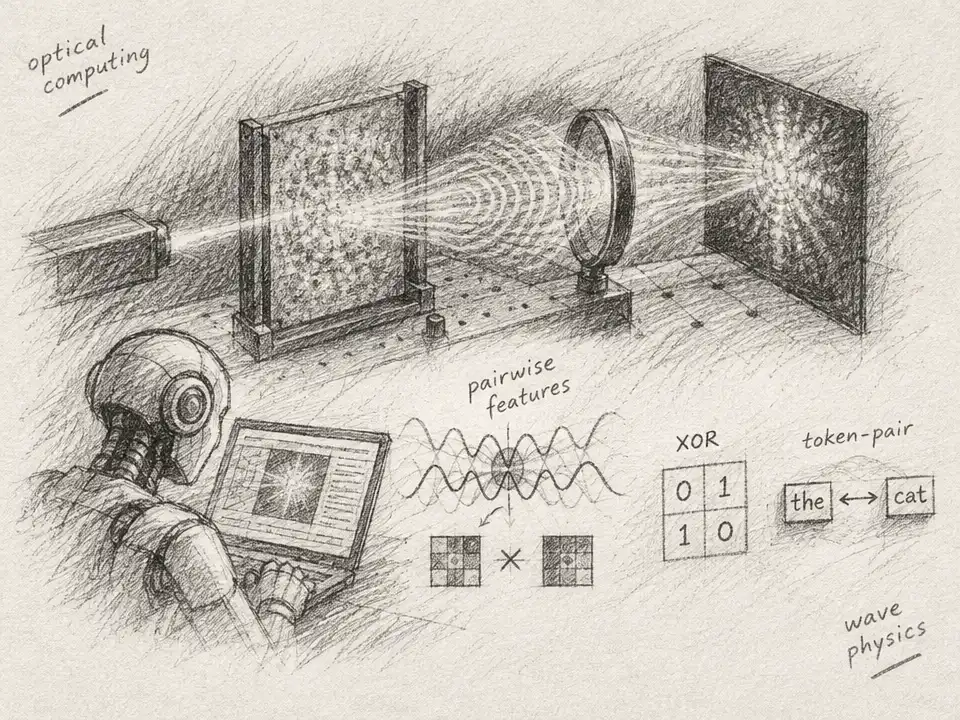
The apparatus was built to make light hard to predict. A programmable device shaped incoming light, while a diffuser scrambled it into a complex pattern before it reached a camera. The platform had more than two million controllable pixels. That complexity was useful: when light waves travel through a scattering medium, their paths mix, creating patterns that are difficult to infer from the input alone.
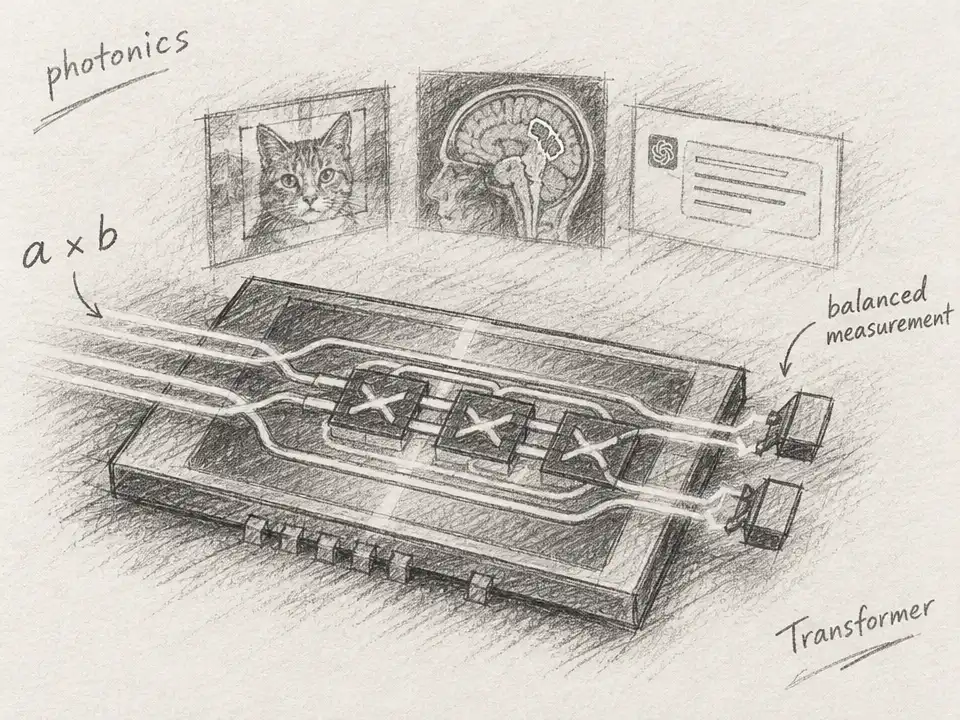
The key clue came from a basic feature of waves. Two separately encoded light fields can be combined, sent through the same scattering material and recorded together. A camera measures brightness, not the full wave directly; brightness depends on the field’s strength squared. When two fields overlap, the measurement includes a cross-term that depends on both inputs at once. By changing their relative phase and comparing measurements, the team could isolate that joint contribution from the rest of the signal.
That joint contribution is the intriguing part. In Transformer attention, a model compares a “query” representation with a “key” representation to estimate how relevant one piece of information is to another. The optical system’s measured cross-term also depends on a pair of inputs, not on either one by itself. The researchers call the effect an optical bilinear interaction. It is structurally similar to a core comparison in attention—not a complete optical Transformer, but a possible physical way to generate pair-dependent features.
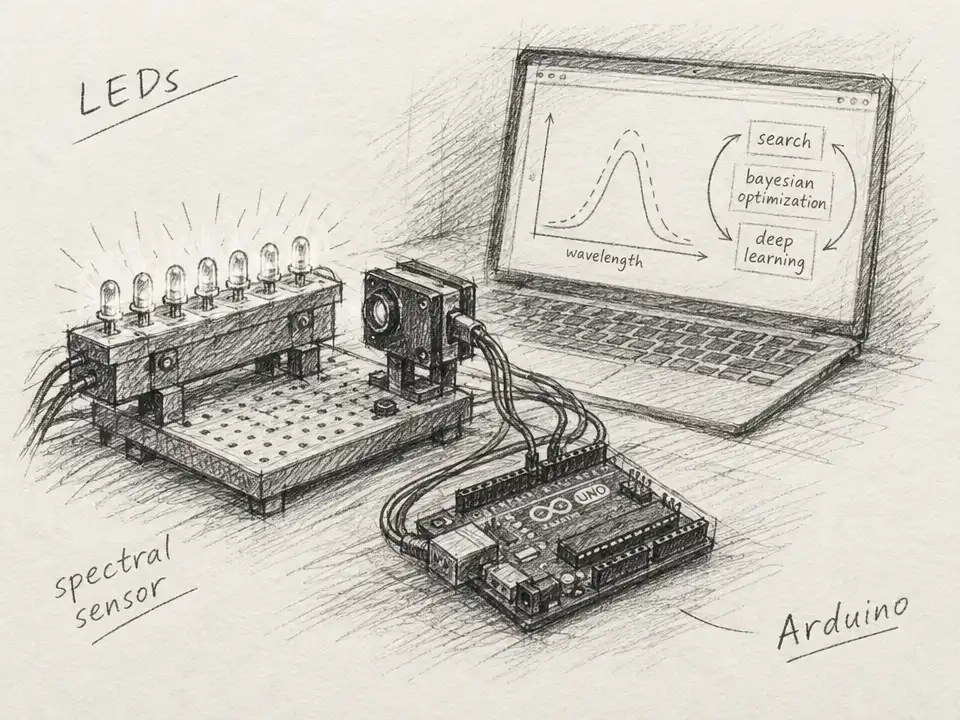
Qiushi did not arrive at the idea in one leap. Across a 206-step investigation lasting 1,288.1 minutes, it used 145.9 million tokens, 3,242 language-model calls and 1,242 tool invocations, while producing research notes and scripts. It first explored the scattering platform as a way to encode individual inputs. The system then reasoned that combining two inputs might reveal something richer: a relationship between them. That proposal became an experimental question, then a measurement protocol.
The team tested the proposed interaction in two small tasks. In one, the system used four tokens in an XOR experiment. XOR is a useful test because the answer depends on the relationship between two inputs; treating each input separately with a simple linear mapping is not enough. The measured optical feature captured the pair and its parity. In a second experiment, an eight-token semantic benchmark, the optical measurements distinguished different ordered pairs and preserved several kinds of pair structure under the study’s linear evaluation.
These are demonstrations of a computational primitive, not evidence that light can already run a language model. The experiment shows that a scattering optical system can produce measurable, pair-dependent features. It does not establish that the method performs attention at useful scale, beats electronic hardware in speed, or consumes less energy in a real deployment. The authors describe high-speed, energy-efficient optical computing as a possible direction, not a result measured in this study.
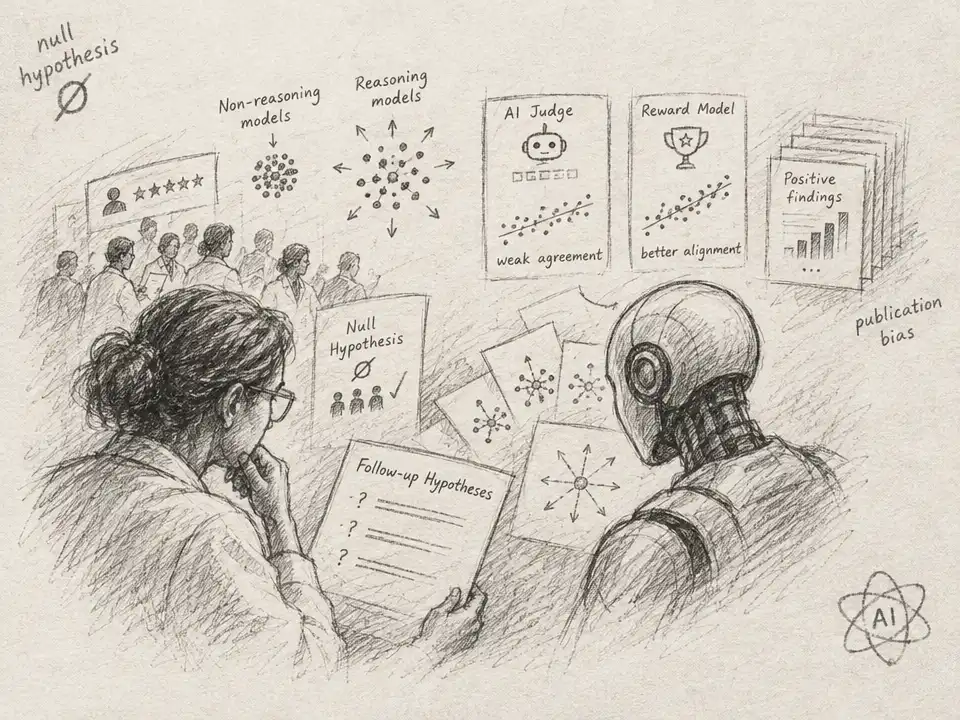
The other surprise is how the research unfolded. Qiushi was also used to reproduce a published optical experiment on a different platform and to turn an abstract theory of wave coherence into a testable measurement. Those steps mattered because they exercised the machinery needed for the open-ended search: translating theory into operations, dealing with real instruments, and revising claims when a result did not justify a stronger conclusion. In one earlier test, a reviewer agent prompted a follow-up that narrowed what the system could claim.
That does not mean the discovery happened without people. Researchers built the AI system, prepared the optical platform and chose the broad topic. The paper’s claim is narrower and more interesting: within that human-designed setting, the system proposed the optical interaction, developed a way to measure it and tested it on hardware. Because this is one study on one platform, the result is a proof of possibility, not a general verdict about autonomous science.
The crossover points in both directions. A concept from AI—pairwise comparison—suggests what to look for in the physics of scattered light. Then the behavior of light offers a candidate way to perform that comparison physically. Instead of asking only how to make computers calculate faster, researchers can ask which parts of computation might emerge from the material itself. For now, a camera and a diffuser have not replaced a processor. But they have shown how a tangle of waves can make relationships between inputs visible—and how an AI-guided experiment can help uncover the connection.