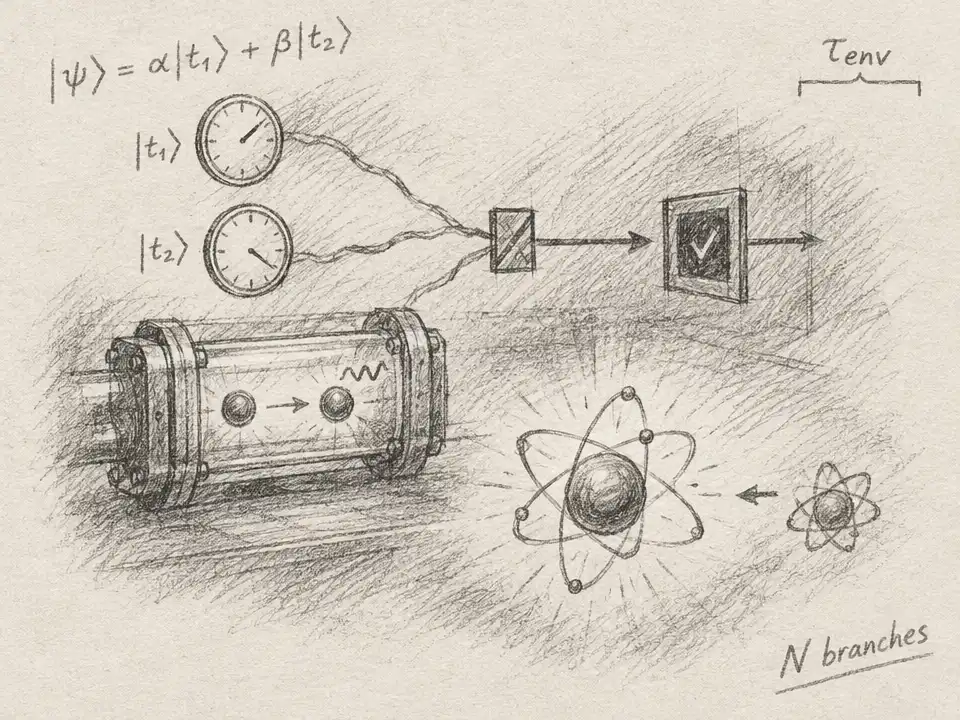
A Quantum Clock Could Reverse Decay—Until Its Environment Forgets
A theoretical quantum-clock proposal suggests decay could run backward in rare selected trials—until environmental memory and bandwidth shut it down.
A theoretical quantum-clock proposal suggests decay could run backward in rare selected trials—until environmental memory and bandwidth shut it down.
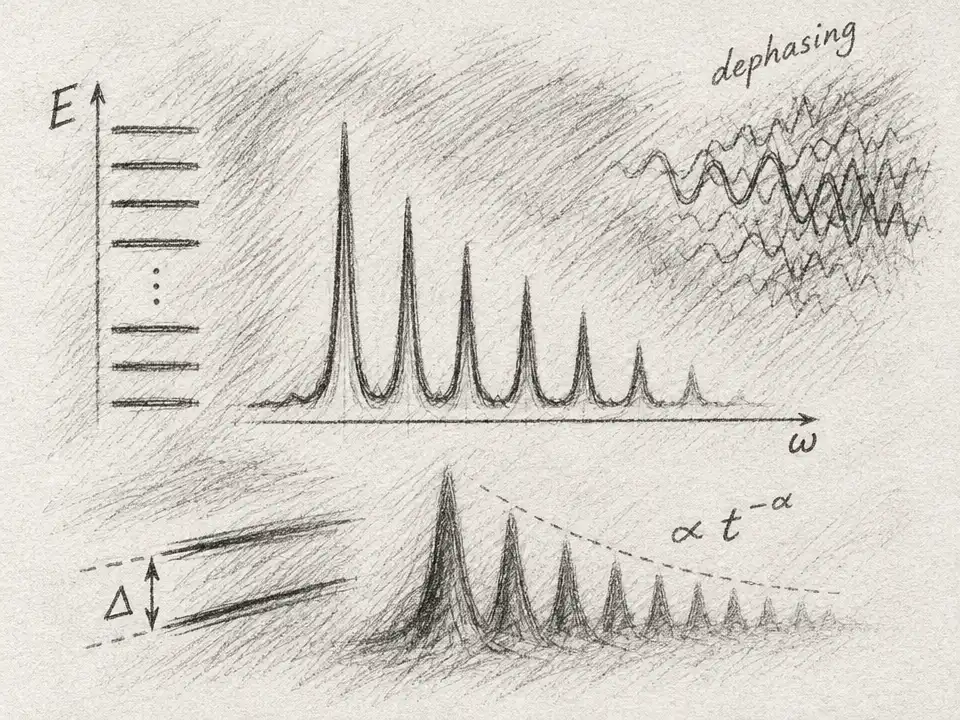
A theoretical study finds that spectral echoes survive strong dephasing longer than expected—and that fast noise can help reveal hidden order.
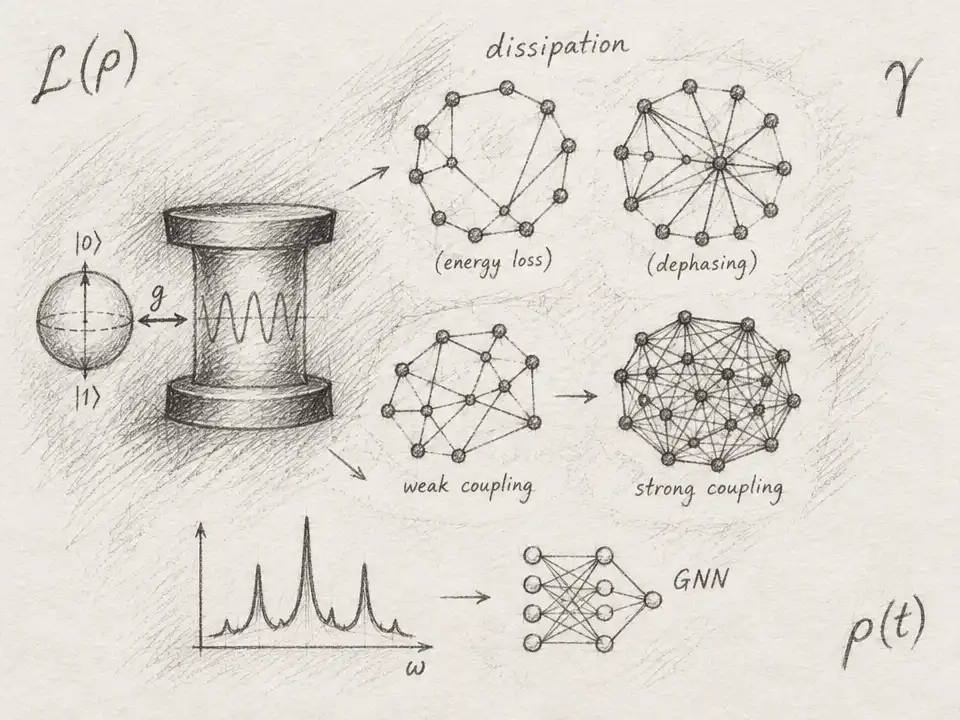
A graph-theory framework maps quantum dissipation, revealing which network links matter and helping predict quantum decay spectra.
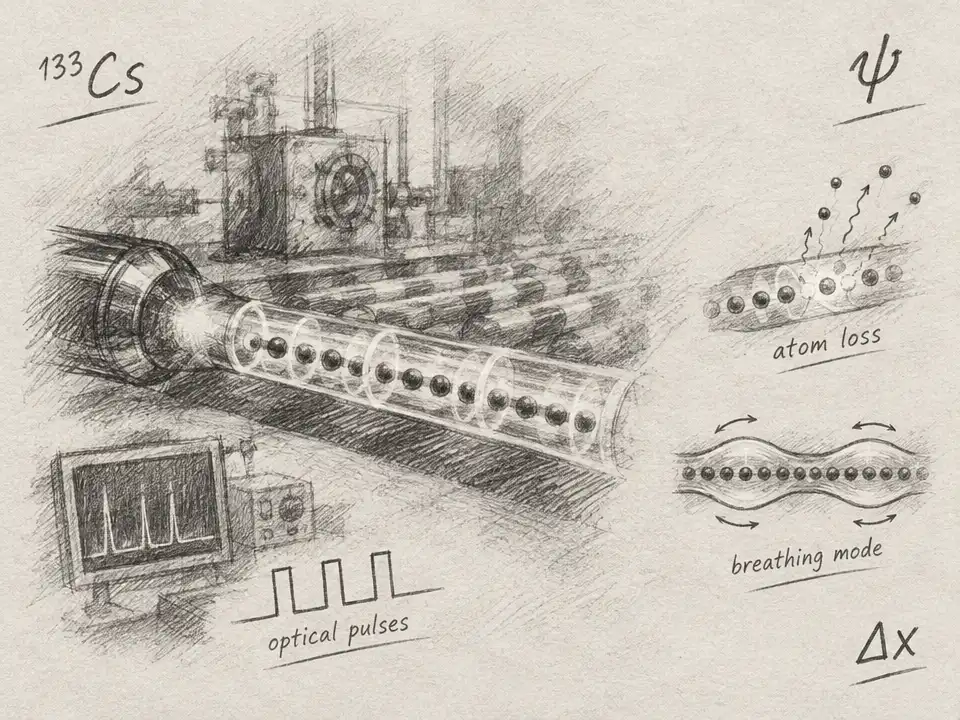
A proposed cesium-atom experiment uses resonant heating and a protected breathing mode to search for subtle changes to quantum mechanics.
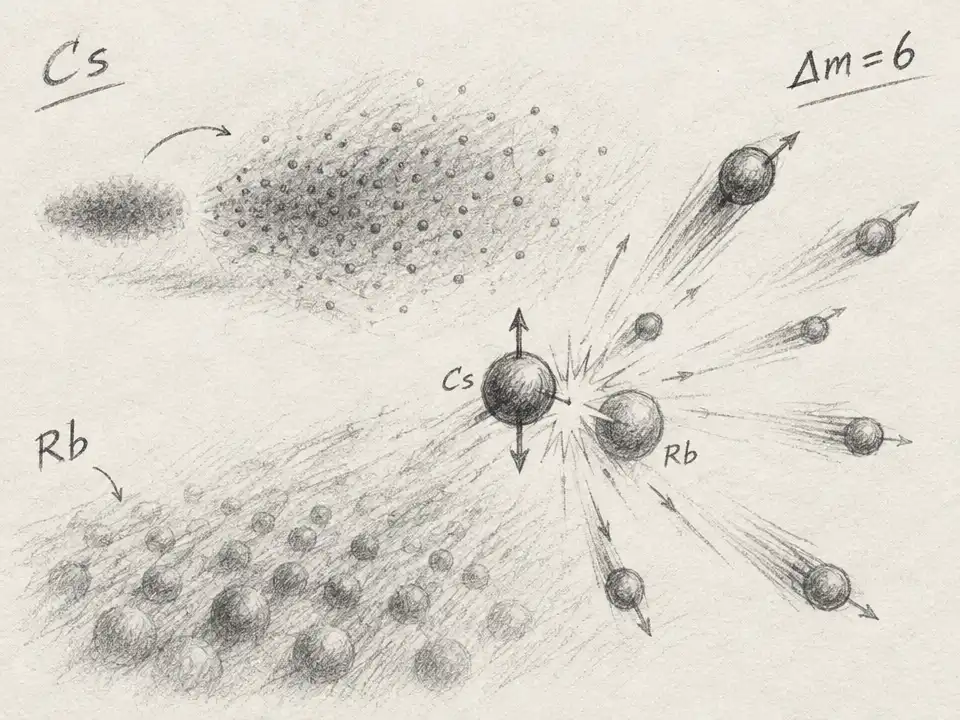
A cold cesium atom gets a temporary burst of motion when quantum spin energy becomes kinetic energy in collisions with rubidium.
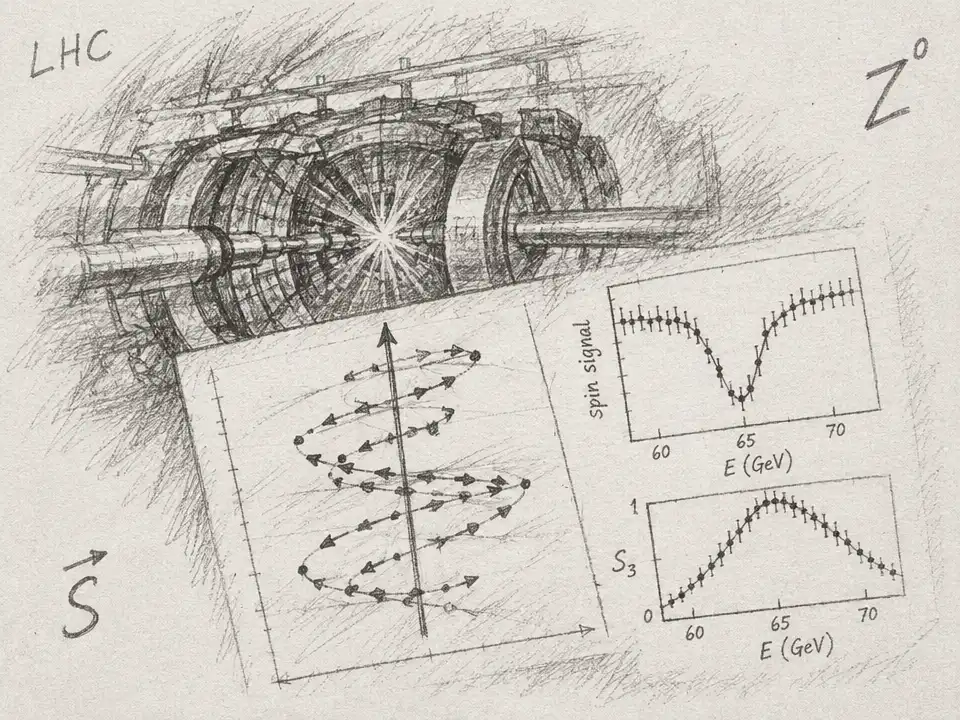
A quantum-tomography reanalysis of archived LHC collisions uncovers a swirling Z-boson spin pattern and a near-unpolarized state, with no known cause.
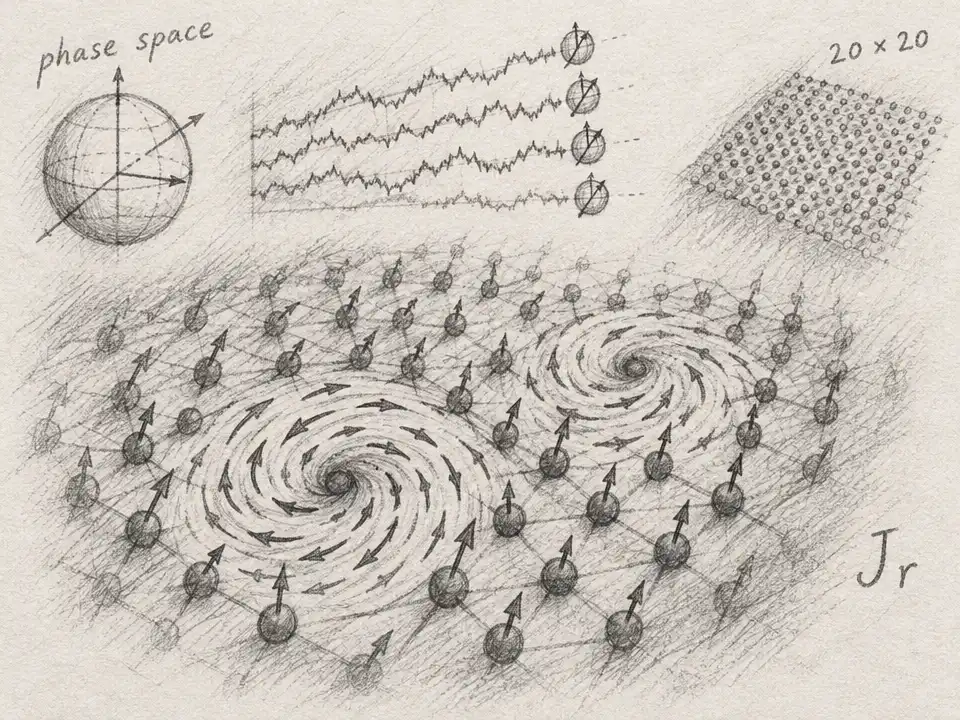
A new spin-simulation method tracks environmental noise and long-range forces, revealing vortices and a surprising reentrant order.