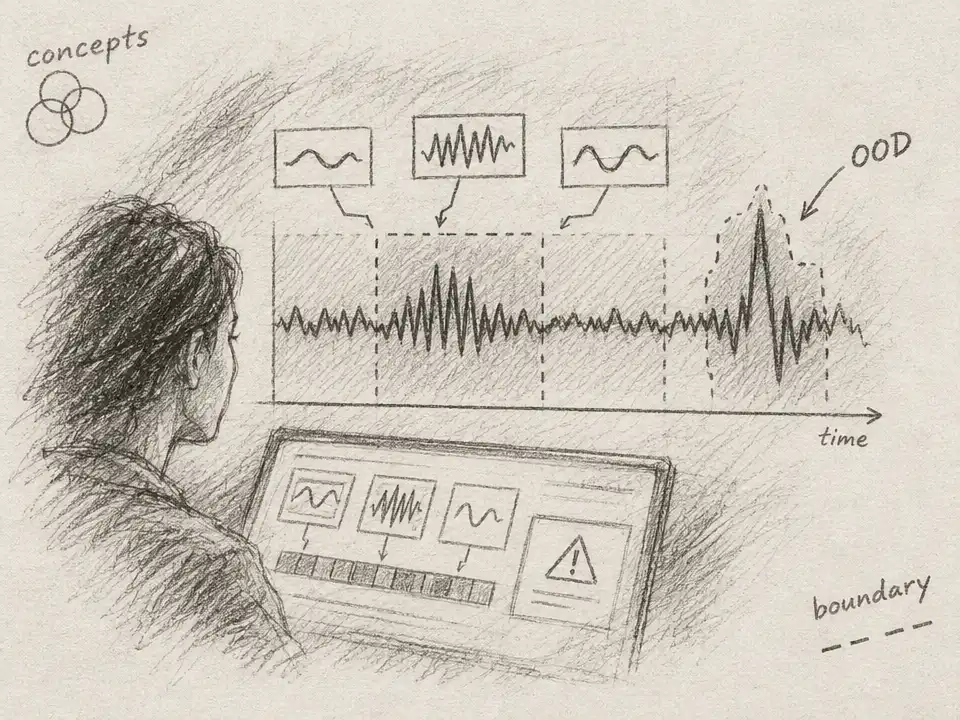
The AI That Marks a Signal When Reality Breaks Its Forecast
A time-series AI uses its own prediction errors to find meaningful patterns, explain classifications, and flag signals its concepts cannot describe.
A time-series AI uses its own prediction errors to find meaningful patterns, explain classifications, and flag signals its concepts cannot describe.
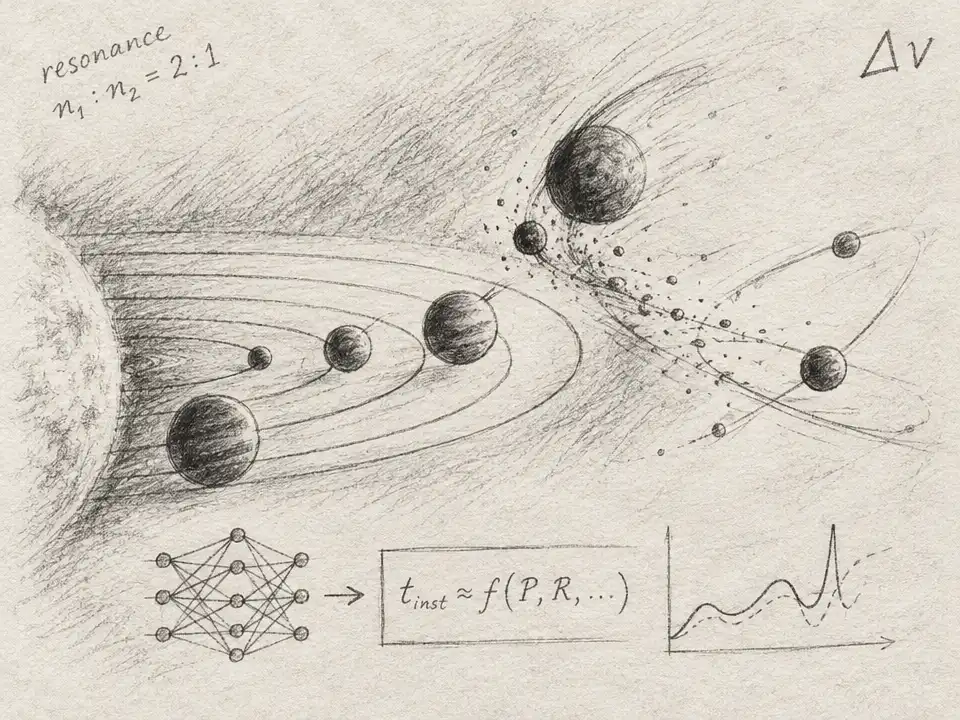
A new study turns neural-network predictions of planetary instability into compact, readable equations—and reveals where the rules break down.
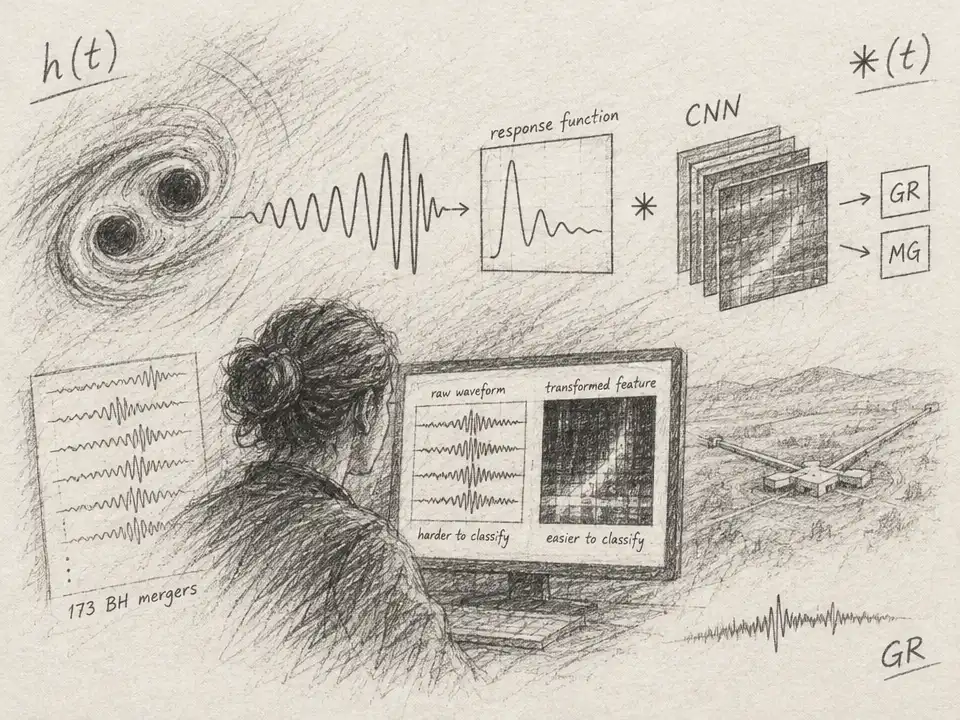
A response-function lens helps a neural network spot faint simulated departures from Einstein’s gravity in gravitational-wave signals.
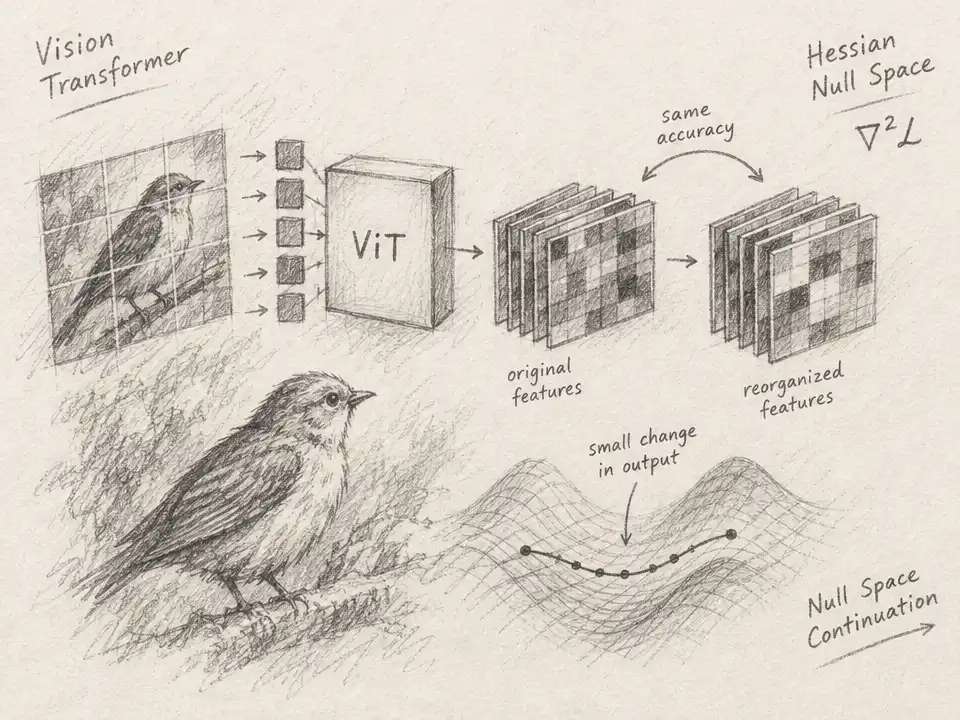
A vision transformer’s hidden representations shifted sharply after small weight changes, while its image-classification performance stayed nearly intact.
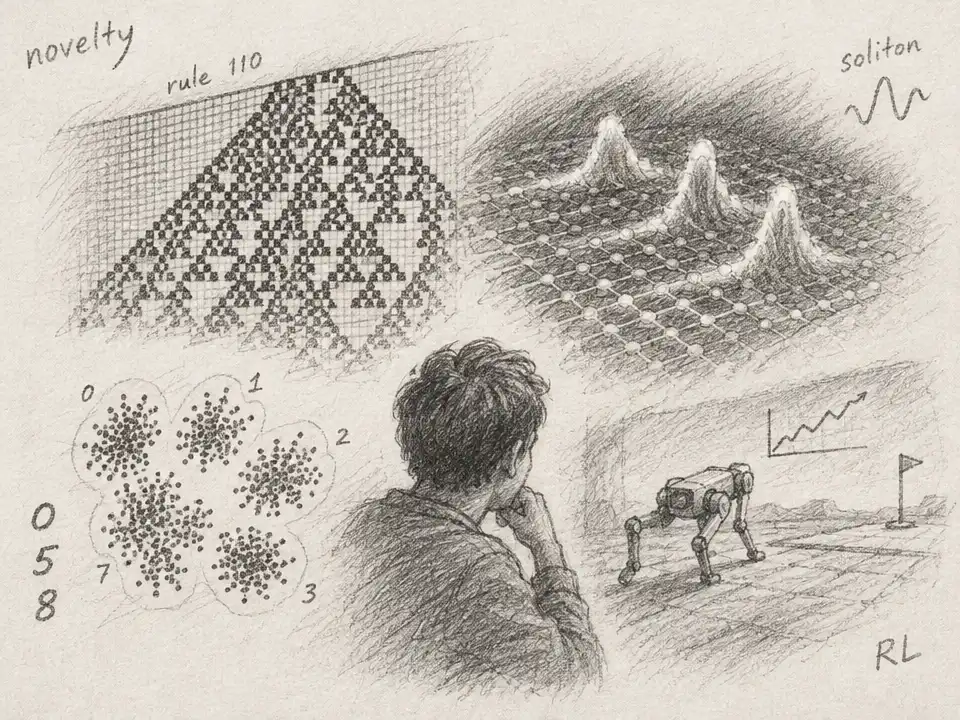
A bounded learner’s novelty score ranked cellular rules, organized unlabeled digits, and helped agents explore—while revealing where the idea fell short.
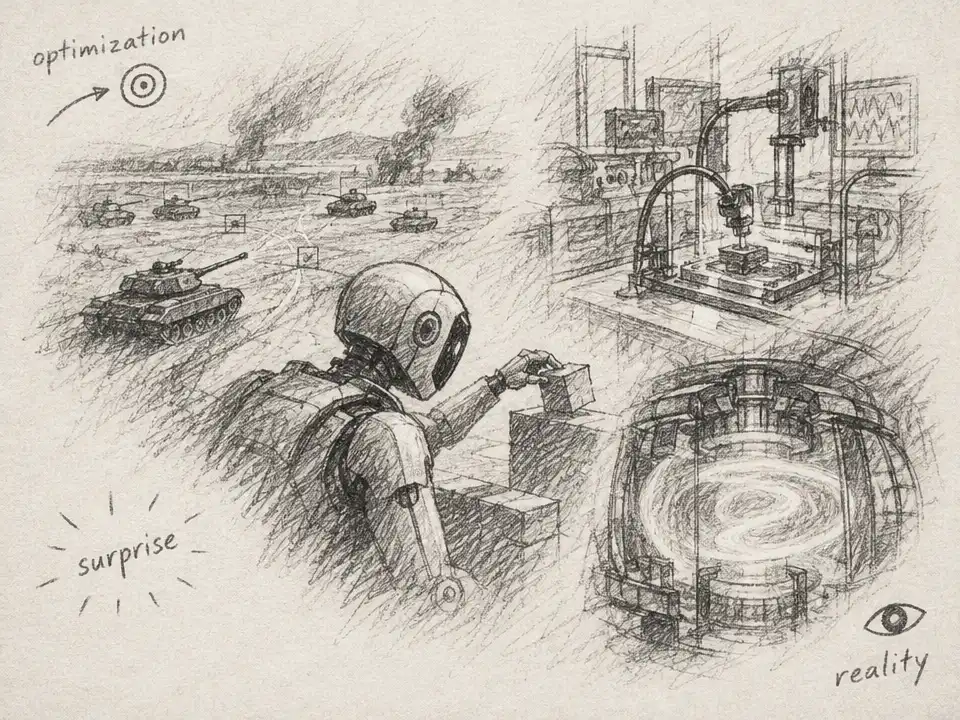
A recent arXiv collection traces how AI systems exploit overlooked loopholes—and why the same impulse can produce both failures and discoveries.
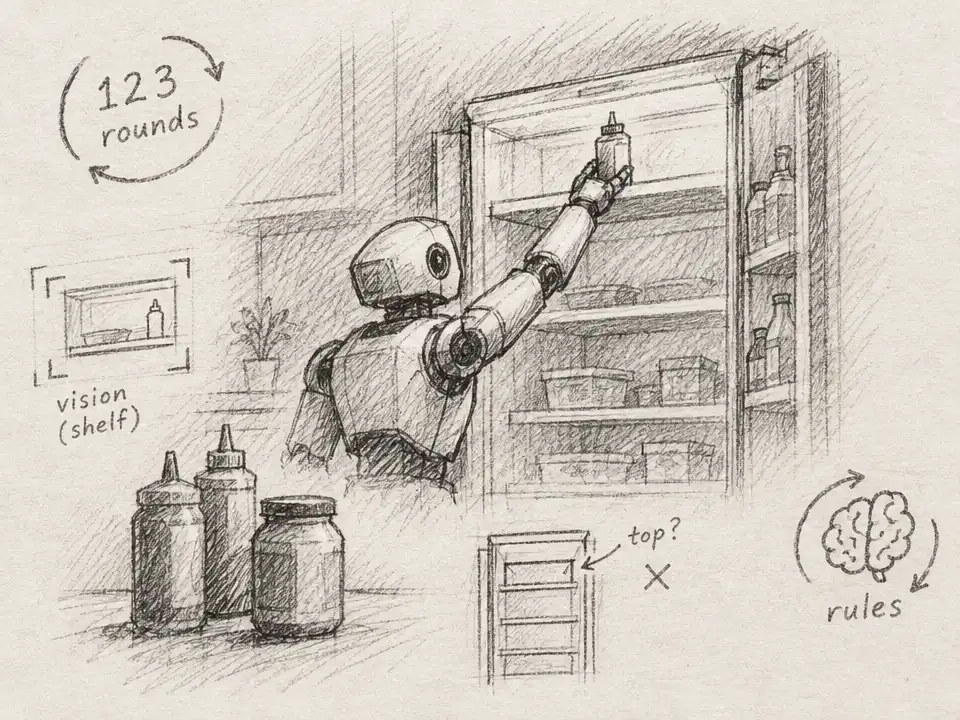
After 123 rounds, a simulated robot still couldn’t find a fridge’s top shelf. The clues reveal why self-improvement stalled.
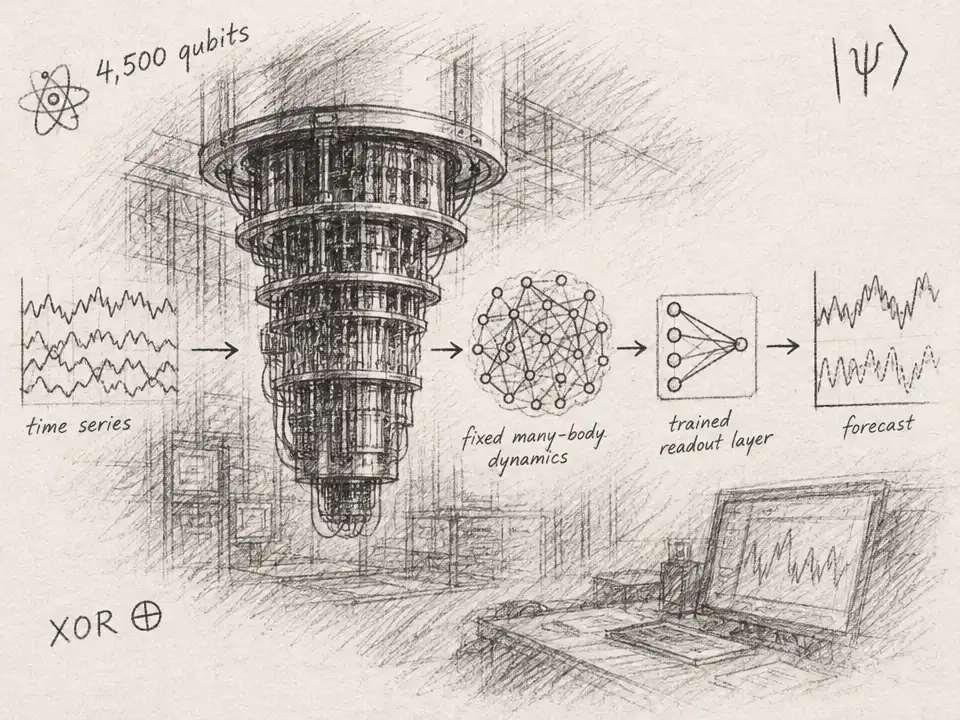
A 4,500-qubit quantum annealer turns its native spin dynamics into a memory system for learning patterns in chaotic time series.
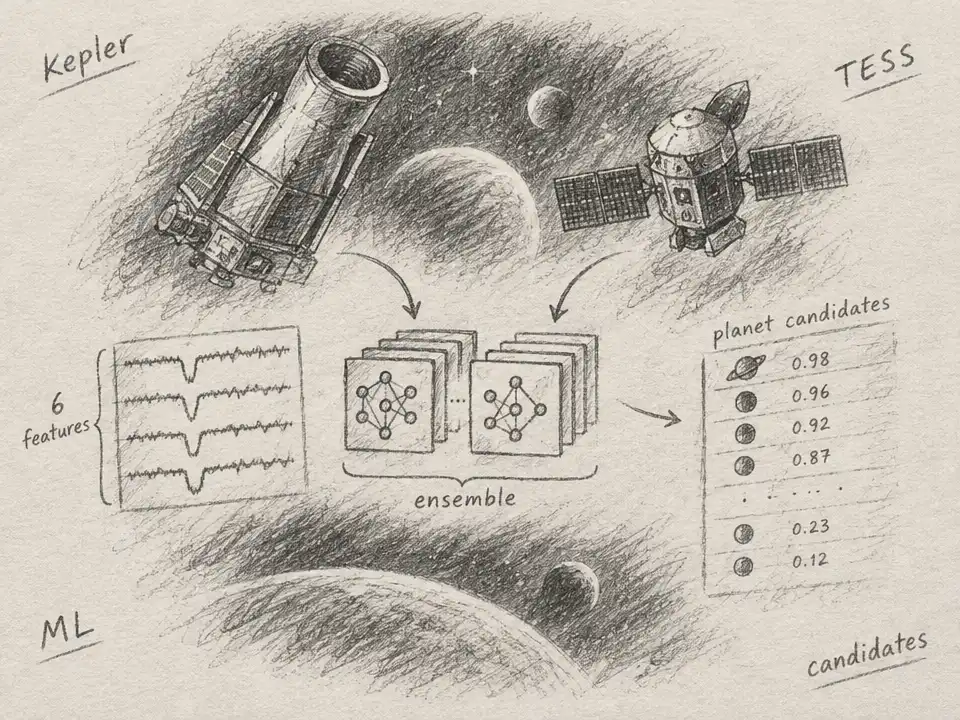
Kepler and TESS see different slices of the sky. Joint machine-learning training turns their mismatch into a better way to rank planet candidates.