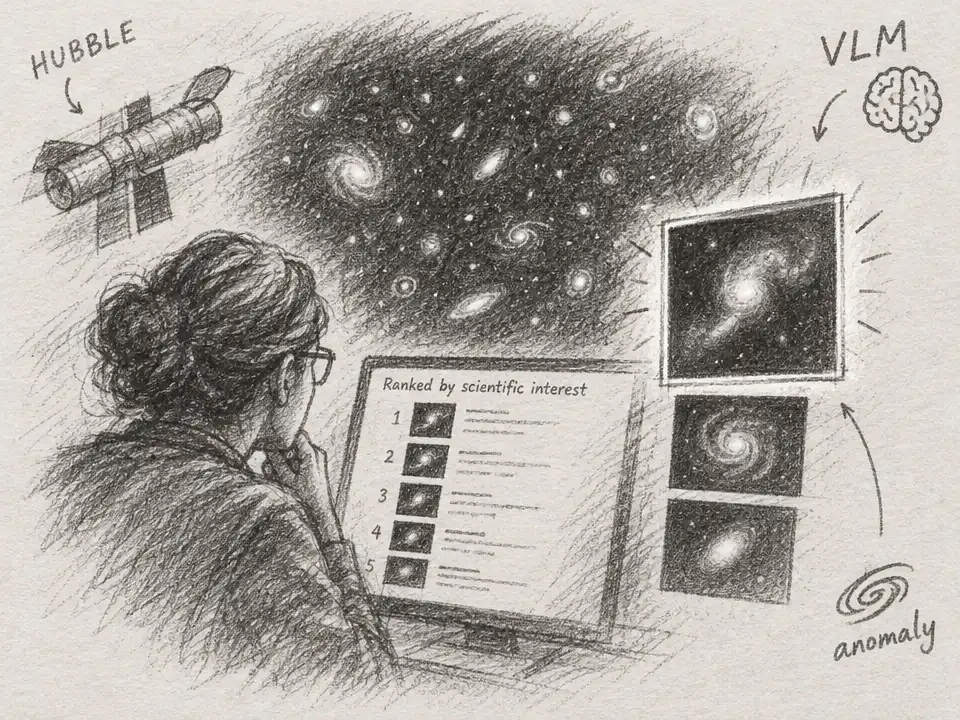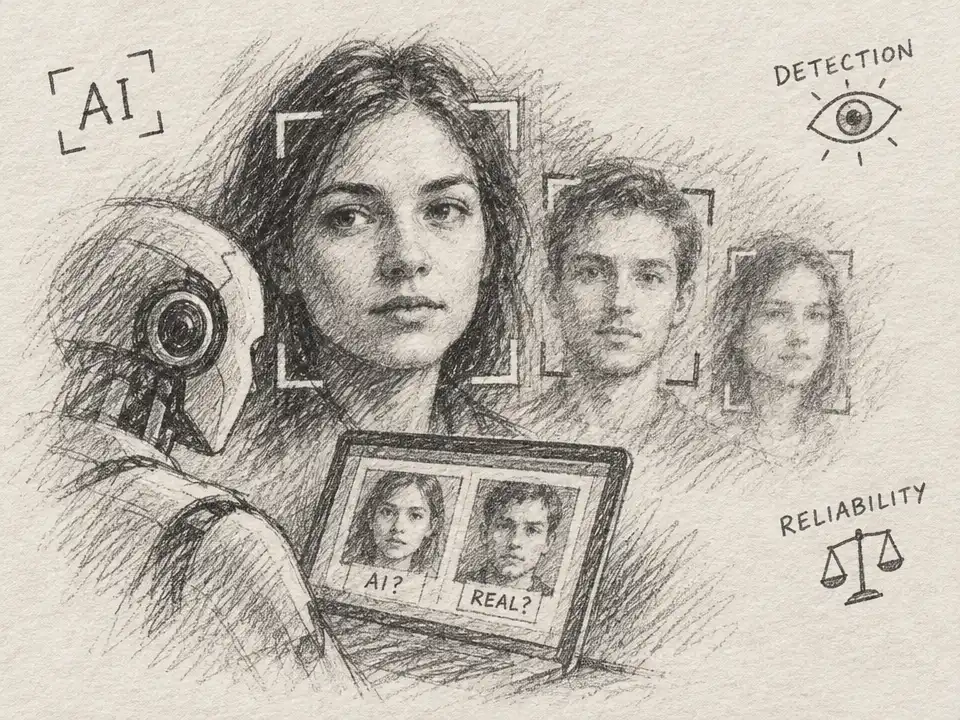
Imagine asking a computer to find something strange in millions of pictures of galaxies. The first problem is not teaching it what a galaxy looks like. It is deciding what strange means. A smudge might be a rare cosmic structure—or a flaw in the image. An algorithm can rank the oddities. But which ones deserve a scientist’s attention? A recent review of machine learning in astronomy argues that the answer emerges when two kinds of pattern-finding work together: a computer’s ability to sift through enormous datasets and a researcher’s judgment about what is worth a closer look.
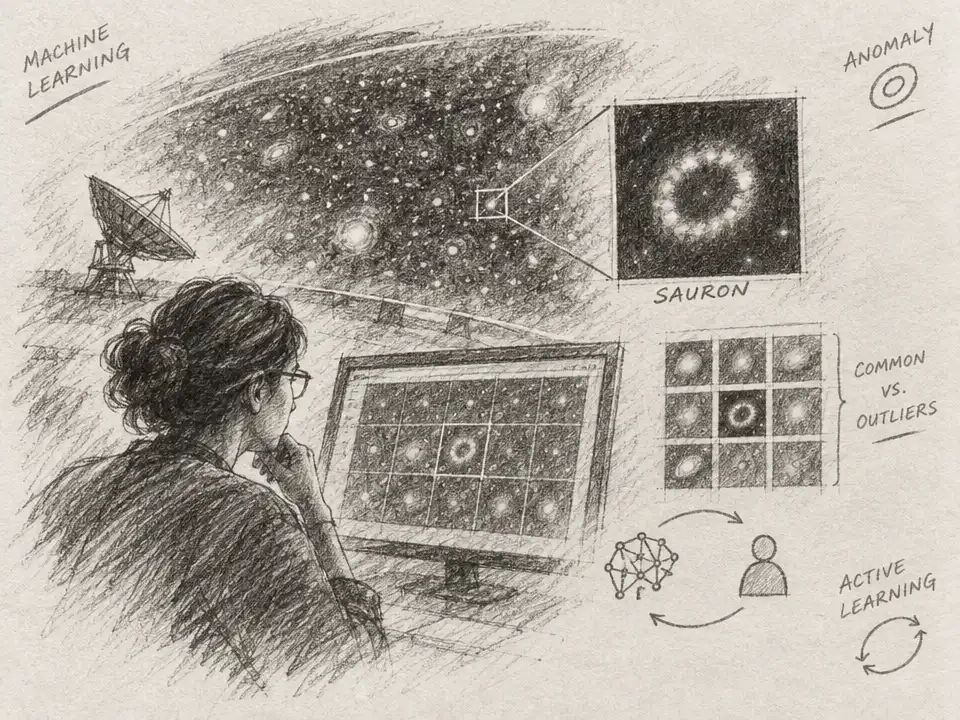
The approach, called Astronomaly, borrows from active learning, a family of machine-learning methods in which a person’s feedback helps guide what the system examines next. Instead of asking astronomers to label every image, it presents a manageable queue of candidates. A researcher can rate what looks interesting; the system uses those ratings to refine its recommendations. The goal is not to hand scientific judgment to a machine. It is to help a scientist spend less time on routine images and more time on the few that might challenge an existing explanation.
That distinction matters because an anomaly is not automatically a discovery. A telescope image can be unusual because a detector misbehaved, a nearby object interfered, or the data were processed imperfectly. A machine trained to flag statistical outliers may find plenty of such artifacts. Astronomaly’s more ambitious question is whether it can help find sources that people—not just a mathematical measure of rarity—would consider intriguing.
One striking example is SAURON, a radio source whose name describes its appearance: a steep and uneven ring of nonthermal radiation. In radio images from the MeerKAT Galaxy Cluster Legacy Survey, it showed a ring of emission about 175 kiloparsecs across, with brighter, roughly quadrilateral regions and two extended features separated by 368 kiloparsecs. The shape did not fit a familiar, simple account of a cosmic radio source. Astronomaly brought it to researchers’ attention; it did not explain what made it. A remnant of a supermassive black-hole merger is one possibility discussed by the researchers, but the source’s physical origin remains uncertain.
That is the real adventure in the story: the system’s output is not a verdict. It is a lead. Astronomers still have to inspect the data, check whether the source is real, compare it with known objects, and ask what observations could distinguish possible explanations. The algorithm helps decide where to look; it cannot turn unusual pixels into a confirmed new class of object by itself.
The method has another twist. Traditional anomaly detection often assumes that unusual objects sit at the edges of a map of the data. But the map depends on how the images are represented. Earlier approaches used hand-crafted measurements of galaxy shape, such as parameters from fitting ellipses to a galaxy’s light. Those measurements can be useful, but they may overlook an oddity defined by color or some other feature they were not designed to capture.
Deep-learning systems offer a different way to represent images: rather than relying only on features chosen by a person, a neural network can learn patterns from examples. In astronomy, networks trained on galaxy images can produce representations that group visually similar sources together. Yet a better representation can create a surprising problem. Sources people find odd may end up tucked within a dense region of the map, alongside many ordinary-looking examples—not isolated at its edges. A conventional outlier detector could miss them precisely because the learned representation is good at recognizing similarities.
Lochner describes a response called Astronomaly: Protege. Rather than insisting that “interesting” must mean “far from the crowd,” it uses active learning to learn a user’s judgments from a relatively small number of examples. The person and the system take turns: the tool recommends candidates, the scientist responds, and later recommendations reflect that feedback. That is closer to a discovery assistant than an automated novelty detector. It can search for patterns a person has already shown interest in, while still surfacing candidates the researcher might not have thought to request.
Researchers have tested the broader Astronomaly approach on different kinds of data. In a search through almost 4 million galaxy images from the Dark Energy Camera Legacy Survey, the team reported 18 previously unidentified sources with highly unusual morphology among the candidates reviewed. In another application, the framework helped identify new variable and flare stars in optical light curves. These examples show that the system can help prioritize searches; they do not mean every flagged source proves to be a new kind of object.
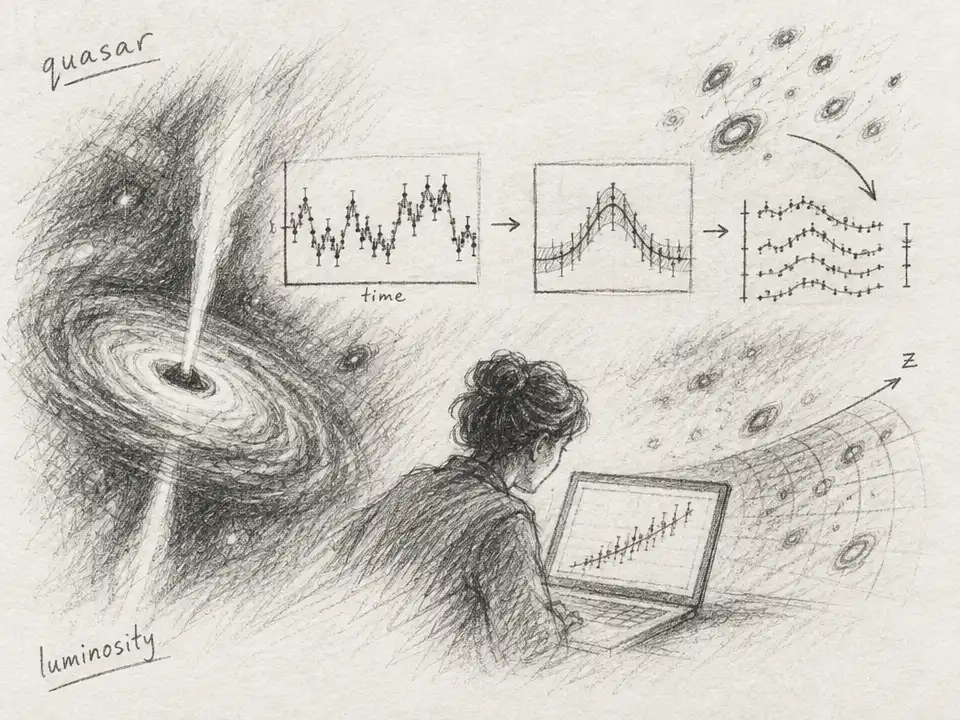
Even the choice of what the computer sees can shape what it finds. Lochner’s review notes that a deep-learning model trained to predict the next point in a changing star’s light curve may be too flexible: it can predict ordinary and unusual behavior alike, leaving little difference for an anomaly score to detect. Other work found more value in using a pretrained classifier to create features for light curves, then applying a separate anomaly-detection method. There is no universal “strange detector.” The useful combination depends on the data, the representation, and the question astronomers want to ask.
The stakes are rising as sky surveys collect more information than anyone could inspect image by image. The review describes future datasets containing billions of galaxies and streams of transient alerts. In that setting, a computer that merely sorts by statistical rarity could flood researchers with artifacts—or quietly overlook phenomena that do not look rare in its chosen representation. Active learning offers a more flexible bargain: let software handle the scale, and let human judgment help shape the search.
That bargain does not make discovery automatic. The meaning of an unusual signal depends on scientific context, and the context can change as researchers learn more. But the method reframes what AI can contribute to astronomy. Its most important role may not be to announce that it has found something extraordinary. It may be to keep searching, listen to what scientists consider promising, and bring the next puzzling image within reach of a human eye.