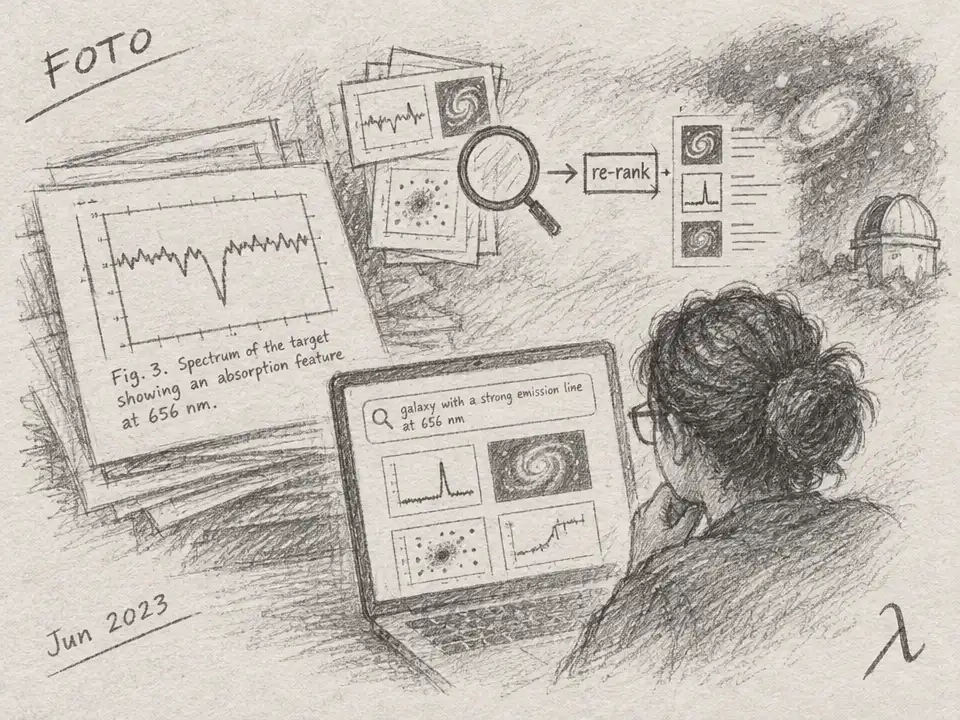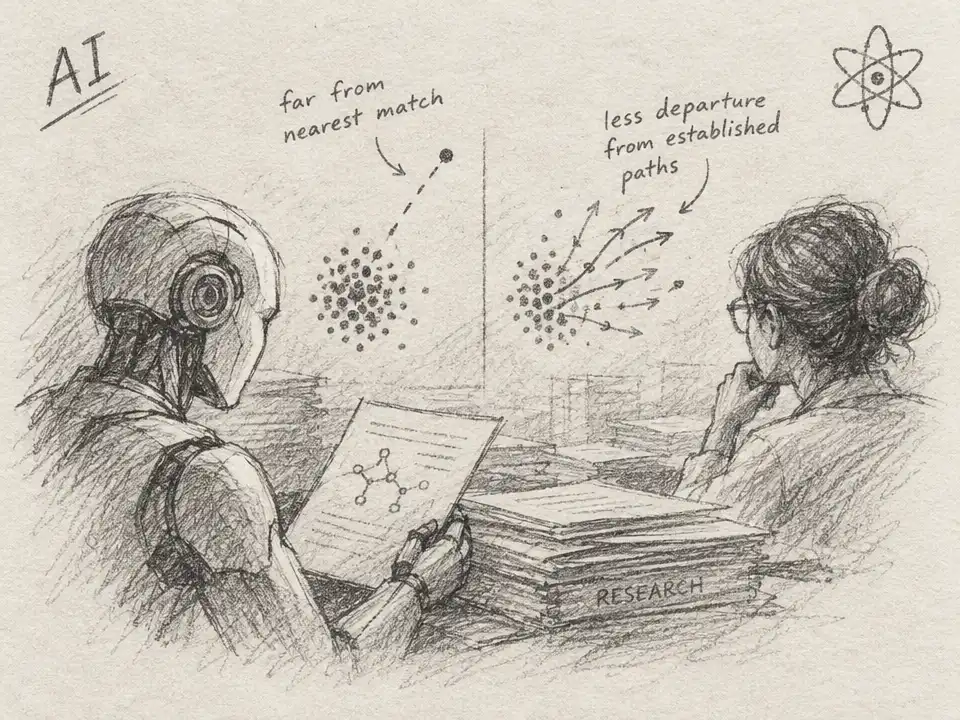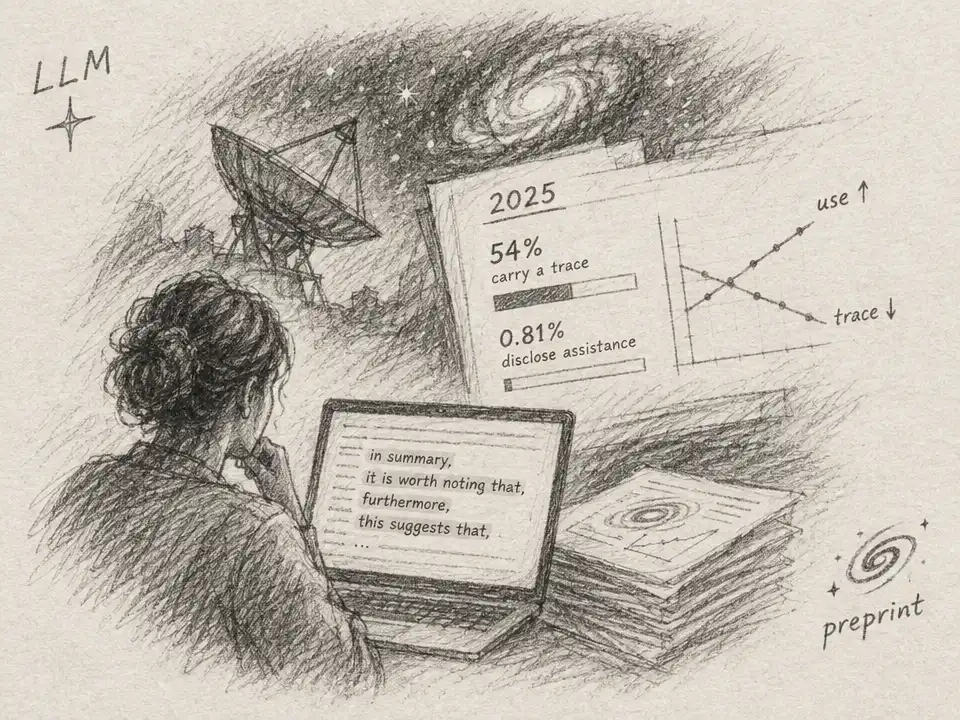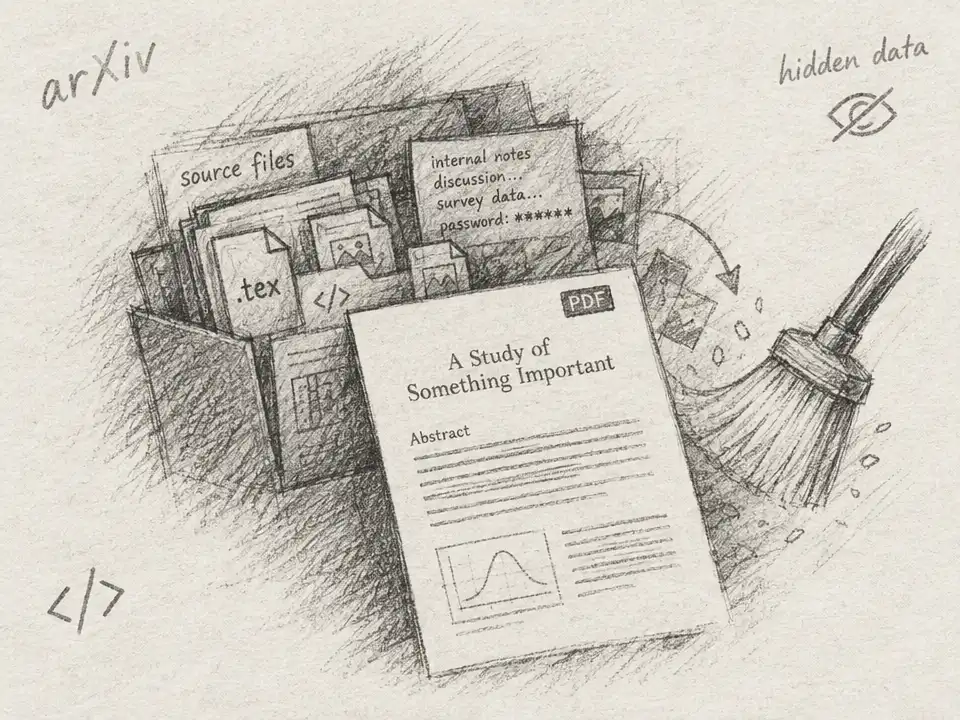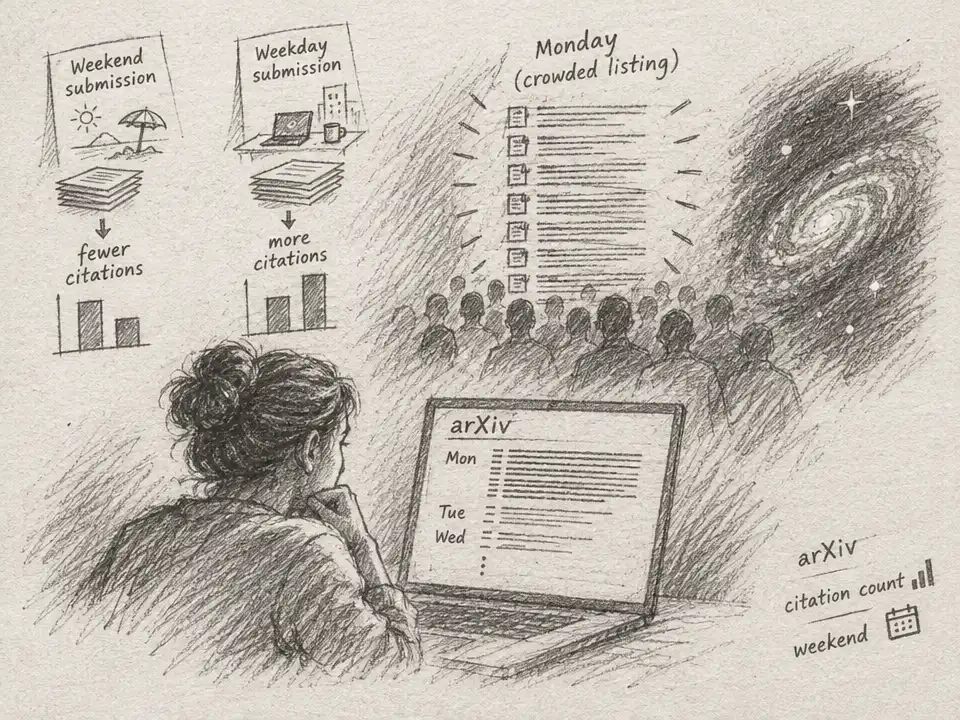
Every week, astronomy papers arrive on arXiv in batches. But there is a scheduling wrinkle: papers submitted over the weekend all appear together in Monday’s listing. That creates a curious question. Do weekend submissions receive less attention later on—or are the papers themselves different in ways that have nothing to do with when readers first see them?
A study of 37,173 refereed astronomy papers offers a striking clue. In five of six journals, papers submitted on Saturday or Sunday had lower median citation counts than weekday submissions. The gap ranged from 12% to 26%. Yet among Monday through Friday, the researchers found no clear differences in median citations. The apparent dividing line wasn’t one weekday versus another. It was weekdays versus weekends.
That pattern sounds like a simple posting-day puzzle, but it has two competing explanations. One is about attention: a longer Monday list may give each paper a smaller chance of being noticed. The other is about the papers and their authors: weekend submissions may differ systematically from weekday ones. The study finds an association, not a cause, and its authors say their data cannot yet tell these stories apart.
To investigate, Chirag Sharma and Shantanu Desai assembled records for papers published between 2020 and 2023 in six journals: MNRAS, ApJ, ApJL, ApJS, A&A and JCAP. They matched those papers to arXiv submission timestamps, then compared citation counts by the day authors submitted and by the day the paper appeared in an arXiv announcement. The final sample included only refereed papers with a retrievable arXiv preprint in the astronomy categories they studied.
That distinction between submission day and announcement day matters. ArXiv’s weekday schedule means that a weekend paper doesn’t appear in a weekend batch. It joins the Monday announcement, along with other papers submitted during the same window. So the researchers checked both when a paper was sent in and when it entered the listing readers could browse.
They also had to decide what counts as a typical paper. Citation distributions are lopsided: most papers receive far fewer citations than a handful of highly cited works. A small number of outliers can pull an average upward, making it a poor stand-in for the experience of the middle paper. The researchers therefore focused on the median—the point with half the papers above it and half below—while also reporting averages as a comparison.
The choice mattered. In A&A, for example, weekend-submitted papers had a slightly higher average citation count than weekday papers, even though their median was lower. A few exceptionally cited papers, including major Gaia data-release papers submitted on a Saturday and a Sunday, lifted the weekend average. The mean seemed to tell one story; the median and the broader distribution told another. This is why the researchers relied on medians and rank-based comparisons rather than letting a few citation giants dominate the result.
The weekend gap appeared in all six journals, but it reached statistical significance in five. JCAP was the exception: its weekend sample contained 104 papers, and the difference pointed in the same direction without meeting the study’s significance threshold. The size of the sample matters here. A result that is hard to distinguish from ordinary variation in a small group does not establish that the underlying effect is absent.
Monday’s announcement list offers another clue. It was the largest daily batch in the researchers’ journal samples. In the three biggest samples, Monday had the lowest median citation count: the differences were modest, but measurable. That fits a visibility explanation. If a crowded list divides readers’ attention, a paper may be less likely to get an early look, discussion or follow-up citation.
But “fits” is not “proves.” The paper counts cover only the researchers’ journal samples, not the full arXiv astronomy listings that readers actually encounter. And a busy listing could be a marker for other differences, not the cause of the citation gap. Weekend submissions might vary by author location, career stage, paper type or the circumstances that led someone to submit at that time. Any of those factors could be related to citations independently of list size.
The study has other limits. Journals differed in how many of their papers had arXiv preprints, so the final sample represents each journal differently. Citation totals were collected at one point in time, in June 2026, and papers had different amounts of time to accumulate them. The authors checked whether the result was driven by a single publication year and found that it was not, but they could not reconstruct every paper’s actual position in the daily list from the records they used.
There is, however, a useful next test. Compare papers that land in the same Monday listing but were submitted at different times: some shortly after Friday’s deadline, others on Saturday or Sunday. They share the same announcement batch, so they face a similar listing environment. If their citation outcomes still differ, that would point toward differences in the papers or their authors. If they look more alike, the visibility explanation would gain support. Even then, one comparison would not settle every possible cause, but it would help separate the leading explanations.
For now, the result is a clue about how scientific attention may travel—not advice to rearrange a submission schedule. The researchers cannot show that submitting on a weekend causes fewer citations, or that an individual author would gain citations by changing days. Their finding is narrower and more revealing: across a large sample of astronomy papers, the weekend is associated with a citation gap, while the weekdays look much the same. The mystery is no longer whether a pattern appears. It is what, exactly, produced it.