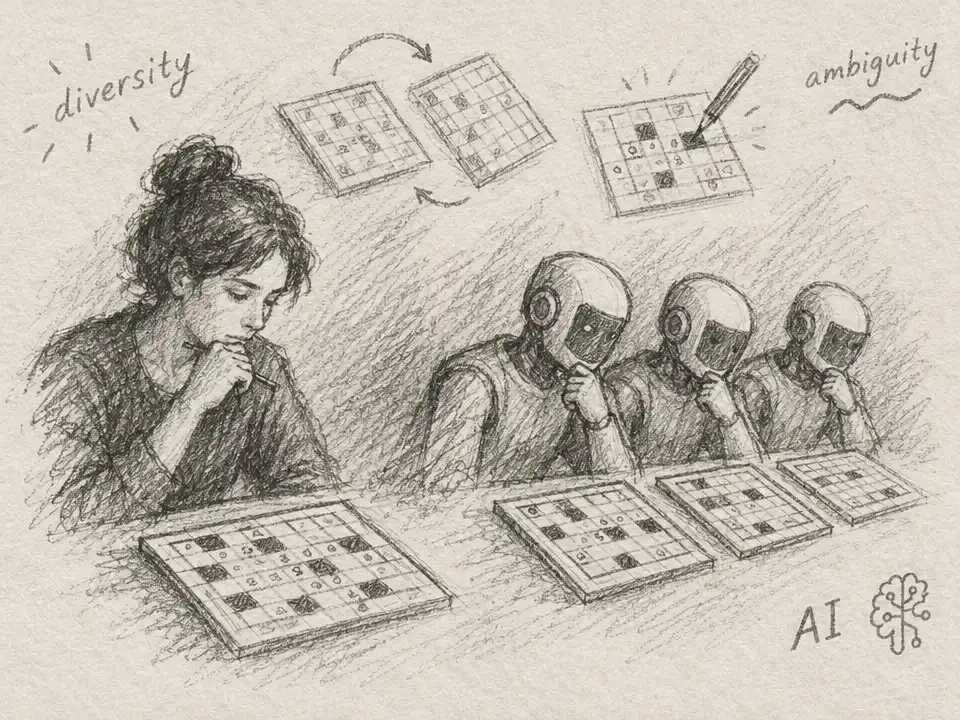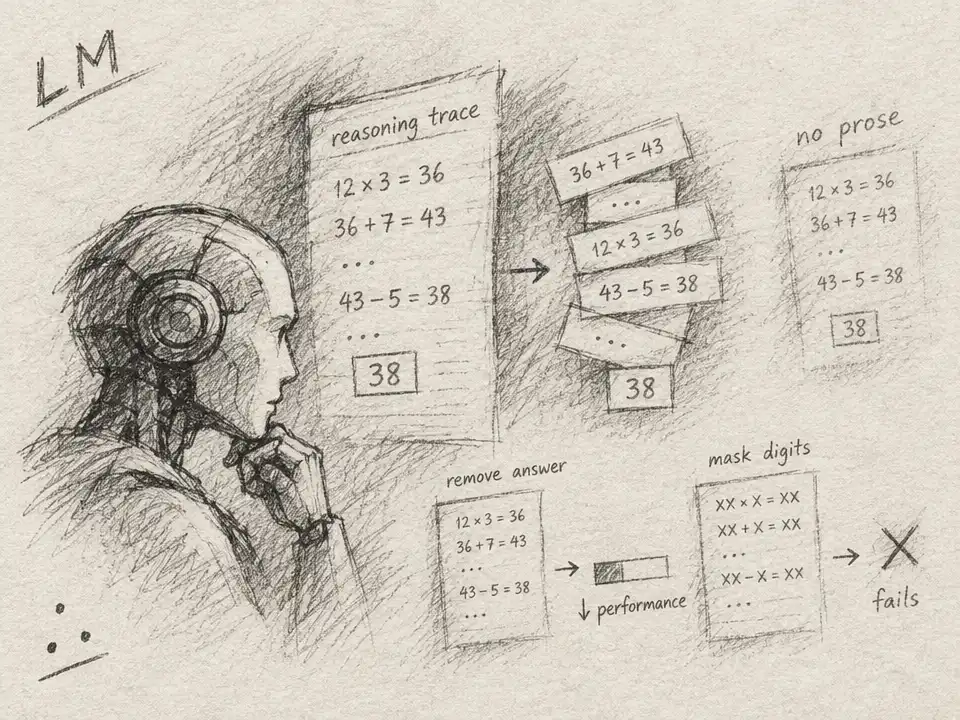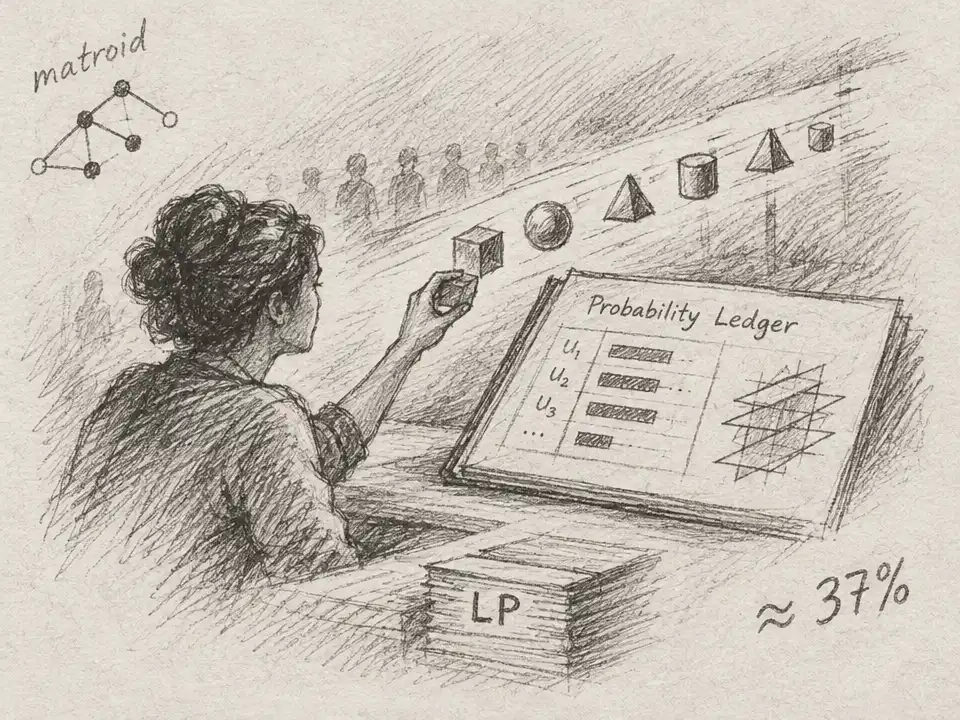
Imagine a computer handed a dossier of scraps: a few notes, a rule, some facts that clash, and a tempting detail that leads nowhere. There is no question at the top of the page. The computer must work out what the puzzle is asking, reconstruct the hidden situation, and decide what to do. That missing question is the whole point.
A paper posted to arXiv on September 24, 2026, introduces EnigmaForge, a benchmark built to test that overlooked step. Most AI tests tell a system what task to perform. EnigmaForge asks what happens when the system has to discover the task for itself. Its central puzzle is not whether a model can follow clues once pointed in the right direction, but whether it can notice which direction matters.
That sounds difficult to score fairly. If a puzzle is ambiguous, a wrong answer may reflect bad clues rather than bad reasoning. So the researchers built each challenge from a hidden set of facts and rules, then used a computer solver to check that exactly one solution fit. They also removed each clue in turn: every clue had to matter, because taking any one away had to allow another possible solution.
The verified structure was then dressed as a story. Clues could appear in different kinds of documents and in settings such as a hotel, theater, or observatory. Some were direct evidence; others were distractors. A few puzzles also required a piece of ordinary background knowledge not stated in the documents. The challenge could ask for an intermediate answer along the way, while the real objective lay one step farther on.
The benchmark’s safeguards were unusually strict. A solver given all the underlying facts should get everything right; a program that merely copied the story should get nothing. The researchers also generated new puzzles from seeds rather than relying on a fixed question bank. In principle, that makes it possible to create fresh, checkable tests instead of repeatedly measuring performance on questions that might already be familiar.
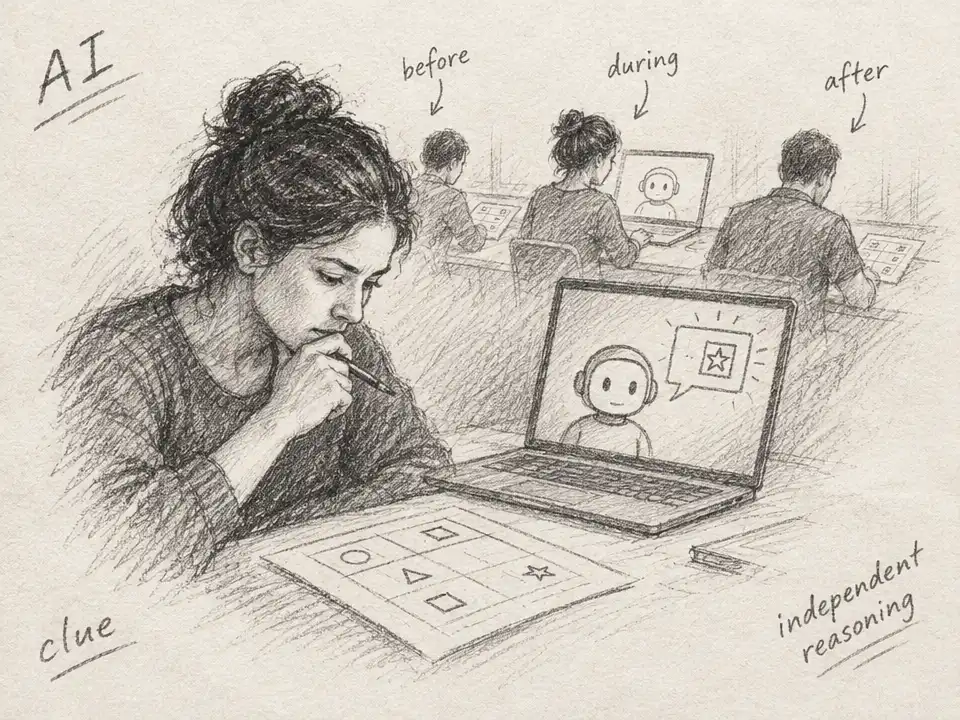
To separate the clues from the missing question, the same puzzle families appeared in three forms. In one, the task was stated plainly. In another, the formal facts were supplied directly. In the third, the model got only the story and had to infer what to solve. Comparing those matched versions let the researchers ask a precise question: how much does a model lose when nobody tells it what the problem is?
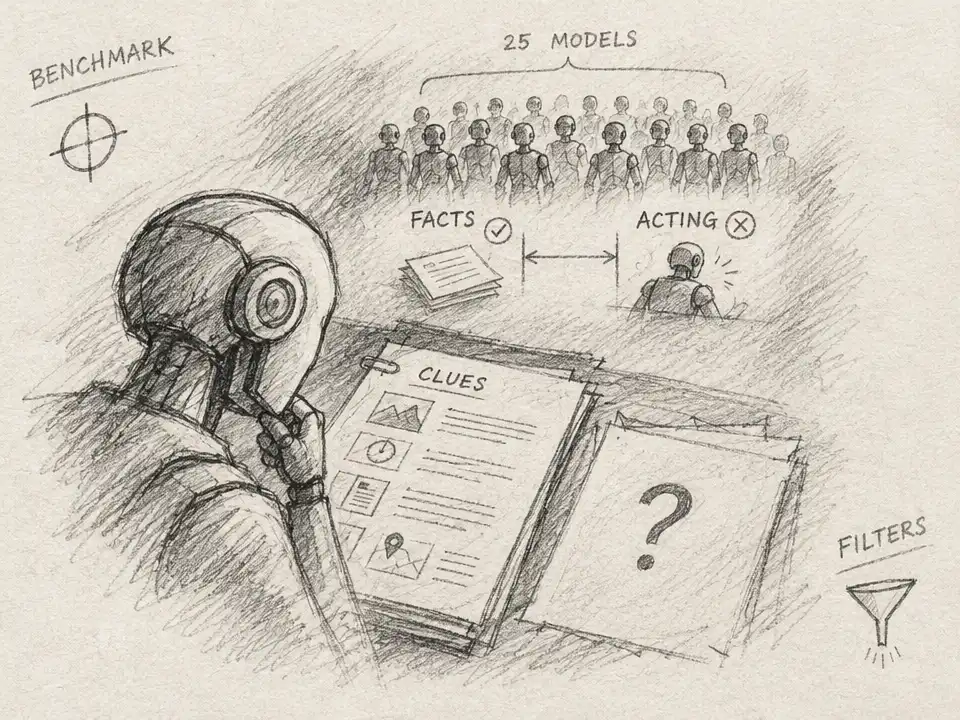
They tested 25 AI models on 600 puzzles, with 17,400 scored records across six difficulty levels. The gap between ordinary fact recovery and unguided task success was striking. Fact-recovery scores varied by about 1.6 times across the models; success when the question was hidden ranged from roughly 4 to 80 puzzles out of 100. A system that looked strong at extracting facts could fall far down the rankings once it had to identify the task, while another that was not among the top fact-retrievers led this test.
The paper calls success on the no-question version intuition. The word is easy to overread: here it means a specific benchmark score, not a claim that a model has humanlike instinct. One model completed 80 of 100 unguided tasks and did just as well when the task was spelled out. Another performed significantly better without the stated question, by 14.2 percentage points. But a different model barely changed when the question was removed—and still solved only 21 of 100 unguided tasks. Indifference to guidance, the results show, is not the same as being good at finding the problem.
That distinction reveals why the benchmark is a puzzle in two senses. First, the model must solve the fictional world inside the documents. Then it must solve a more basic puzzle: what outcome is the world asking it to determine? Most models did better when the task was explicit, with the paper reporting gains of 9 to 37 percentage points for many systems. A conventional benchmark that always supplies a question can measure the first ability while missing much of the second.
There was another complication hiding in the results. Some models never reached the puzzle because content filters blocked the input. One filter blocked 585 of 600 attempts; on the 14 that got through, the model scored between 0.91 and 1.00 on fact recovery. That small sample cannot establish how it would have performed across the full test. But it does show why treating every blocked attempt as a reasoning failure can muddy a leaderboard: the score may partly reflect what a filter permits, not only what a model can solve.
So what has EnigmaForge actually discovered? Not that a single test can rank general intelligence, or that solving a constructed puzzle predicts success in a messy workplace. The authors note that the benchmark is English-only, has no human comparison baseline, and uses a generated structure that a system trained specifically on it might learn. Each model was tested in one configuration, too. The result is a focused instrument, not a final verdict.
Its useful clue is the gap itself. Recovering pieces of a situation and recognizing which question those pieces answer are different jobs. A test that supplies the question can quietly skip one of them. EnigmaForge makes that omission visible—and turns the unanswered question into the hardest clue on the page.