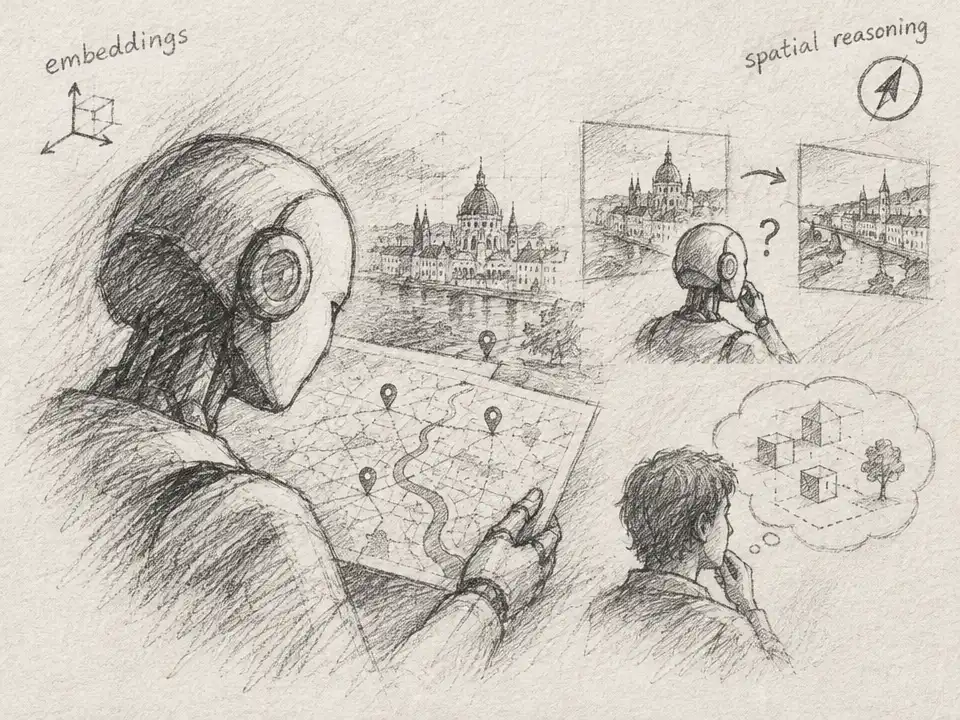
A language model may contain a map without ever drawing one. Give researchers the name of a city, and they can sometimes recover where it sits on Earth from the changing patterns of activity inside the model. But ask the same kind of system to imagine a room from a different viewpoint, and its spatial sense can suddenly falter. Those findings sketch a hidden world with an unexpected border: knowing where things are is not the same as knowing how to move around them in your mind.
To look for a map, researchers examined language models trained to predict the next word. They fed them names of places, then measured the internal signals produced as each name passed through the network. The test covered locations at several scales, from places around the world and across the United States to points of interest in New York City.
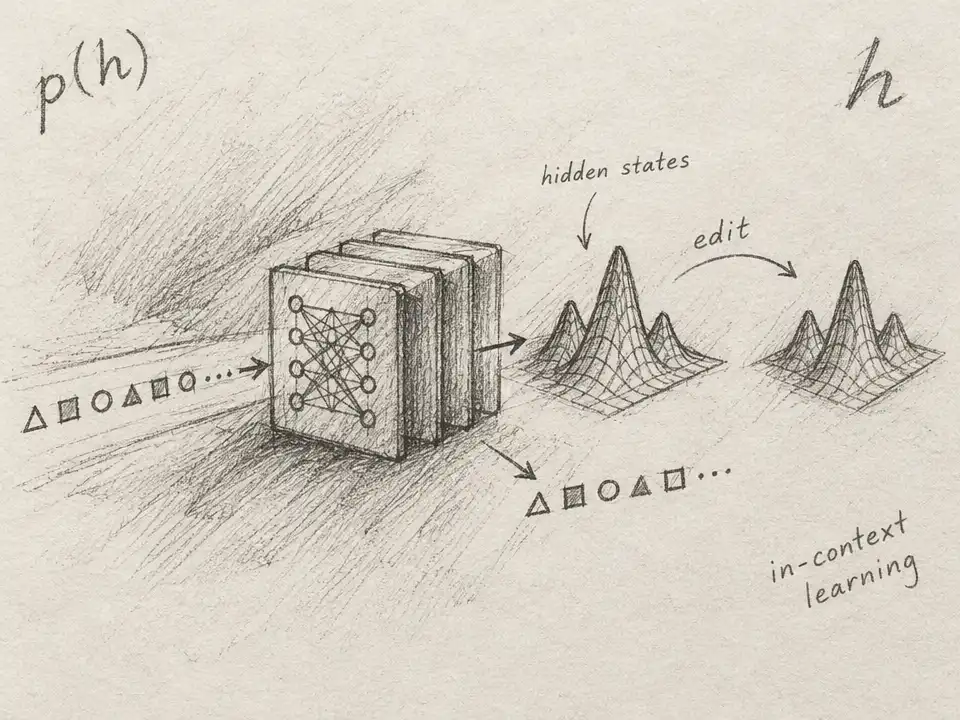
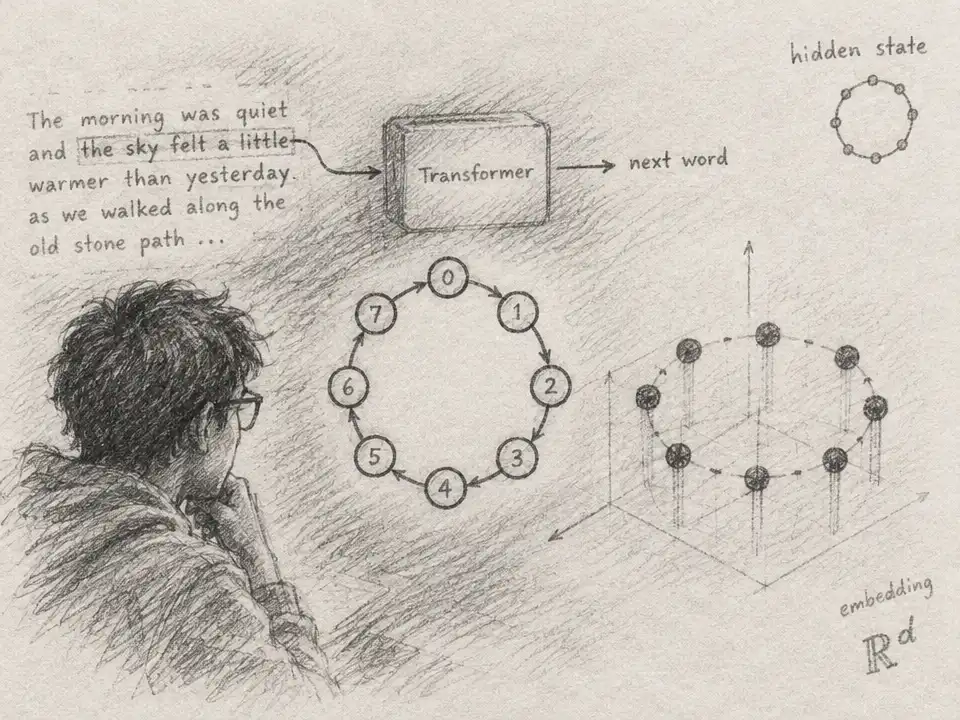
Those signals are not words or coordinates. They are long lists of numerical activations, the model’s moment-by-moment internal state. The researchers trained a simple decoder to translate that state into latitude and longitude. Crucially, they tested it on place names that had not been used to fit the decoder. It could still recover geographic information from the models’ hidden activity.
The map did not appear all at once. In the Llama-2 models examined, spatial information became easier to extract through the early layers and leveled off around the middle. Larger models generally held more recoverable information. A more complicated decoder added little, suggesting that a relatively simple readout could find the geographic pattern already arranged in the activations.
That does not mean the model keeps a neat atlas tucked away in its digital head. The researchers supplied geographic answers while training the decoder; the language model itself had not been taught to output coordinates for this experiment. A clever decoder could, in principle, assemble a map from simpler clues, such as which country a place belongs to. Tests that held out entire regions helped address that possibility, but could not settle exactly what form the model’s internal representation takes. The team also tested individual neurons and interventions, finding evidence that some of the spatial signals played a role in the model’s processing. Still, a readable pattern is not automatically a complete, humanlike understanding.
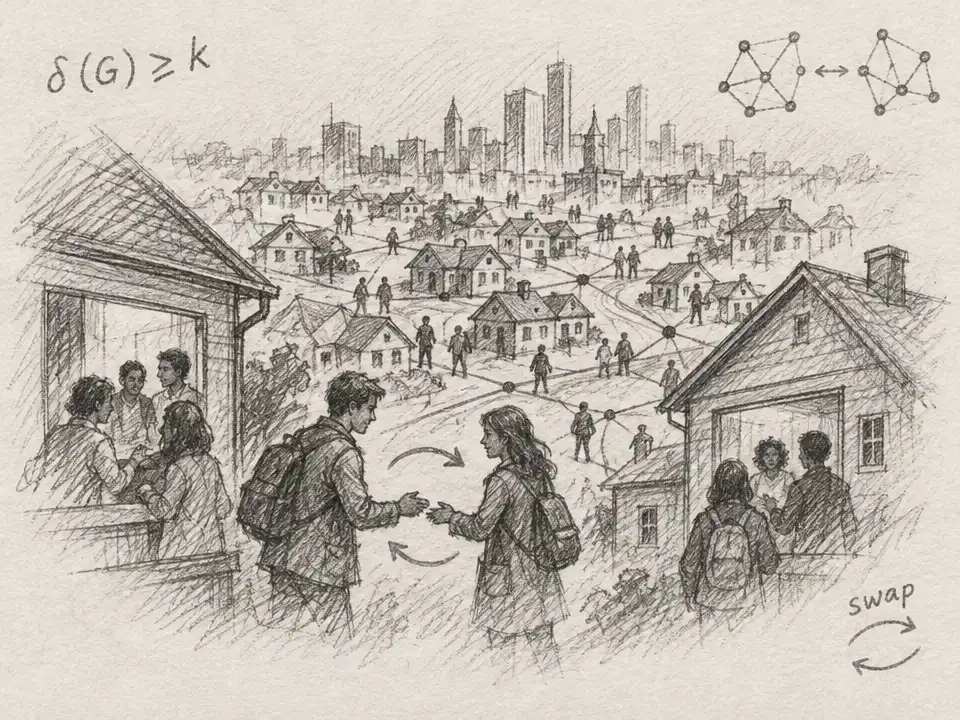
Now change scale. Instead of asking where Boston lies, ask what happens to a room when you turn around. A chair on your left may now be behind you; the room itself has not changed, but your frame of reference has. To solve the problem, you must hold several objects and their relationships in mind while transforming the viewpoint. That is a different challenge from retrieving the coordinates associated with a familiar place name.
A 2026 benchmark study tested that kind of challenge using descriptions of procedurally generated homes. The scenes had a median of five to seven rooms. Researchers built a sequence of tasks, starting with simple spatial facts and moving through relationships among multiple objects, viewpoint changes, updates to a scene, and the construction of a structured map of it. They evaluated 13 language models across eight languages, as well as a structured-text control.
The clearest break came at the viewpoint step. Models that could answer basic spatial questions often lost more than half that performance when asked to reason from a changed perspective. The drop appeared across languages and model scales tested in the study. In other words, success at naming a relation or recognizing a scene did not reliably carry over to mentally turning that scene around.
A small human pilot adds an intriguing wrinkle. Native speakers tested under the same text-only conditions also struggled on the viewpoint tasks; the researchers report zero strict passes in that pilot across all eight languages. This is not evidence that people generally cannot imagine rotated rooms: the sample was small, and participants had no scratchpad or external memory aid. Rather, the shared difficulty points to a possible bottleneck in keeping a dense set of spatial relationships straight when everything arrives as text. The study’s proposed explanations remain to be tested, including whether a written scratchpad or a floor-plan image would help.
The two investigations probe different things, so they do not cancel each other out. One finds that geographic information about familiar named places can be decoded from a model’s internal state. The other finds that converting text into a flexible, viewpoint-dependent picture is difficult. A model can carry pieces of a map without being able to rotate it, update it, or reliably navigate by it.
That distinction matters wherever fluent language is mistaken for grounded spatial skill. A hidden map is a clue about what prediction-based training can organize inside a network. It is not, by itself, proof that the model can reason through an unfamiliar space. The next step is to find out when those internal coordinates guide an answer—and when the map is present, but the route is still lost.