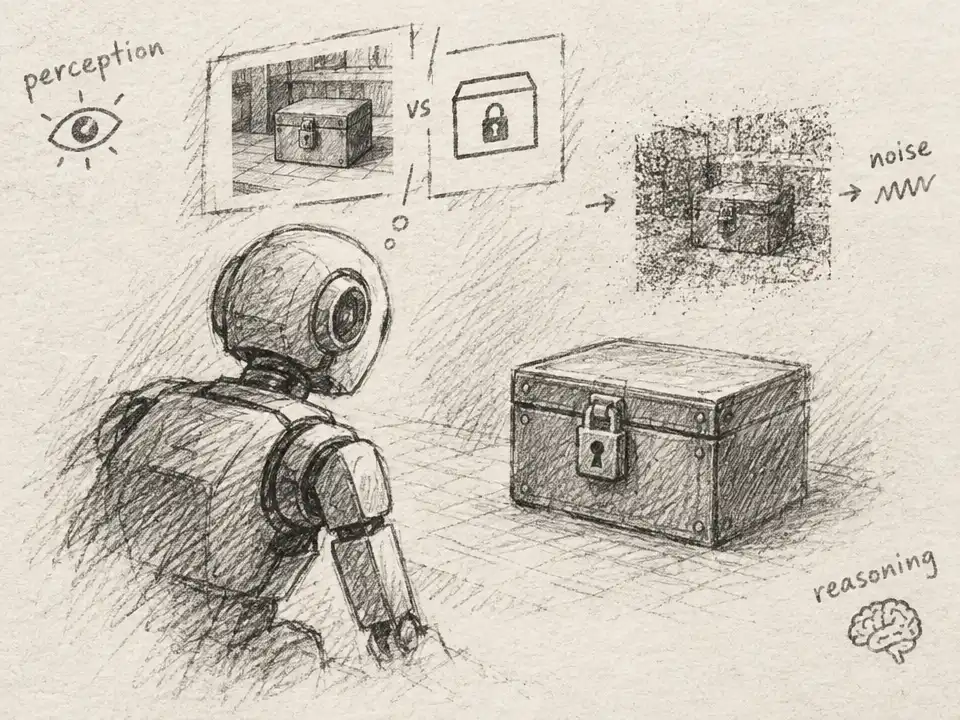
Why Did a Robot Solve a Lockbox Better With Worse Data?
A robot solved a mechanical puzzle more efficiently with ordinary images than perfect state data, exposing a surprising link between noise and reasoning.
A robot solved a mechanical puzzle more efficiently with ordinary images than perfect state data, exposing a surprising link between noise and reasoning.
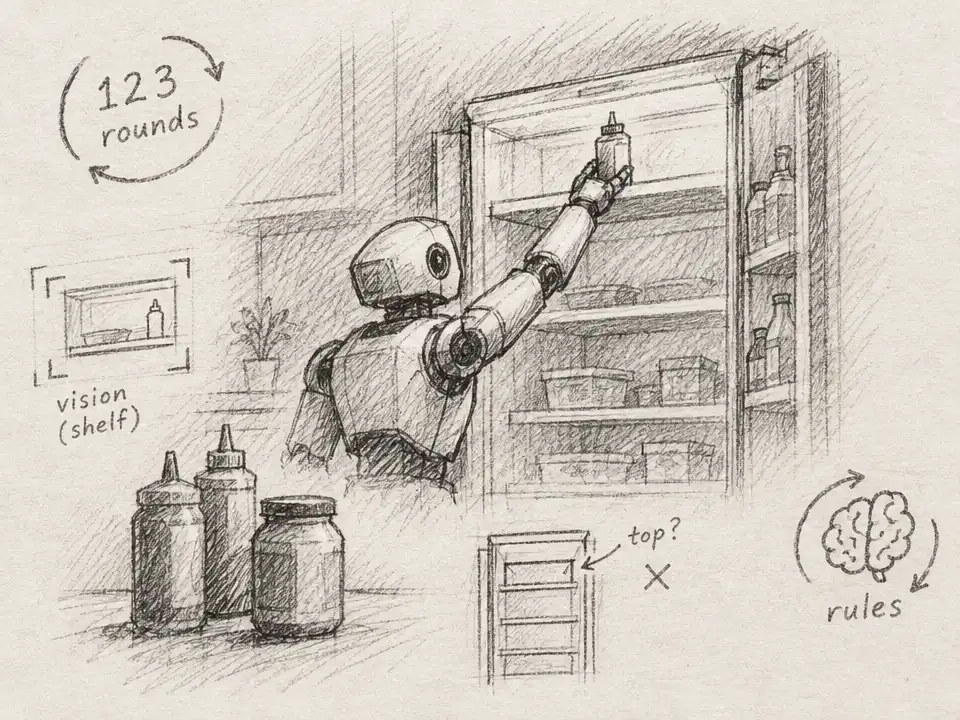
After 123 rounds, a simulated robot still couldn’t find a fridge’s top shelf. The clues reveal why self-improvement stalled.
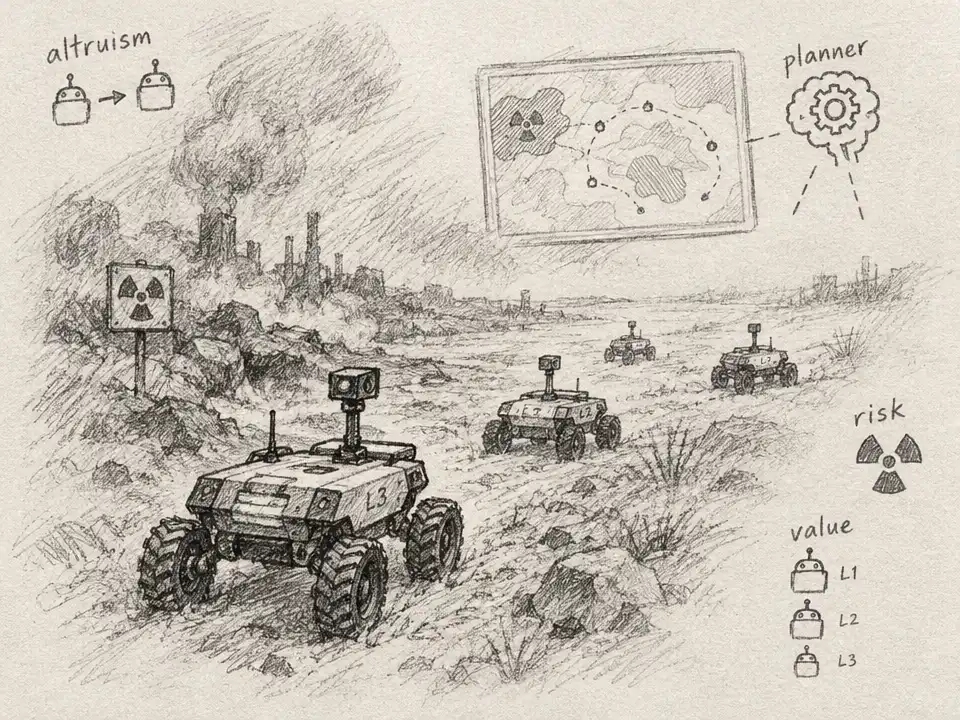
An evolutionary idea about altruism helps robot teams balance exploration, duplication and risk—and raises the question of who decides which robot matters most.
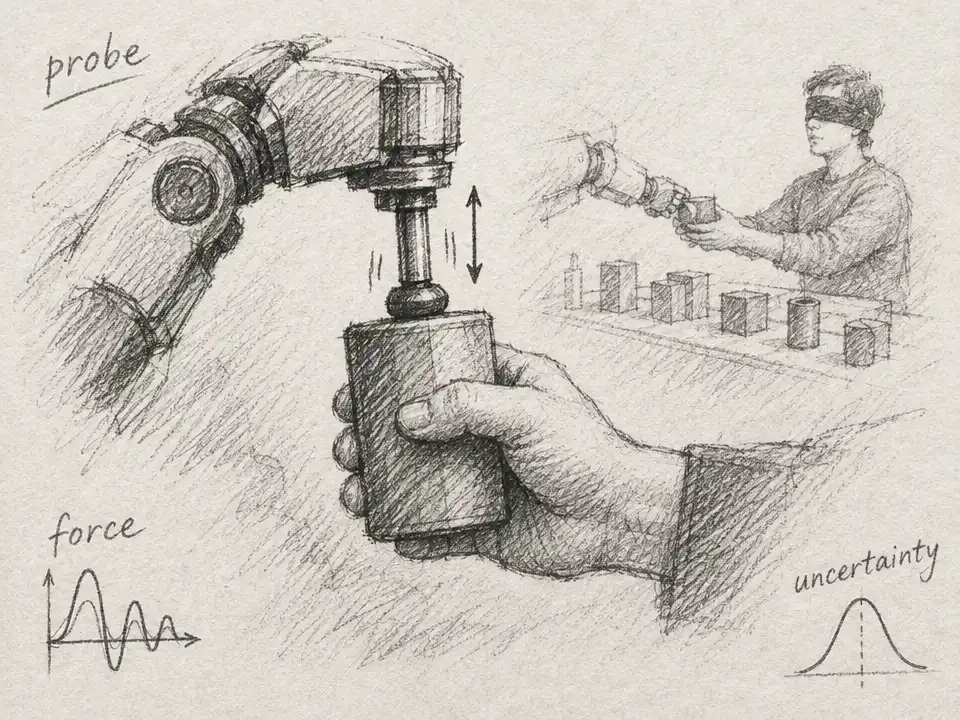
A robot uses tiny, information-seeking motions to distinguish a firm human grasp from a touch, improving handoff reliability in lab tests.